Of all the religious movements that have shaped Assam, none has marked it more deeply than the neo-Vaishnavism of Srimanta Sankardev (1449 to 1568). This was the Ekasarana-nama-dharma, the religion of taking refuge in one. It arose in the late fifteenth and sixteenth centuries in the country of the Bara-Bhuyans. It then spread, against persecution and later under royal protection. In time it remade the religious, social and cultural life of the Brahmaputra valley so thoroughly that the modern Assamese identity is in large part its creation. It gave the valley a scripture in its own language. It gave every village a congregation. It gave a body of song, dance and drama. And it gave an institution, the sattra, that carried all of this in unbroken transmission for five centuries.
A reform of the heart
Sankardev set devotion to a single supreme God above the whole apparatus of rite, image, sacrifice and caste that governed the religious life of the valley. That God was Krishna, worshipped not as one avatar among many but as the supreme reality itself, identified with Narayana. He made the chanting and hearing of the divine name the central act of faith. The doctrine he named Ekasarana, “single refuge”, was the surrender of the devotee to one God alone without the mediation of other deities. It rests on four supports, the cari vastu: the Name (naam), the deity (deva), the preceptor and scripture (guru), and the community of the devout (bhakat). Tradition holds that Madhavdev fixed the place of the guru when he accepted Sankardev as his own preceptor. The devotion it teaches is that of the servant and the child before God, and it pointedly leaves aside the romantic worship of Krishna with Radha that colours Vaishnavism elsewhere. Where the older order demanded the priest, the offering and the correct ritual, this asked only the sincere repetition of the name. So it opened to those the Sakta and Brahmanical establishment had kept out, drawing tribal and low-caste followers into a single congregation. In this country Sakta and tantric worship, with its animal sacrifice and priestly precedence, was long established. Set against that order, Sankardev’s teaching was a far-reaching reform, and like every reform it drew the hostility of the establishment it bypassed.
Because the name was everything, the worship took the form of singing it together. The ordinary devotion of the sattra and the village hall is the nam-prasanga. This is the ordered congregational recital of the name and of the verses of the founders, performed daily before the sacred book. Its grandest form is the Paalnaam, an elaborate, often day-long collective naam. The great royal house of Auniati on Majuli became renowned for it. In this service hundreds of voices carry the name in rounds through the prayer-hall.
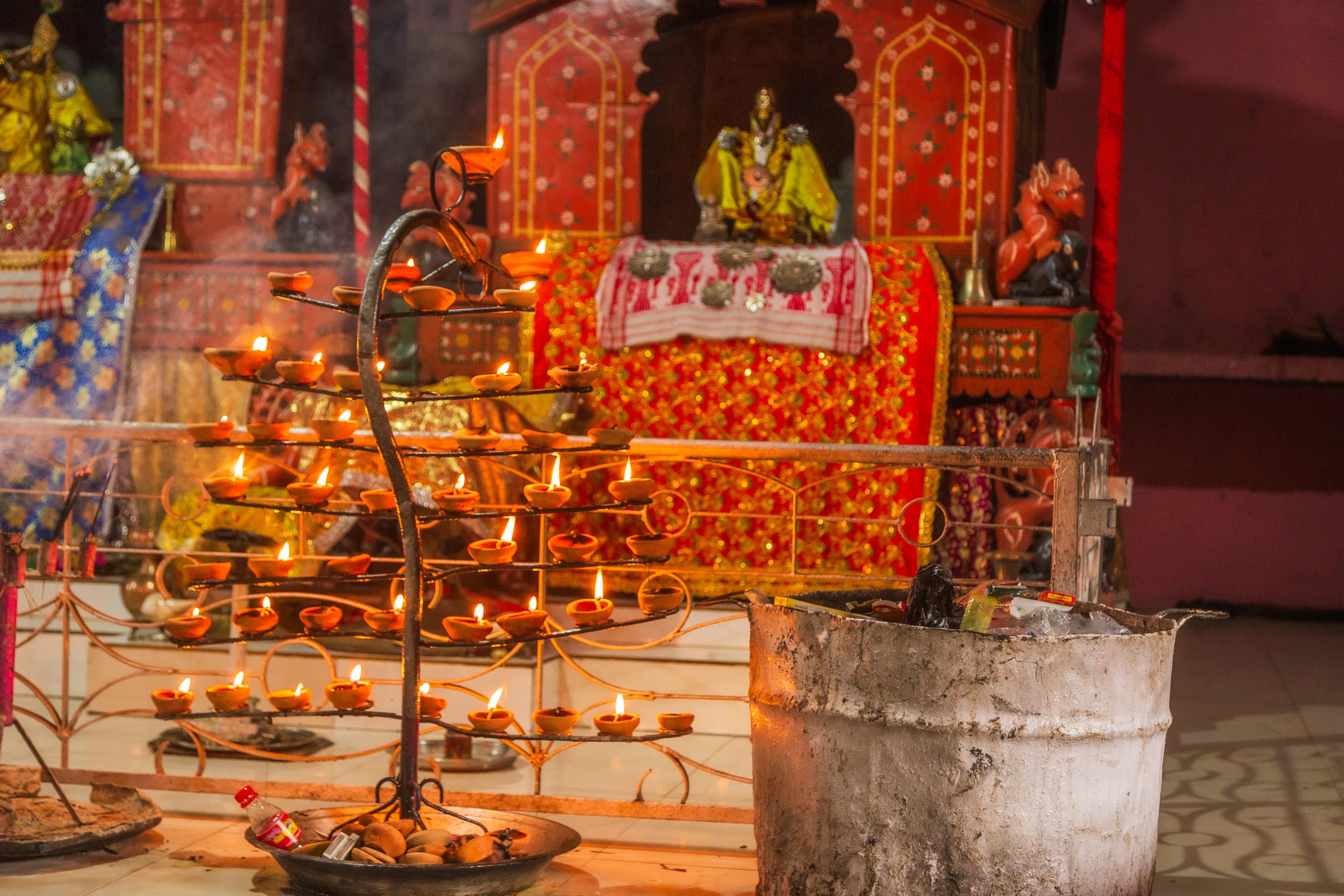
The faith arrived with its own body of scripture, and this is what gave the valley holy books in its own tongue. Sankardev rendered much of the Bhagavata Purana into Assamese verse, above all its tenth book, the Dashama, which tells the deeds of Krishna and remains the most beloved of his works. His Kirtana Ghosha, a great cycle of devotional songs, became the book read and sung in every namghar. His foremost disciple Madhavdev matched it with the Naam Ghosha, a household scripture to this day, and with the Ratnavali. These are not learned treatises but verse meant to be chanted before the congregation.
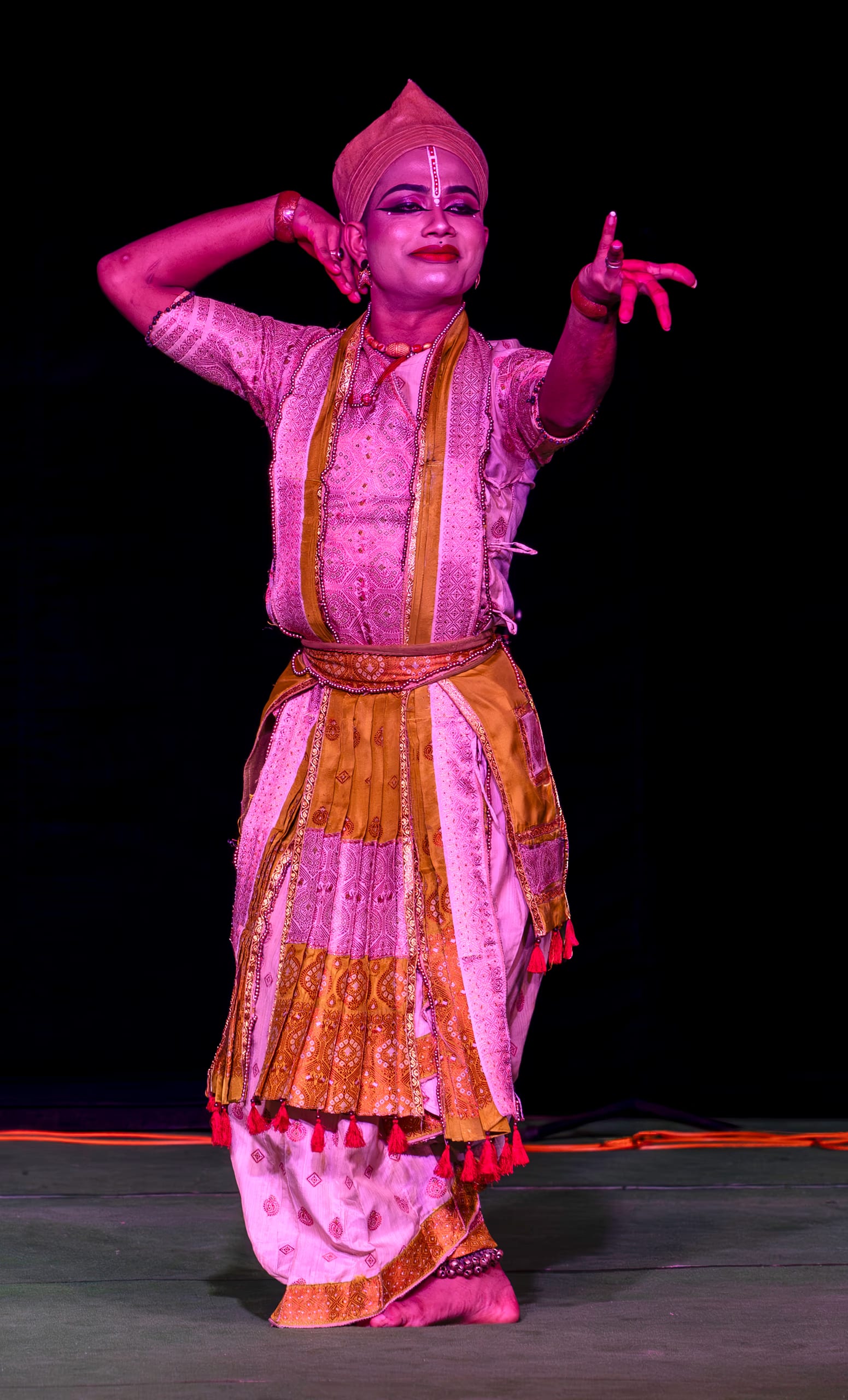
Nor did the founders leave the faith as bare doctrine. They clothed it in a complete devotional culture: the Borgeet songs set to their own ragas, the Ankia Naat bhaona theatre of one-act religious plays, and the Sattriya dance. So the faith arrived as a way of living, singing and performing, not a creed to be assented to.
The sattra and the namghar
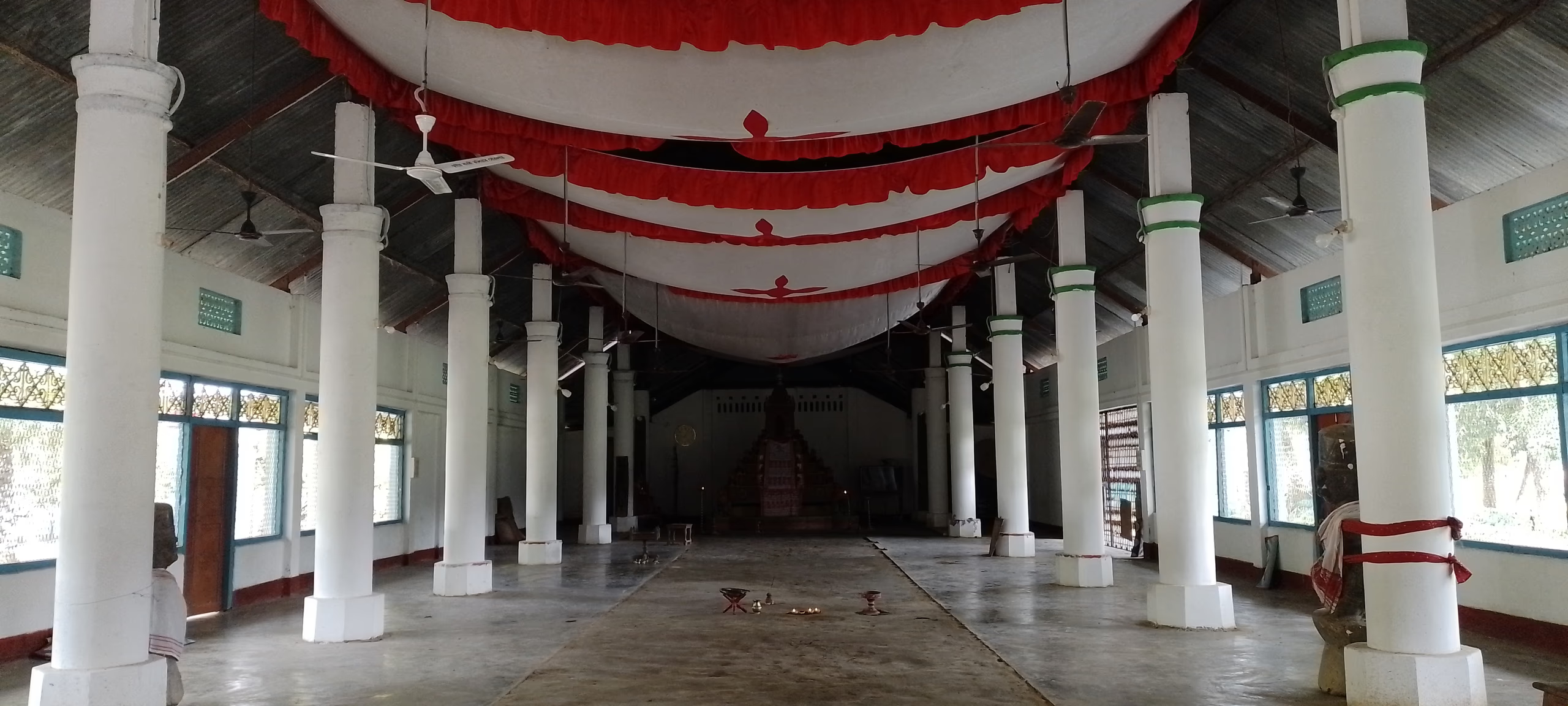
What carried Ekasarana down the centuries was an institution, the sattra, the monastery-and-congregation. Satyendra Nath Sarma showed it to be the very engine of the faith, the body through which it was organised, taught and sustained. At its heart stands the namghar or kirtan-ghar, the long prayer-hall in which the congregation gathers. At its eastern end is the manikut, the “house of the jewel”. This is the sanctum that holds the sacred book and the throne in place of an idol, since the word and the name, not the image, are the object of worship in the stricter houses. Around these run the hatis, the rows of cells where the resident disciples live. The whole is enclosed and entered through a gateway. So a sattra is at once a seminary, a theatre, a manuscript library and a congregation. The consecrated seat itself is a than, a word that marks the holiest grounds. Above all there is Bardowa Than, the birthplace of Sankardev and the founding ground of the whole tradition.
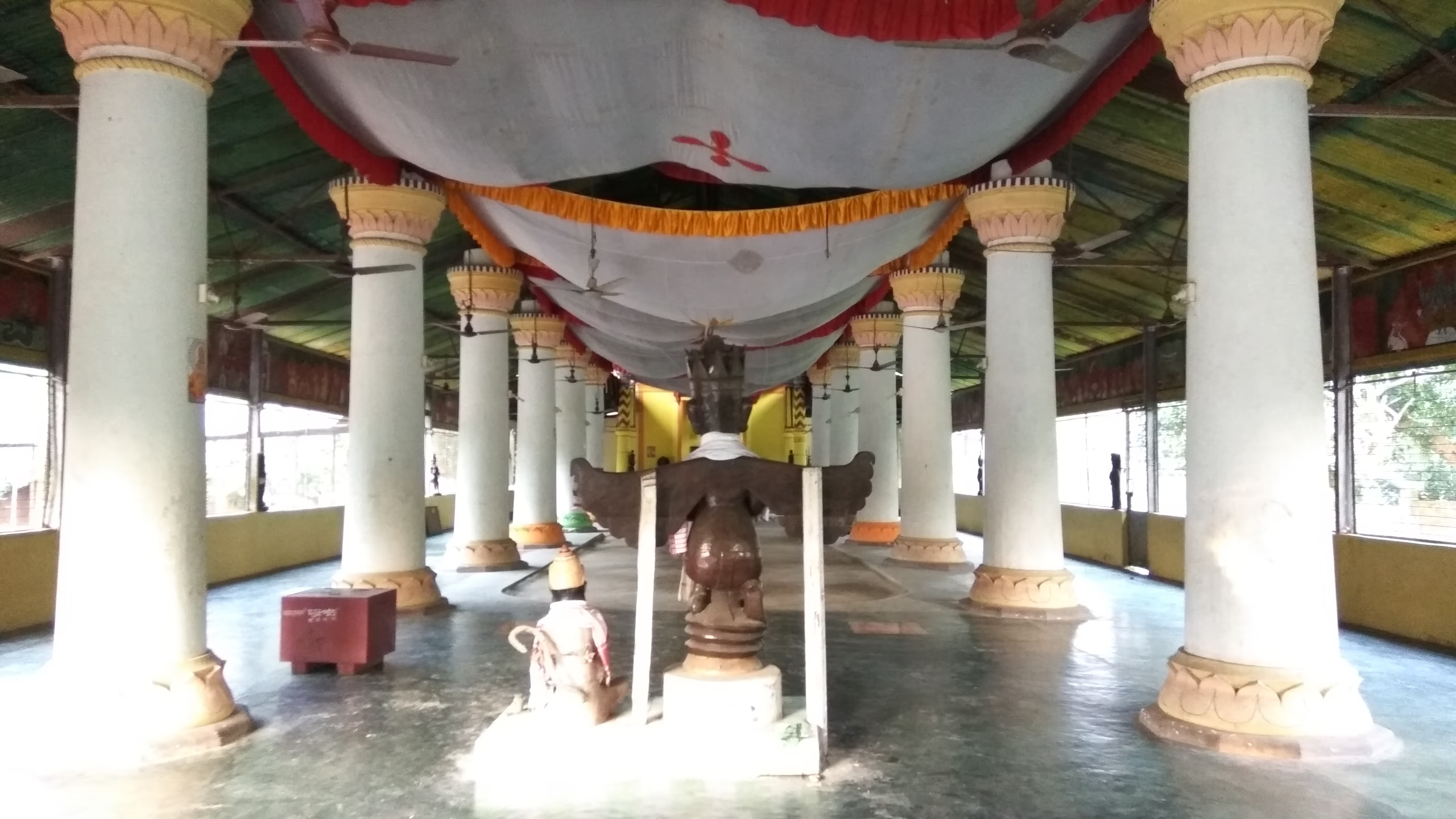
A sattra is governed by its adhikar or sattradhikar, the spiritual head who holds the line of succession from the founder. He is assisted by a deka-adhikar marked as his heir and by an order of officers below him. Its members are the bhakats, the initiated disciples. Houses divide by their rule of life. In the celibate sattras, such as those of the Kamalabari line on Majuli, the bhakats take vows and live wholly within the enclosure, devoting their lives to prayer, manuscript and the performing arts. The householder sattras, by contrast, ordain married disciples who keep the faith in the world. Beyond the monastery, the same form is reproduced in miniature in every village as the namghar. This public hall is at once place of worship, court of the village, and meeting-house. So the institution Sankardev's followers built is not only religious but the basic civic architecture of rural Assamese life.
Patronage, schism and the long reach
Born among the Bara-Bhuyans, the movement met early hostility from a Brahmanical order it threatened and from rulers wary of its gathering crowds. After years of pressure Sankardev found shelter at the Koch court of Naranarayan. The king's brother Chilarai became its protector. This alliance of reformer and king secured the faith past its founder's death. It was for that court that the great woven tapestry of Krishna's deeds, the Vrindavani Vastra, was made. The Vastra's own journey out of Assam and back again is a story in itself.
The Vrindavani VastraA saint set twelve weavers to weave the whole life of Krishna into one vast silk. It vanished over the Himalayas, was cut up by monks who could not read it, and ended scattered across the world's museums.Read the story →The Ahom court that came to rule the upper valley was at first suspicious and at times savage toward the Vaishnavas. But from the seventeenth century its kings reversed course and became the tradition's greatest patrons. Jayadhwaj Singha embraced the faith and endowed the royal sattras of Majuli. Auniati among them was founded under his patronage in 1653. Dakhinpat, Garamur and their sisters grew rich on grants of land and of subject households. These are the four great royal houses that still command the island.
After the founders the movement divided, as such movements do, into four orders, the samhati. The first was the Brahma-samhati, the order of Damodardev and Haridev. It moved away from Madhavdev's leadership and readmitted Brahmanical usage and the worship of the image, drawing the old priestly families back in. Then came the Purusha-samhati and the Nika-samhati. The Nika-samhati was the “pure” order founded by Madhavdev's disciples to hold the discipline at its strictest. Last was the Kala-samhati, the most liberal and the most guru-centred, which carried the faith furthest among the tribes and the low-born. The division turned on questions a stranger might think small: the place of the image against the book, the standing of Brahmin custom, and the relative weight of the living guru and the absent God. Yet it set the character of every sattra and endures among them to this day. It was from the Kala-samhati that the Moamoria following grew. Their long rebellion at the close of the eighteenth century shook the Ahom state to its foundations. This was a measure of how far the faith of the namghar had become a force in the valley's history as well as its soul.
A living tradition
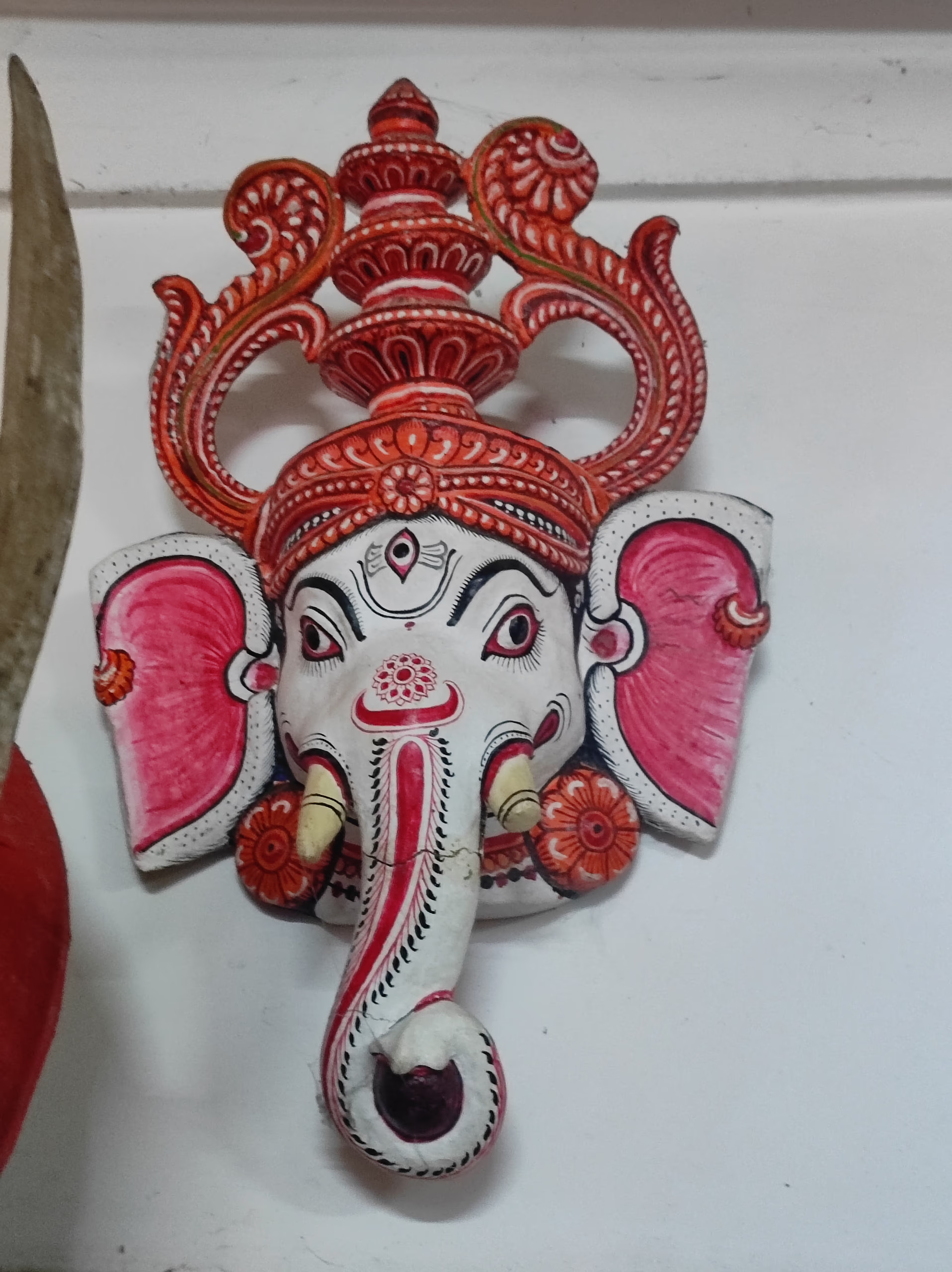
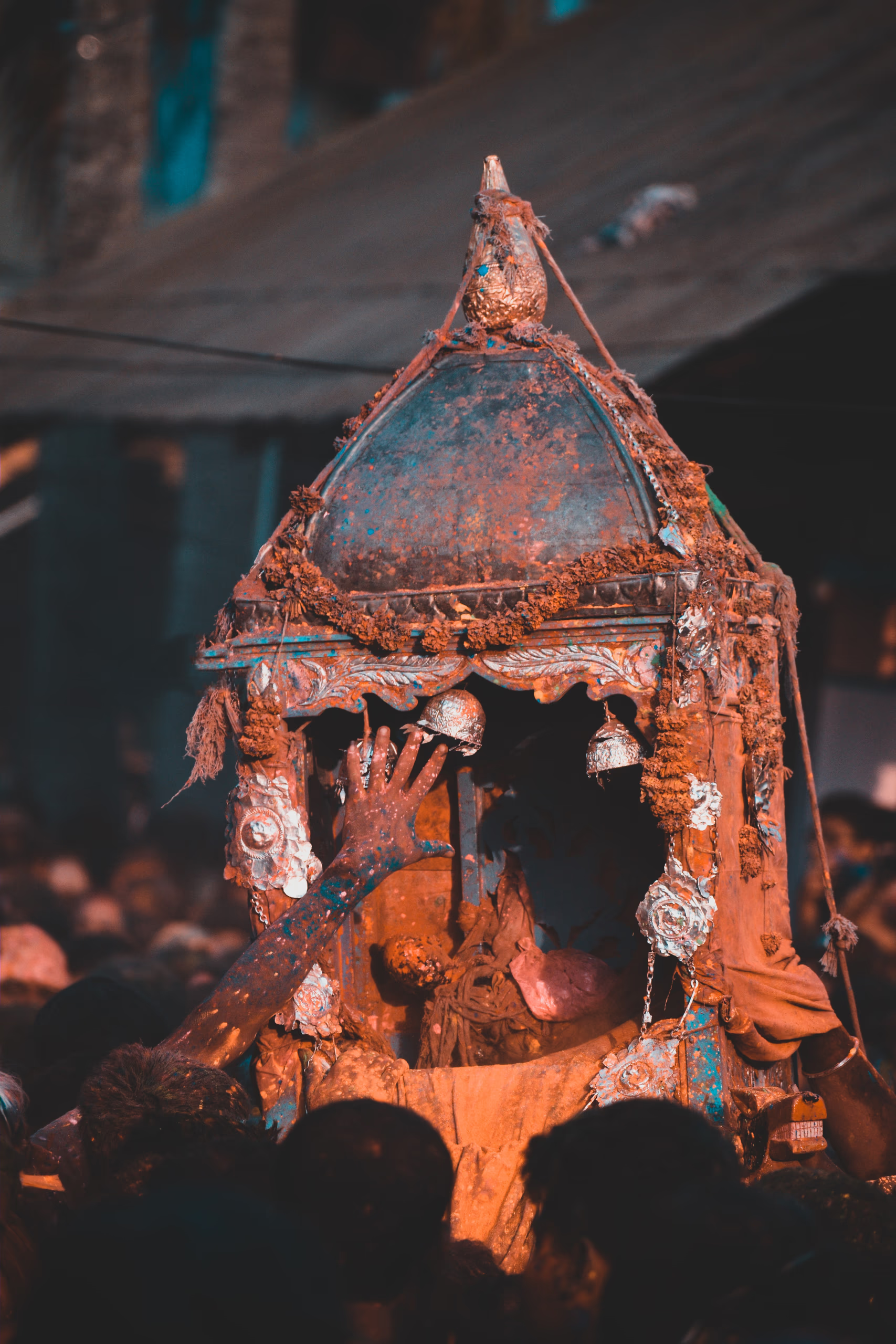
Five centuries on, the tradition is still the living centre of Assamese culture rather than its museum. Majuli remains its heartland. Its sattras still perform bhaona, train dancers, and keep the mukha mask-making craft alive. The year turns on its festivals: the autumn Raas Mahotsav that stages the life of Krishna across the island, and the spring Doul of Barpeta. The namghar still anchors the social life of nearly every Assamese village. Pressures bear on the tradition now. The Brahmaputra erodes Majuli. A changing economy weighs on the celibate houses. And politics has at times claimed the tradition as an ethnic symbol. Yet as scripture, song, theatre and the shape of the village itself, the religion Sankardev founded remains, more than any king or kingdom, the deepest continuity in Assamese life.