The Borgeet, the “great songs”, are the devotional lyrics composed by Srimanta Sankardev and his disciple Madhavdev in the fifteenth and sixteenth centuries. They are the lyrical heart of the neo-Vaishnava tradition. Set to their own ragas, they have been sung in the sattras and namghars for five hundred years. Together they form a complete classical-devotional music. It arose in the Brahmaputra valley at almost the same moment that Dhrupad was taking shape in the courts of upper India. It is an independent eastern parallel to the great classical traditions of the subcontinent.
Songs of the reform
The Borgeet were created as instruments of the Ekasarana faith. They are poems in praise of Krishna, composed to be sung as an act of worship. They also carried the teaching in a form the whole community could learn, remember and perform. Tradition holds that Sankardev composed his first Borgeet on his first pilgrimage to the north around 1488. It was Mana Meri Ram Charanahi Lagu, set in the raga Dhanashri, and it began the tradition. He is said to have written some two hundred and forty in all. A fire destroyed all but the thirty-four that were later recovered from memory. By tradition the loss grieved him so deeply that he composed no more, and asked Madhavdev to carry the work on. Madhavdev added close to two hundred of his own, some hundred and ninety-one counted, turning above all to the child-Krishna, so that the surviving Borgeet are a treasured remnant of a once far larger body carried across two hands.
Even the name they now carry came only later, for Sankardev called them simply songs. It was the Vaishnava devotees of the following generations who set them apart as Bor Geet, the great or supreme songs. In subject they turn on the spiritual mood of devotion, the essence of Vedanta and the boyhood deeds of Krishna. They carry this as the single-minded, ekantika bhakti the faith was built on. It is the union of that grave matter with a plain, singable beauty that has kept them dear to listeners of every rank.
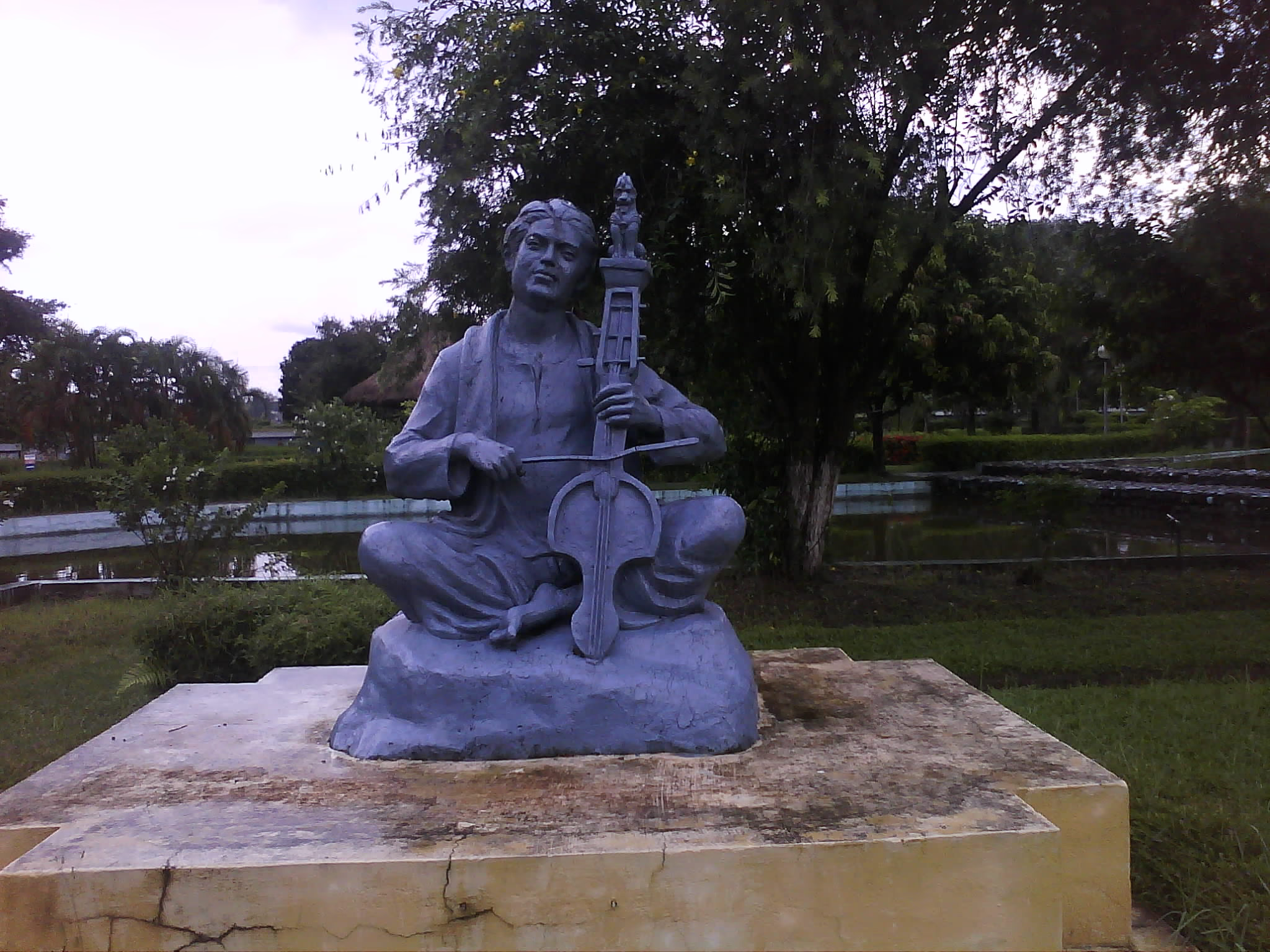
Brajavali, the language of the song
Like the plays of the bhaona stage, the Borgeet are sung not in everyday Assamese but in Brajavali. Brajavali is the artificial literary idiom blending Assamese with Maithili that Sankardev shaped for devotional poetry. The elevated, deliberately archaic register lifts the songs out of common speech. It binds them to the wider Vaishnava devotional culture of eastern India. At the same time it keeps them the shared property of the congregation, rather than of any one region's dialect.
The name itself points east and north, to Braj, the country of Krishna's boyhood around Mathura. It signalled that these were songs of the Krishna faith, in a diction coloured by that sacred landscape. Yet Brajavali was never a spoken tongue anywhere. It was a poetic language, a made thing built for song and scripture alone. In this Sankardev drew on a wider habit of the age. The devotional poets of eastern India had long written their Vaishnava lyrics in such an artificial Braj-flavoured speech, the Maithili verse of Vidyapati being the best-known model. Assamese remained the language of his prose and much of his other verse.
The choice was deliberate and enduring. By keeping the songs in this raised, half-foreign idiom, Sankardev set them apart as sacred utterance, distinct from ordinary talk. Madhavdev kept to the same language in the Borgeet he added, and the sattras have preserved it unchanged through five centuries of singing. The words can therefore feel remote to a modern Assamese listener. But that very distance is part of their character. It marks the Borgeet as a treasured inheritance rather than the passing speech of any one place or time.
A classical music of its own
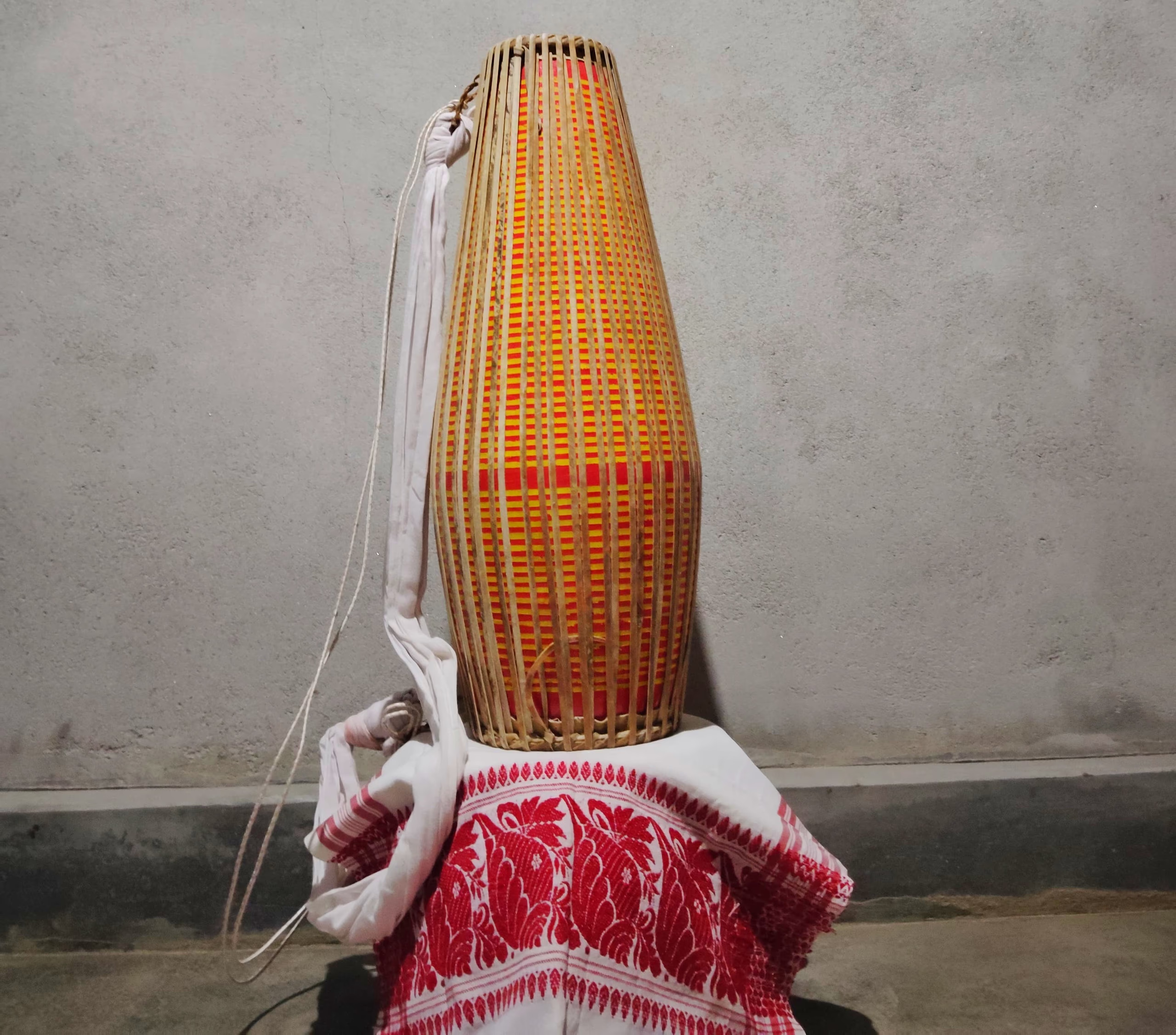
Musically the Borgeet are a distinct classical-devotional system, grave and sustained. They are utterly unlike the quick folk Bihu songs. Each is built as a pada with a dhrung, the opening line that returns as a refrain between the verses. The poet names himself in the closing couplet, so a song carries its author within it. Each is set to a defined raga, among them Dhanashri, Syam, Ahir, Kalyan and Basanta. They are sung to raga but not tied to any fixed tala, and the female raginis are held apart from them by convention. These ragas keep their own Assamese character and are not simply borrowings from Hindustani music. The raga is unfolded in three registers: the low juroni, the middle urani and the high ghuroni. It is carried on the two-headed khol drum and the taal cymbals of the sattra. This is the classical-devotional tradition Maheswar Neog set within the continuum of the Assamese arts. It is the song-tradition from which the music of Sattriya dance and the whole neo-Vaishnava performing culture draws.
A living five-century tradition
The Borgeet are still sung. Within the sattras they are transmitted from guru to disciple. They are also increasingly studied and performed beyond them, on the concert platform and in the conservatory. The khol is still carried and played as the gayan-bayan of the prayer hall.
Their melodies have been collected and notated to guard them against loss, but their true keeping has always been oral, in the trained memory of the singers. They stand with Sattriya dance and the Bihu repertoire as one of the three pillars of Assamese music, and as the most direct surviving voice of Sankardev's sixteenth-century reform.