Sattriya is the classical dance of Assam. Among India's classical dance forms, it is the only one born not in a royal court or a temple but in a monastery. It was created in the fifteenth and sixteenth centuries, inside the neo-Vaishnava movement of Sankardev, as an instrument of devotion. For five hundred years it was codified and guarded in the sattras, the monasteries, of Majuli and the wider valley. The Sangeet Natak Akademi recognised it as a classical dance of India only in 2000. At that moment a medieval monastic art stepped onto the national stage with its lineage unbroken.
Born in the sattra
Sattriya grew directly out of the artistic system Sankardev built to carry his teaching. His devotional plays, the Ankia Naat, and their staging as bhaona demanded a dance vocabulary. Generations of monks elaborated and fixed that vocabulary, and it became Sattriya. His chief disciple Madhavdev composed dance-dramas of his own and carried the tradition on after him. Its home was the monastery. Its dancers were traditionally the celibate monks, the bhokots. Its purpose was worship rather than entertainment. The dance developed and survived entirely within the sattra institution, from the great houses of Majuli to the Barpeta sattra that Madhavdev founded. From it the form took both its name and its remarkable continuity. This was a transmission from guru to disciple inside a closed religious community, one that Satyendra Nath Sarma traced in his study of the order.
The repertoire
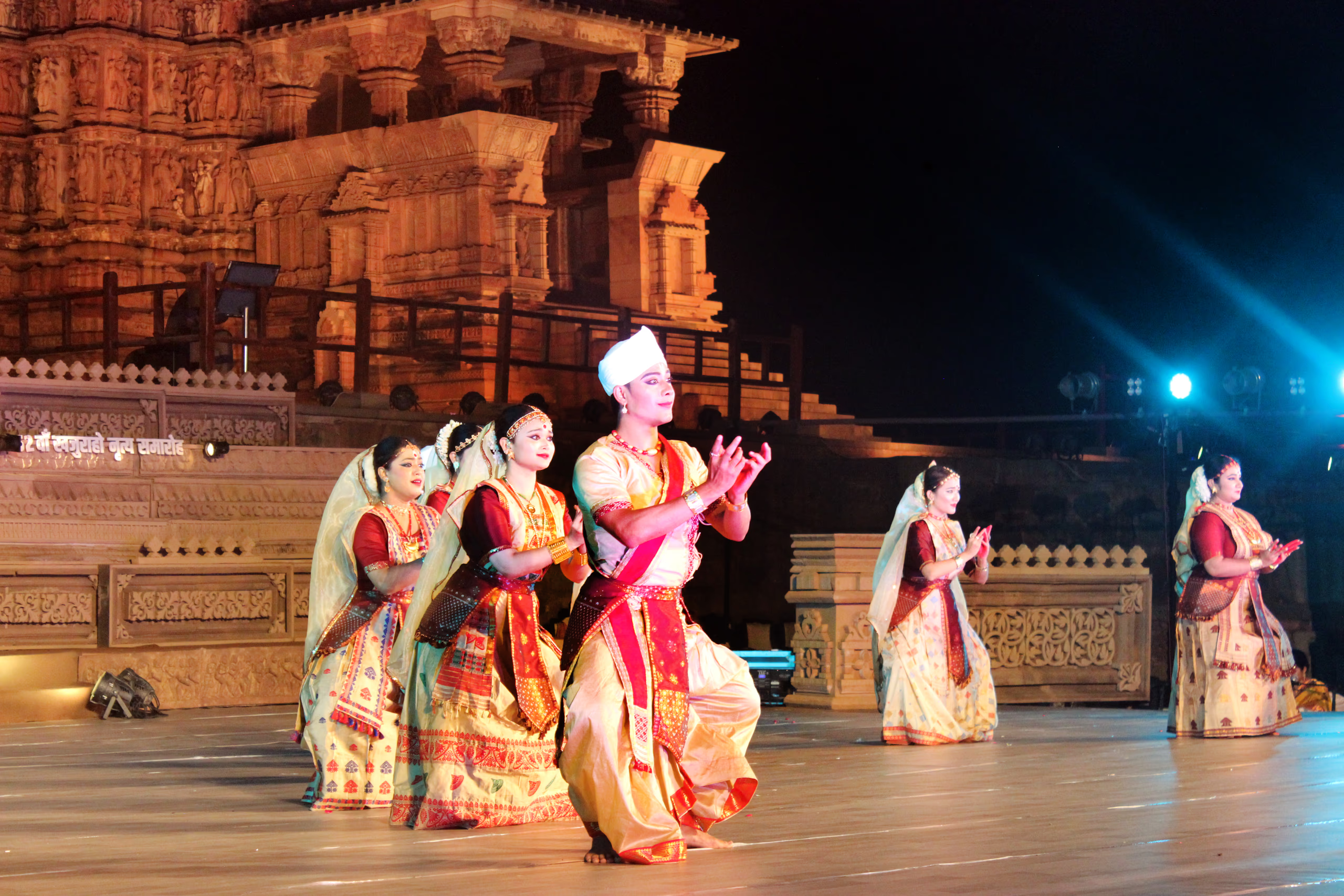
The Sattriya tradition carries two broad streams of dance. The first is bound to the bhaona stage, the all-night performance of Sankardev's plays through which the dance runs from beginning to end. Such an evening opens with the Gayan-Bayanar Nach, the measured entry-dance of the singers and drummers who will carry the music, and moves to the Sutradhari Nach, the long and demanding solo of the Sutradhar, the white-clad narrator-conductor who introduces the play, links its scenes, and dances, sings and recites throughout. From there each character arrives in a set entry-dance of their own, the Krishna Nach, the Gopi Nach and the rest, the Prabesh or Bhangi by which a figure first takes the stage. These dances exist to serve the drama, and within the sattra they are still danced in that setting rather than as separate items.
The second stream is the body of independent numbers performed in their own right, apart from any full play, and it is these that the concert stage now knows best. Among them are the slow and lyrical Chali, traced by tradition to Madhavdev and danced in the soft feminine mode, and the vigorous, virile Jhumura, traced to Sankardev himself, alongside the Rajaghariya Chali, the Nadu Bhangi, the Bar Prabesh and the Behar Nach. Each is a composition in its own right, built as a fixed sequence of pure-dance passages and expressive, story-telling ones and set to a defined rhythmic cycle, so that a dancer learns not a free improvisation but an inherited and exactly ordered piece. This is the structured performing-arts complex that Maheswar Neog mapped across Assamese music, drama and dance.
Technique and music
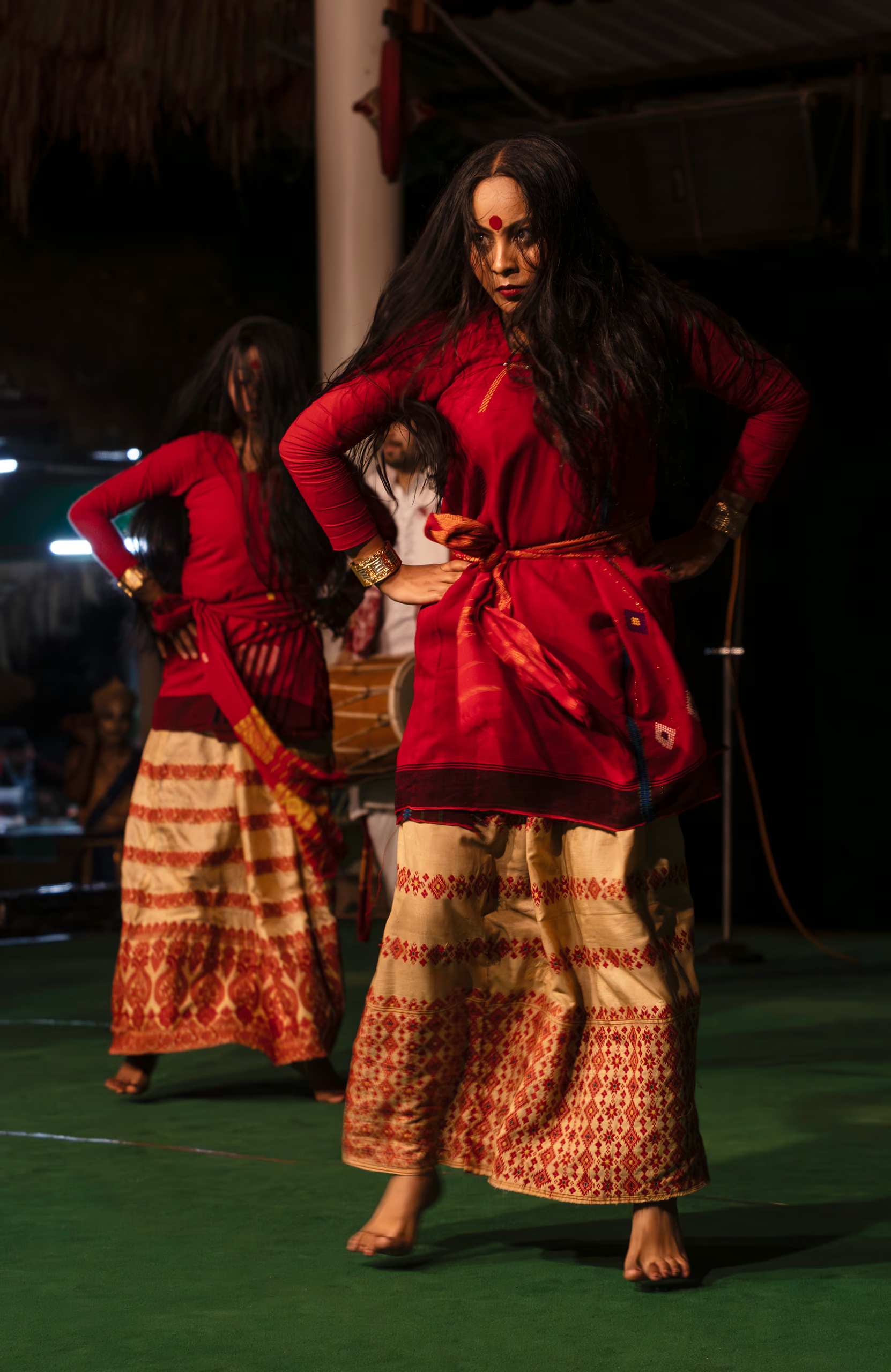
A Sattriya dancer is built from the ground up on the Mati Akhara, the basic floor exercises traditionally numbered at sixty-four in echo of the Natya Shastra, which train the body long before any item is learned. They are grouped into families such as the Ora, Saata, Jhalak, Sitika, Pak, Jap, Lon and Khar, and from them the dance draws its whole grammar, its pure movement or nritta, its expressive mime that carries feeling and story or nritya, and its full dramatic play or natya. The hand-gestures follow the codified mudras of the Hastamuktavali, the treatise on gesture that the tradition inherited, and the standing posture, the footwork and the turns are fixed with the same exactness. Within a single codified style the dance holds two temperaments together, the vigorous, masculine bhangi and the soft, lyrical one, and a fully trained dancer is expected to command both.
Its music is the sattra's own, carried on the two-headed khol drum and the taal cymbals and led by the Borgeet, the classical devotional songs set to their own ragas, so that the dance is inseparable from the sung poetry it embodies and moves to a family of talas peculiar to the sattra rather than to the wider Hindustani world. The costume completes the same devotional purpose. It is woven in pat and muga silk with traditional Assamese motifs, the male dancer in dhoti, chadar and the folded paguri turban, the female in the pleated ghuri and the mekhela-chador drawn in at the waist, and both are set with the old gold jewellery of the valley, the crescent junbiri, the gam-kharu and muthi-kharu worked onto the wrists, the kopali at the brow and the thuriya at the ear, and the ringing ankle-bells that sound the beat. Movement, music, text and dress are all bent to the one end.
From monastery to stage
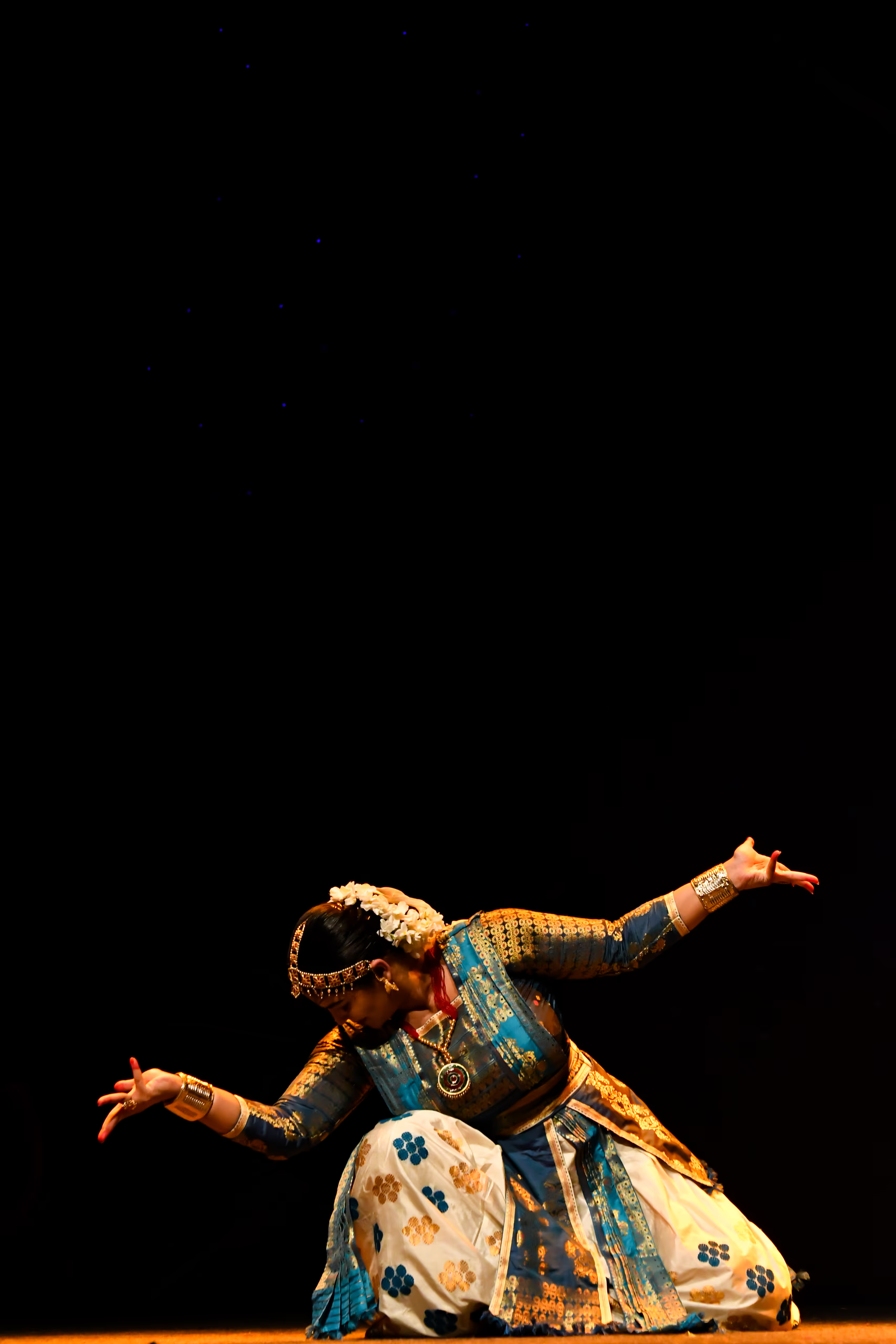
For four centuries Sattriya lived almost entirely inside the sattras, danced by monks for the congregation. Its passage into the wider world was the work of the twentieth century. It was carried out first by masters such as Maniram Dutta Muktiar Barbayan, who brought the monastic dance to the public platform. Later gurus followed: Jatin Goswami, Ghanakanta Bora Barbayan and others. They taught it in the cities and the academies, and pressed for its recognition. With that move the form opened to women and to lay dancers. Secular and monastic performers now share a repertoire once confined to celibate monks. On 15 November 2000 the Sangeet Natak Akademi set it formally among India's classical dances. The shift has brought new audiences and new stages. It has also brought new questions about how a sacred monastic art changes when it is performed for applause.
A living link
It is preserved with rare continuity in the sattras of Majuli. Sattriya is one of the clearest living threads running from the medieval religious revolution of neo-Vaishnavism into the cultural present. It is kin to the bhaona theatre, the Borgeet songs and the mukha masks. These share its stage and the devotion from which all of them spring. What binds them is not style but function: each was made to serve the same act of collective worship, and each is still performed for that purpose in the sattra and the village prayer-hall rather than only on the concert platform.
That is what keeps the dance a living thing and not a museum piece. The sattras of Majuli and the wider valley remain working monasteries, and the dance is still learned there in the old way, from guru to disciple. The same monks who dance the repertoire also stage the bhaona, sing the Borgeet and wear the masks, so the art forms are not preserved in isolation but held together as one devotional practice. The recognition of 2000 placed Sattriya beside India's older classical dances, yet its deepest claim is the simpler one: after five centuries it is still danced where it was born, for the reason it was born.