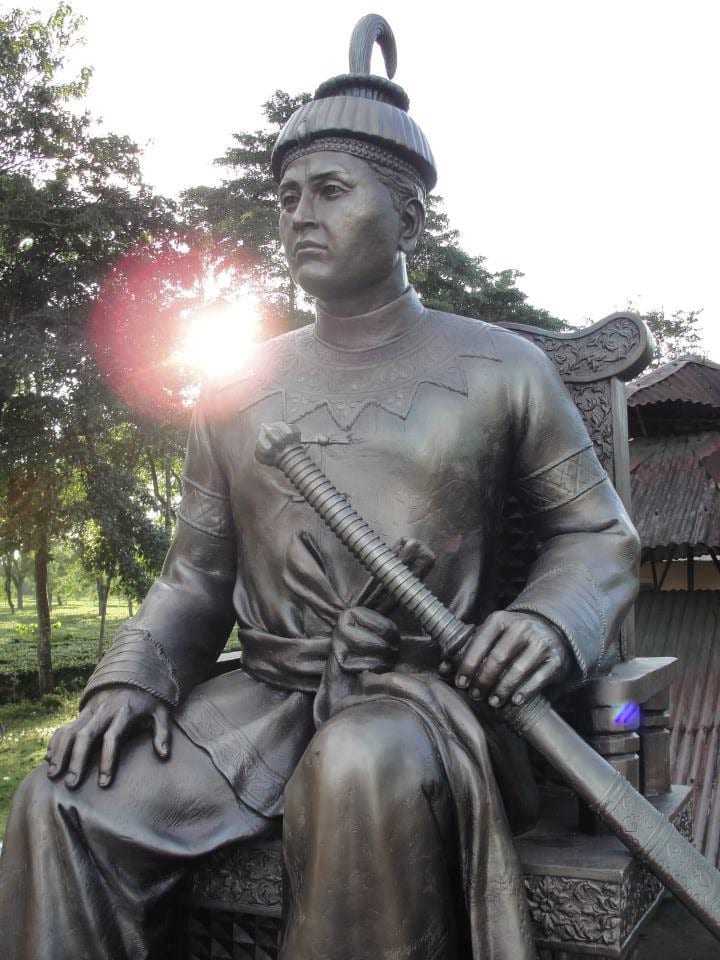
By the middle of the seventeenth century the Ahom kingdom had ruled the upper Brahmaputra valley for more than four hundred years. Now it faced the most powerful empire on earth. The Mughals under Aurangzeb controlled almost the whole subcontinent. They wanted the valley too. The contest came to a head on the river near Guwahati in the spring of 1671. The battle turned on a single dying commander, Lachit Borphukan. He rose from a sickbed to save a kingdom that was slipping away from him in the water.
An empire comes up the river
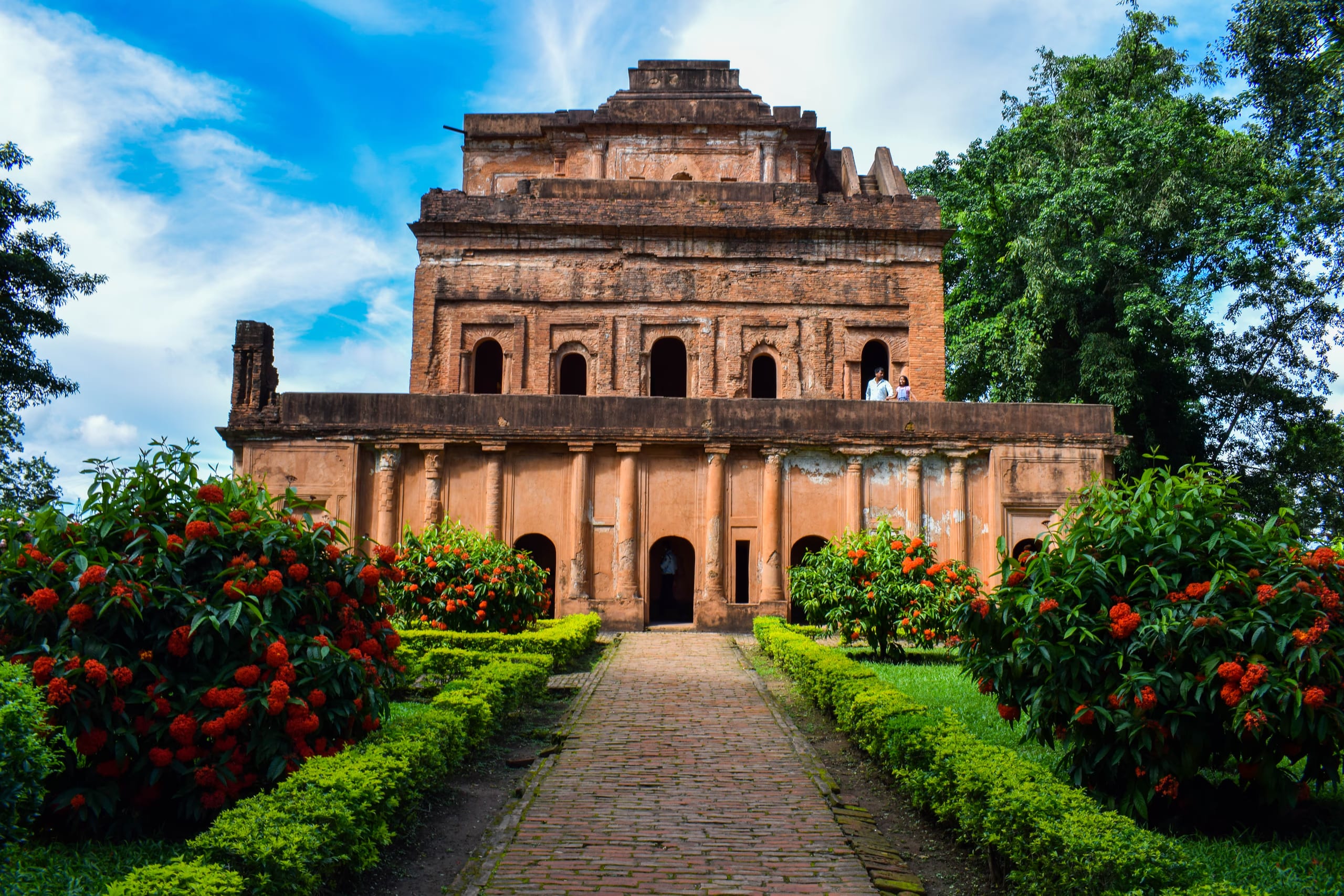
The Mughals had tried before and never managed to hold Assam. They would march in, burn the capital, and sign a treaty. Then they would lose everything again to the floods, the disease and the Ahoms’ long war of patience. In 1662 Mir Jumla, Aurangzeb’s governor of Bengal, led a full invasion up the Brahmaputra. He took the Ahom capital at Garhgaon and forced the king to flee into the hills. By the Treaty of Ghilajharighat in 1663 the Ahoms gave up Guwahati and paid a crushing indemnity.
Guwahati was the gateway where the river narrows. Whoever holds the banks holds the door to the upper valley. Mir Jumla died on the march back to Bengal, but the humiliation stood. The next king, Chakradhwaj Singha, resolved to undo it. He declared that he would rather die than remain the subject of a foreign power. Behind him stood the kingdom’s chief minister, the Burhagohain Atan Burhagohain. He rebuilt the army and the war-fleet. He held the state together through the long fight and through the troubled years that came after the victory.
The general and the odds
In 1667 the Ahom commander Lachit Borphukan, governor of the western frontier, retook Guwahati. He drove out the Mughal officer who held it. Aurangzeb answered by sending one of his ablest generals, Raja Ram Singh I of Amber, a Rajput prince. Ram Singh came up the river with an enormous force. He had a core of his own troopers, then wave upon wave of levies added to it: tens of thousands of infantry, some eighteen thousand horse, Koch archers and shieldmen, war-boats and heavy guns. The contemporary reckonings run to a militia near a hundred thousand strong.
On paper it was no contest. The Ahoms had a fraction of the men and none of the empire’s weight of metal. What they had was the river. And they had a commander who understood that the river was the whole of his argument. Lachit meant to fight where the water made the numbers meaningless, and nowhere else.
My uncle is not greater than my country
Lachit’s method was discipline, and the Assamese have never let one episode of it be forgotten. The Ahoms dug in behind earthen ramparts along the banks. One stretch, by the tradition, had to be raised in a single night, or the position would lie open by dawn. Lachit came in the dark to inspect the work. He found it unfinished, and the officer in charge, his own maternal uncle, at rest.
He had him executed on the spot. The words are remembered as Dexotkoi momai dangor nohoy, my uncle is not greater than my country. The story is a hard one, and it is meant to be. It should be held as tradition rather than documented fact, for it finds no mention in the records of the time. Yet it has survived three and a half centuries because of what it measures: how far this man would go to hold the smallest stretch of the ground he was sworn to defend. A commander who would kill his own kinsman over an unfinished wall was not a commander the empire could frighten.
The lesson of Alaboi
He learned the other half of his method the hard way, and it cost the kingdom dearly. In August 1669, against his own instinct, the Ahoms were drawn into the pitched land battle the Mughals wanted. It was fought on the open field at Alaboi, north of the river. The Ahoms threw a vast force at the Mughal line, a vanguard of it disguised as Brahmans to get in close. At first the trick worked and the imperial troops broke.
Then Ram Singh loosed his veteran Rajput horse. On flat, dry ground the cavalry was pitiless. The Ahom army was cut apart in a single afternoon. By the accounts that survive, some ten thousand Ahom men died on that field. It was a catastrophe, and Lachit took the lesson and buried it deep. He would never again meet the empire on the ground it chose. He would pull the whole war back to the water. It is why, even in victory, he would later hold his men back from the open-ground pursuit that had killed so many at Alaboi.
Everything but the water
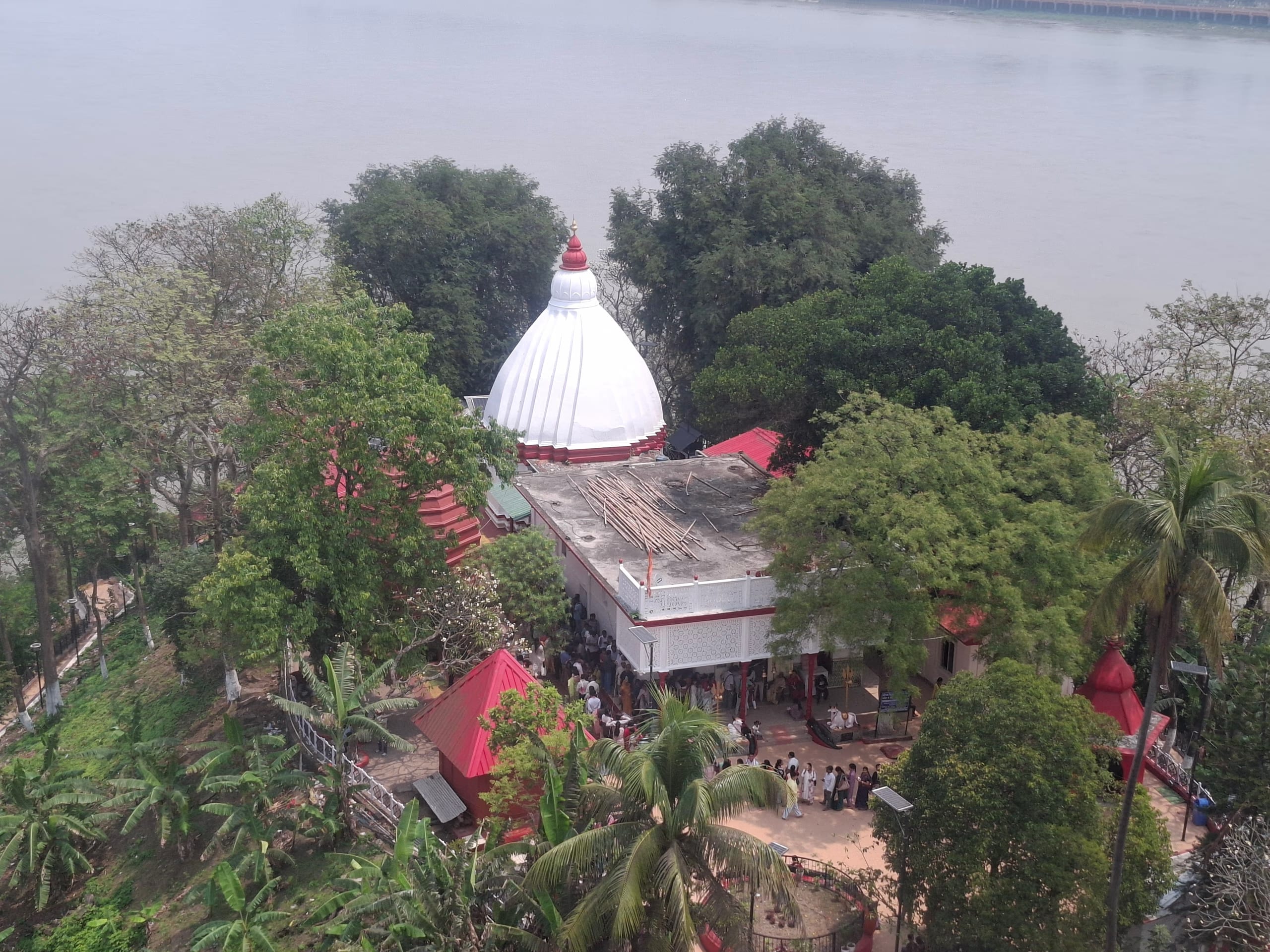
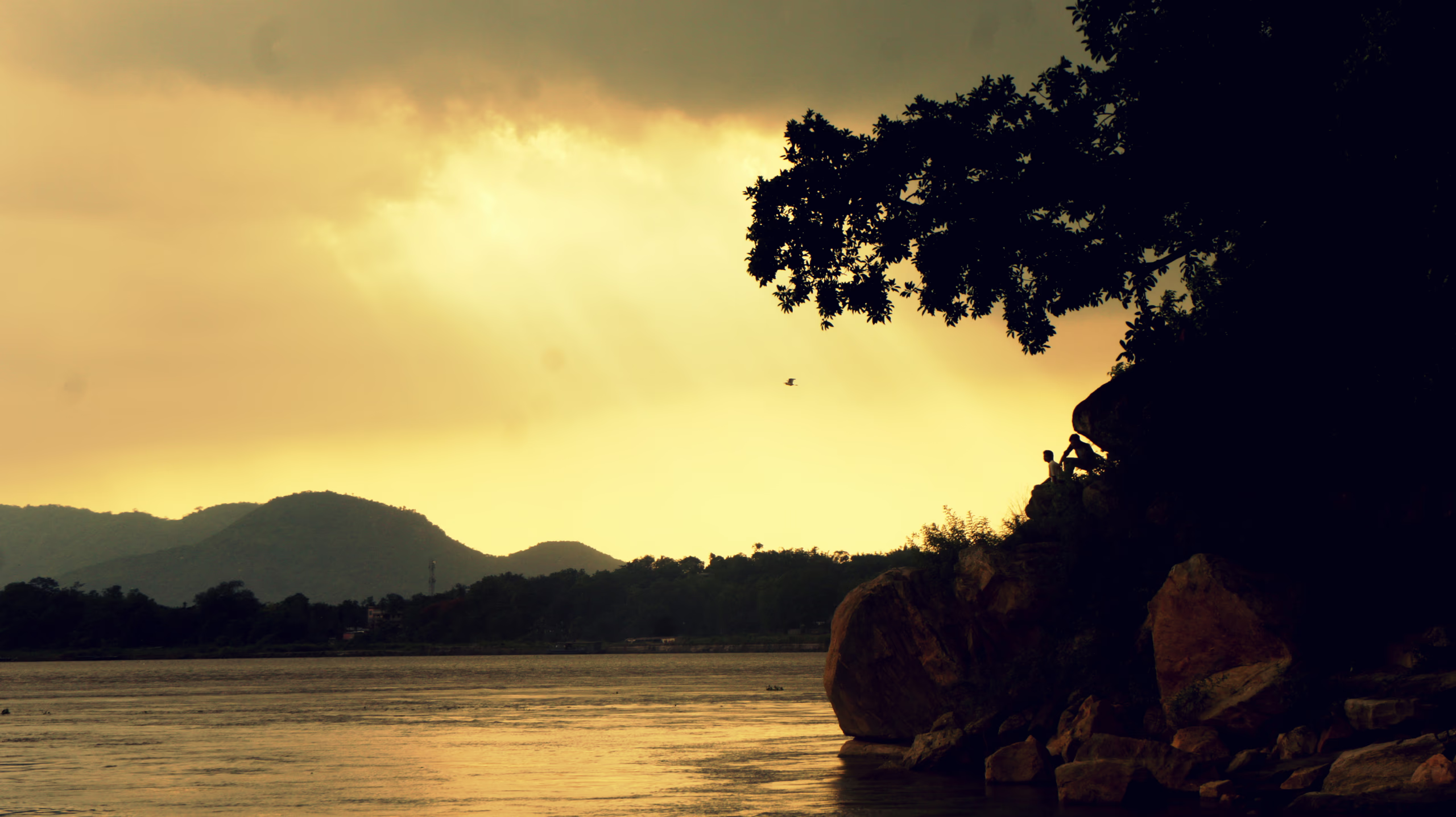
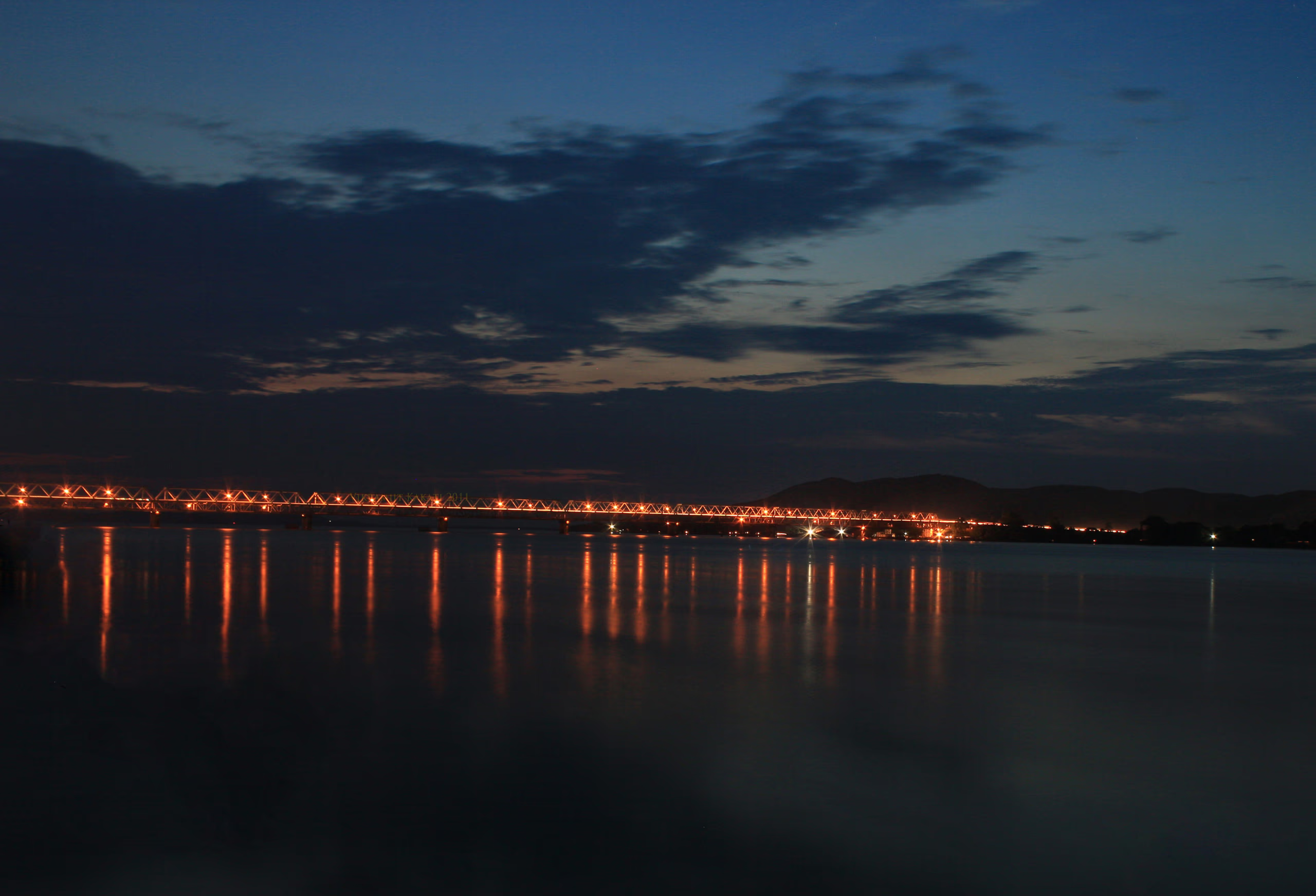
So he refused the battle they wanted. He withdrew to the narrows and fortified them. There the Brahmaputra is pinched between the temple hill of Aswaklanta on the north bank and the Nilachal on the south, with the rock islet of Umananda standing in the current. In that bottleneck the Mughals’ numbers and heavy boats counted for little. A smaller, faster Ahom flotilla could fight on even terms.
For the better part of two years the two sides circled there. Ram Singh tried everything short of the one thing that might have worked. He offered bribes. He made threats. He sent raids against the ramparts. He even forged letters meant to make the Ahom king suspect his own general of treason, hoping to have Lachit recalled or killed by his own side. The Rajput was a soldier of the open field, and the Ahom way of war offended him. He complained that the constant harassment from the water, the night raids and the refusal to stand and fight, lowered the whole dignity of warfare. By some accounts he went so far as to propose settling the matter cleanly, army against army on chosen ground, or even by single combat between champions. It was exactly the fight Lachit had sworn never to give him again. None of it moved the line. Lachit held the narrows, and the empire sat in the water in front of him and could not get past.
The battle on the water
The decisive engagement came in March 1671, by water, at Saraighat. At the worst possible moment Lachit was gravely ill. He was barely able to stand, and he watched the opening of the fight from the gatehouse of his fort. As the Mughal fleet came on toward the sandbanks off Andharubali, the nerve of the Ahom oarsmen failed. Part of the flotilla began to slip downstream. With it went the independence of the valley.
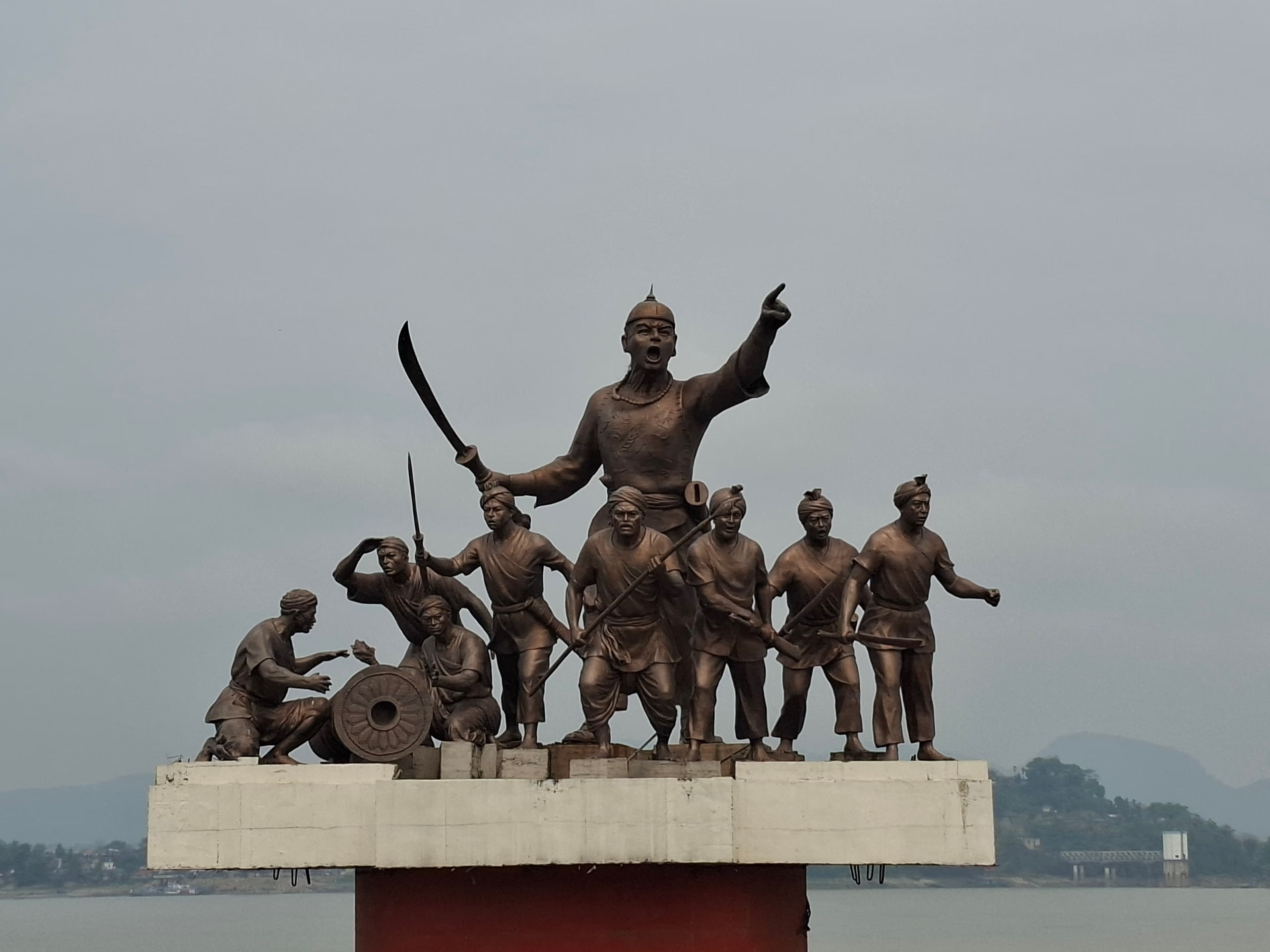
What Lachit did then is the heart of the story the songs keep. He would not lie in the fort and watch the kingdom fall. He called for boats and had a man named Nadai of Kharangi carry him down to the water and aboard. He took only six war-boats. By the chronicle’s account he went among the wavering men and shamed them back to their oars, shoving some bodily into the river. Then he flung the challenge that Assam still repeats. The king had put all the people into his hands to fight the enemy. Should he now turn back to his wife and children? He rowed his six boats straight at the imperial fleet.
The turning men turned again and followed him. The whole flotilla closed. In the narrow water off Amrajuli, on the north bank opposite the Kamakhya hill, the Ahom craft swarmed the larger Mughal vessels. They bridged the river with their own boats to trap the enemy front and rear. They rammed and boarded ships that could not manoeuvre in the press. The triangle of water between Itakhuli, Kamakhya and Aswaklanta filled with men and boats until there was scarcely room to row. Then the Mughal admiral Munnawar Khan, sitting at his hookah, was shot dead from behind, and the imperial fleet lost its head and its order at once. The armada broke apart on the current. Ram Singh withdrew, and he did not come again.
The cost on the water was heavy on both sides. The Mughals lost three of their high nobles and some four thousand men beyond the drowned and the boarded. Lachit, true to the lesson of Alaboi, did not chase the beaten fleet onto the land where the cavalry could turn and kill. He had won the fight the only way it could be won, and he was content to let the river carry the empire away.
What the river kept
Saraighat was the turning point in the long Mughal contest, though the door would change hands once more. Guwahati was surrendered to the Mughals in 1679 through the treachery of Laluksola Borphukan. It was won back for good at the Battle of Itakhuli in 1682, and after that the Manas River stayed the western boundary for the rest of the Ahom period.
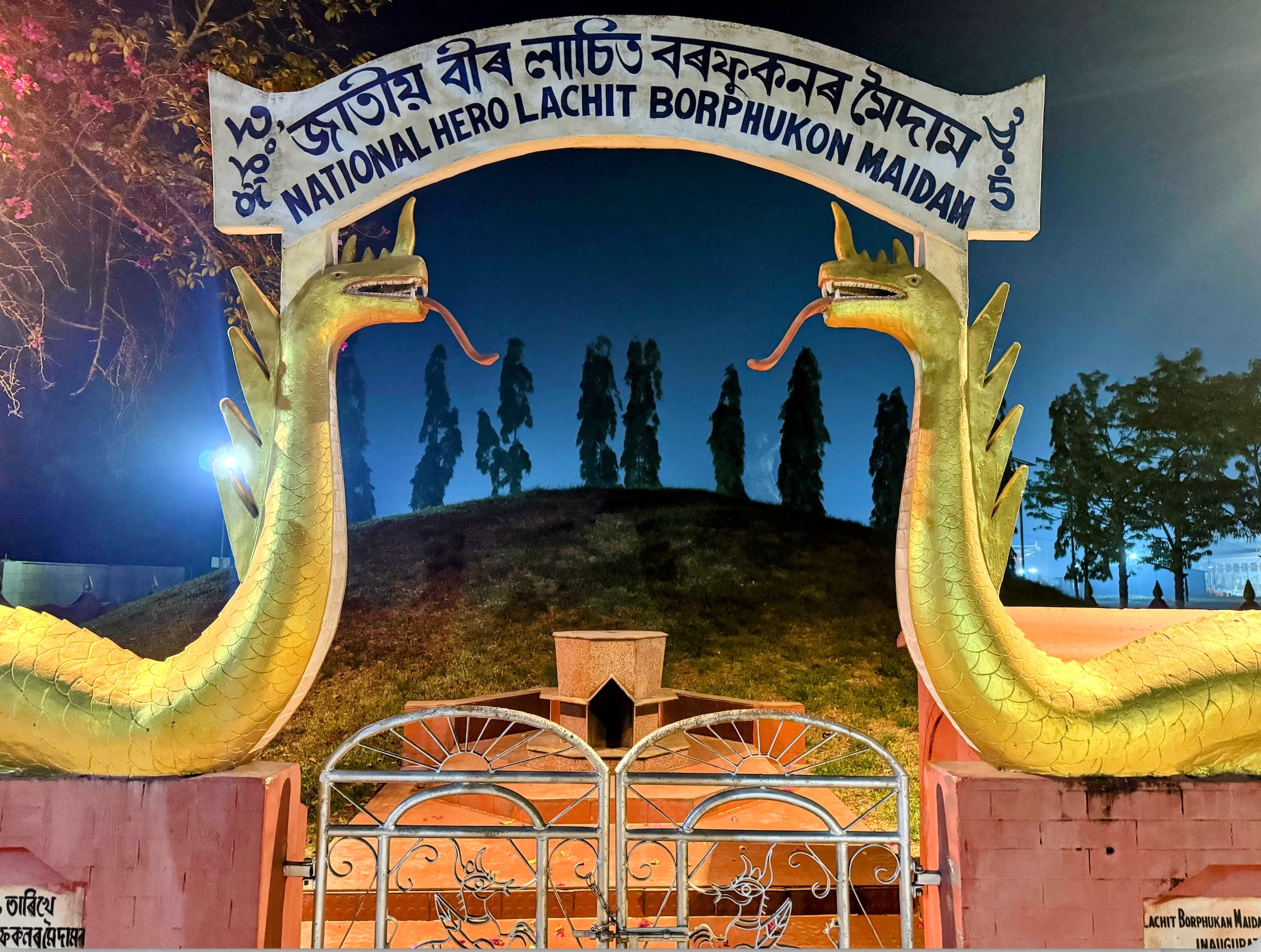
Lachit did not live to enjoy the victory. Worn out by the illness he had carried into the fight, he died in April 1672 at Kaliabor, about a year after the battle. The Tai-Ahom buried him beneath a maidam at Teok, near Jorhat. He is today the most honoured soldier in Assamese memory. Each year the finest cadet passing out of India’s National Defence Academy receives the Lachit Borphukan gold medal in his name.
Saraighat was the high-water mark of the Ahom centuries. But the kingdom that could break an empire on the river proved less able to govern itself at home. Within a few years of the victory the court fell into a savage round of intrigue and prince-killing. Out of that bloodletting would come one of the most haunting stories the valley remembers: the silence of a tortured princess who would not betray her fugitive husband, and the dynasty that her sacrifice set upon the throne.