Umananda is a Siva temple on Peacock Island. This is a small wooded island in the middle of the Brahmaputra, opposite the Guwahati ghats. By many reckonings it is the smallest inhabited river island in the world. The shrine, the island, and the ferry across to it together make one of the most picturesque approaches to a temple anywhere in eastern India.
The island shrine, an Ahom foundation
The temple sits on the island the Ahoms called Bhasmacala, in the channel of the Brahmaputra below the Nilachal hill. The setting is inseparable from the shrine itself. It is a temple on a green island in a great river, with the city on either bank. Tradition holds the rock to be a place of Siva's meditation. The deity is worshipped here as Umananda, a form of Siva. The temple was built up in its present form under the Ahom king Gadadhar Singha, conventionally dated to 1694. It rose on a site of much older Saiva worship. This belonged to the period when the Ahom monarchy was patronising the Hindu shrines of the Guwahati region, as it deepened its identification with the religion of the plains. It was the same royal devotion that raised the Sibsagar Sivadol a few decades later.
Worship and festival
Umananda is an active temple, drawing worshippers across the water year-round. Every visit begins with the ferry, so worship here keeps the rhythm of the river as much as the rhythm of the shrine. The deity is Siva in his form as Umananda, and the daily round of the temple follows the ordinary observances of a Saiva shrine. The great day of the year is Sivaratri, the night vigil sacred to Siva, kept across India in the late-winter month of Phalguna. It is then that the island shrine becomes a focus of pilgrimage, and the short crossing fills with devotees.
Its Saiva worship belongs to the wider devotional landscape of Guwahati, the old Pragjyotishpura whose sacred topography P.C. Choudhury reconstructed. The shrine does not stand alone in the river city. It shares that landscape with two others in plain view of the ghats. Above it, on the Nilachal hill, rises the great Sakta shrine of Kamakhya. On the bank opposite stands the riverside Siva temple of Sukreswar. Together the three make the crossing to the island one point in a single sacred circuit of the water city.
The Night of SaraighatA dying general, a wavering fleet, and the river that kept Assam free of the Mughals.Read the story →The hill of ashes and its langurs
The island's older name, Bhasmacala or the hill of ashes, carries the legend that explains the temple's dedication. By the Puranic tale, Siva was here, deep in meditation, when Kamadeva, the god of desire, disturbed him. Siva burned him to ashes with a glance. So the rock took its name from the act. The shrine took its name, Umananda, the joy of Uma, Siva's consort, from the reconciliation that followed. The burning is not fixed to this island alone. The same legend is localised at more than one Kamarupa site: the hill of Madan Kamdev north of Kamakhya also claims the ground of it. The two thus carry competing local traditions of the one myth. That myth, and the way it gave the land the very name Kamarupa, is told in full as a story.
Beyond the legend, the island holds a quieter story of its own, one written in living creatures rather than in myth.
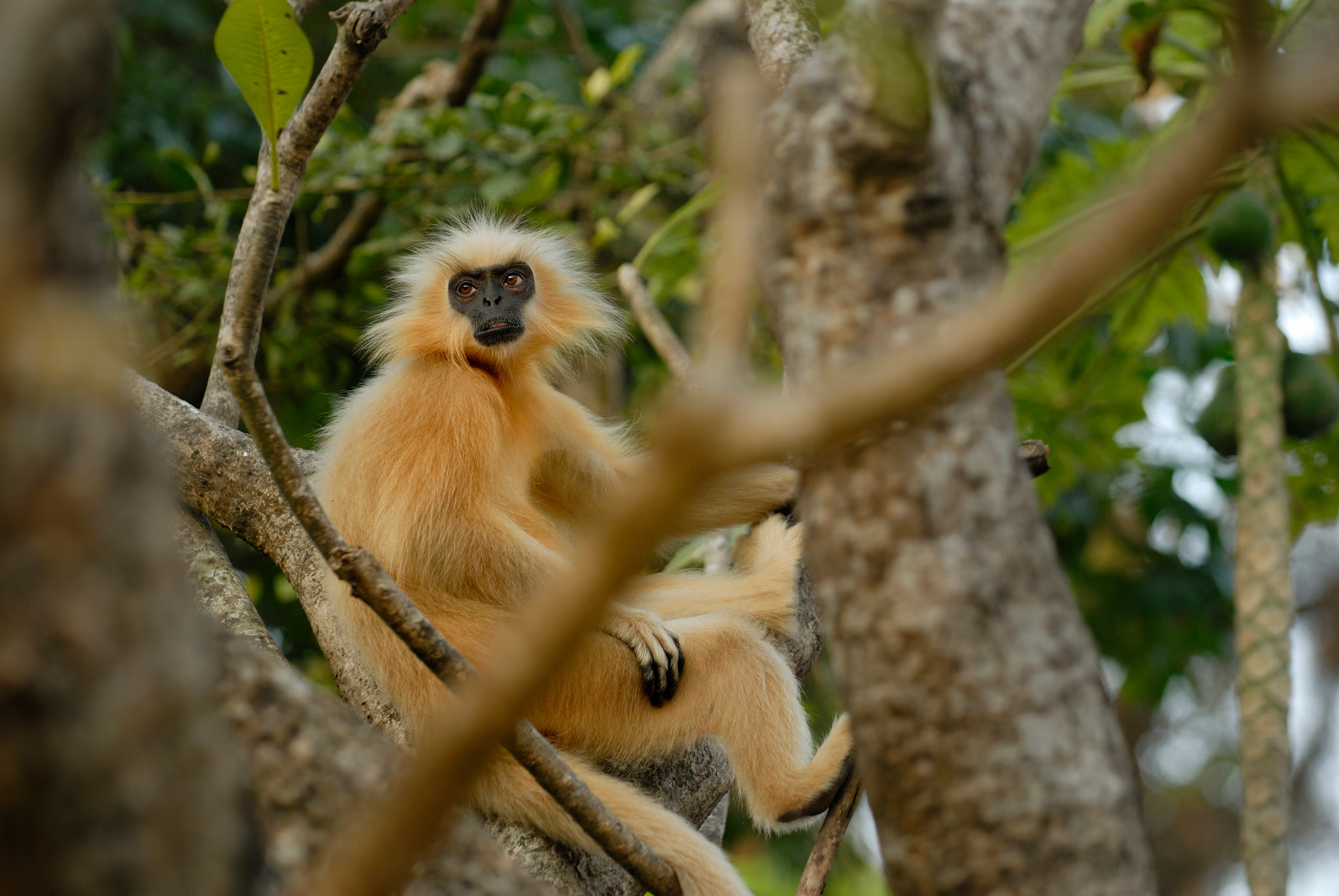
The wooded island carries a second, more recent association. For decades it sheltered a small introduced troop of golden langurs, the rare and beautiful primate of western Assam. They were brought in the 1980s to this unlikely mid-river refuge, well outside the species' natural range. The colony dwindled over the years. With the death of the last survivor in 2020, the langurs are no longer found on the island. Visitors who once came partly to see them now make the crossing for the shrine and the river alone.
The narrows the temple stands in
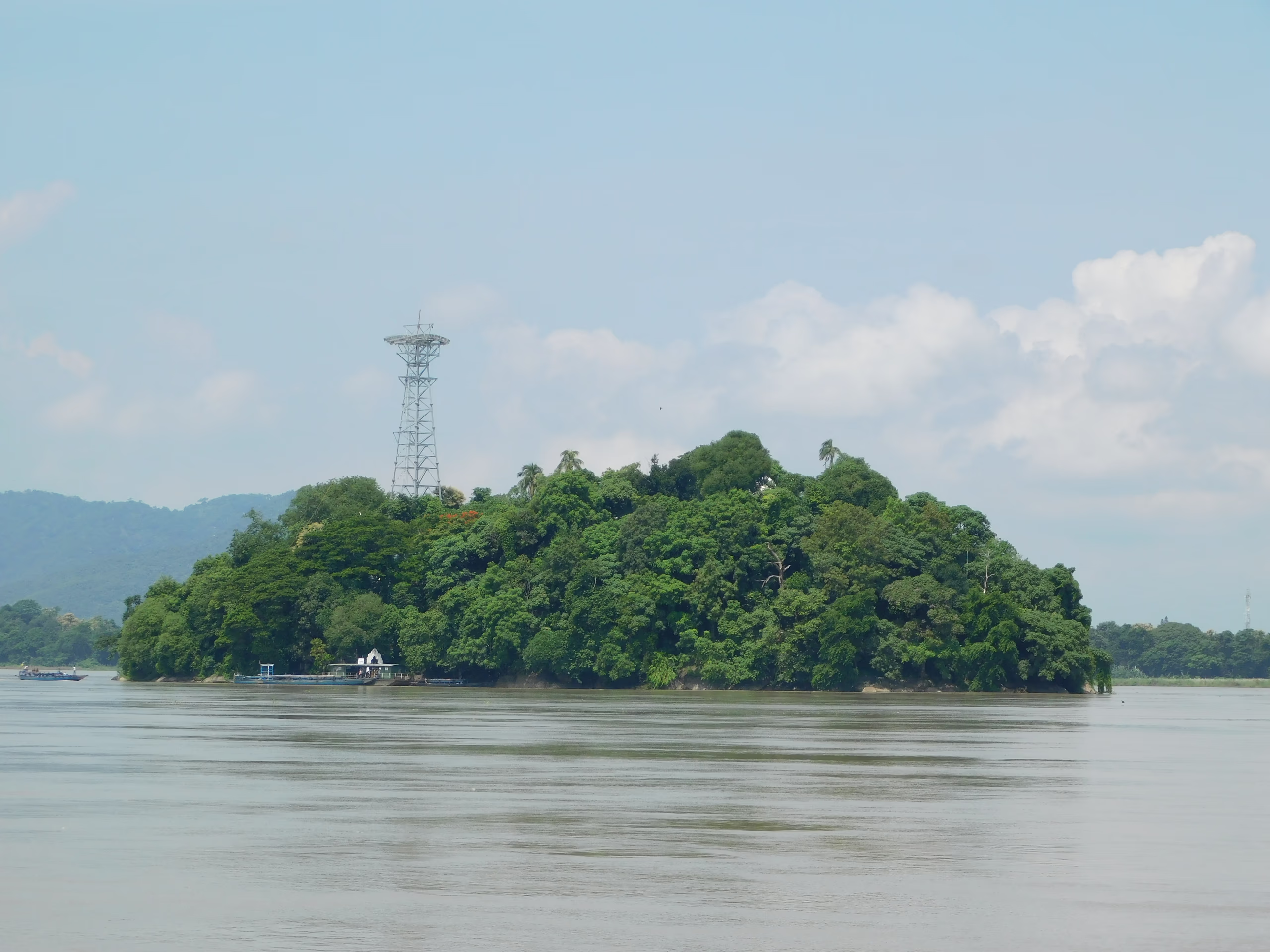
What makes a Siva rock worshippable in midstream is the river itself. The Brahmaputra is unusual among the deified waters of India, where almost every great river is a goddess. Assam keeps the famous exception. It reads the flood as a son, the Brahma-putra or child of the creator-god. The Kalika Purana traces this name to Brahma and to the Brahmakund freed by Parashurama in the eastern hills. That Sakta text was composed in Kamarupa, and it also gives Kamakhya on the hill above its sacred geography. Across most of its course the river is broad and braided, splitting into a shifting web of channels and sand islands. But at Guwahati it gathers between the hills into a deep, fast narrows. That constriction let the Ahoms hold a temple on a rock here. Just downstream, it also let Lachit Borphukan's smaller flotilla break a Mughal armada with no room to manoeuvre, at Saraighat in 1671. The river's longer course from the Tibetan plateau, and the great earthquake of 1950 that reshaped its bed, belong to the story of the river and the day the earth moved.
Visiting
Umananda is reached by ferry from the Guwahati ghats (Sukreswar/Kachari ghat). The crossing is short, and is itself part of the experience. The island can be seen in an hour or two. As an active temple it is open to visitors with the usual observances. The river is calmest and the crossing pleasantest in the drier months. Pair it with the city's other shrines: the Sukreswar temple on the bank you cross from, the great Kamakhya shrine on the Nilachal hill above, and the Navagraha temple of the nine planets across the river.