Basistha is an ashram and Siva temple at the southern edge of Guwahati, set where three hill streams meet at the foot of the Meghalaya plateau. Tradition makes it the hermitage of the sage Vasistha, and the spot, a temple among rocks and falling water, is one of the green retreats of the city.
The hermitage of Vasistha, an Ahom foundation
The site takes its name and sanctity from the sage Vasistha, one of the great rishis of the Hindu tradition. The ashram is held to have been his. The three streams that meet here, the Sandhya, Lalita and Kanta, are woven into the sacred lore of the place. Like Kamakhya, Umananda and the other shrines of Guwahati, Basistha belongs to the sacred topography of old Pragjyotishpura. This was the religious landscape of the Kamarupa capital, reconstructed by P.C. Choudhury. The temple in its present form was built by the Ahom king Rajeswar Singha in 1764. It was part of the dynasty's long programme of endowing and rebuilding the Hindu shrines of the Guwahati region, as the Ahom monarchy deepened its identification with the religion of the plains. This royal patronage was of a piece with the building of the great Sibsagar Sivadol in the same century. The eighteenth-century shrine is an octagonal brick temple with a polygonal sikhara, but it did not begin the worship here. It was raised over the remains of an earlier stone temple, datable on style to about the tenth or eleventh century. So, as at the older hill-shrines of the north bank, the Ahom fabric stands on a sanctity centuries older than itself.
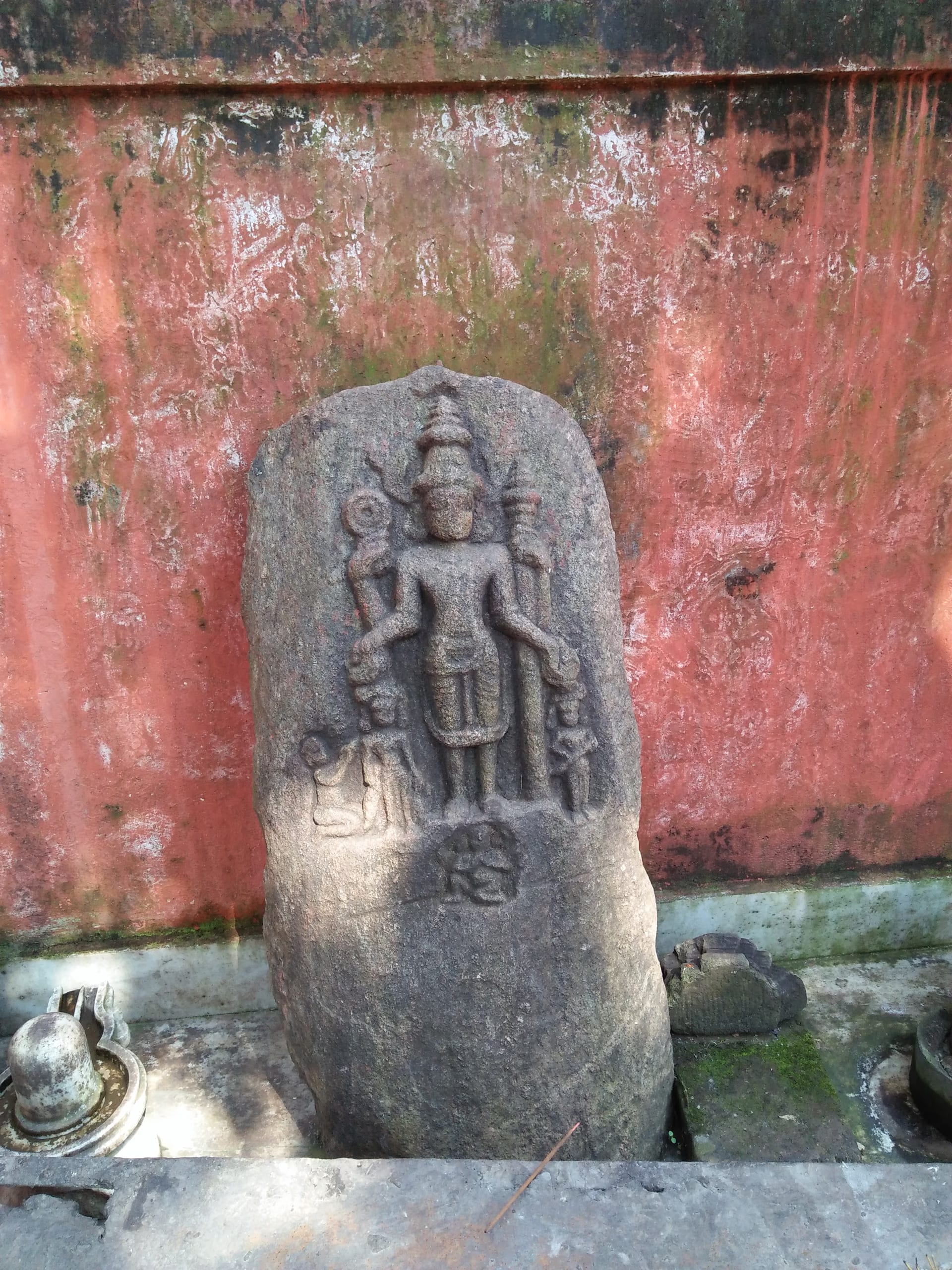
The sage and the three streams
The lore of Basistha turns on water as much as on the sage. The three hill streams that meet at the ashram, the Sandhya, the Lalita and the Kanta, are held to flow from the penance of Vasistha. They rise in the hills of Meghalaya and, from this confluence at the city's edge, descend as the waters that gather into the Basistha and Bahini-Bharalu and feed Guwahati. So the hermitage is imagined as the source of the living streams of the capital. Tradition makes the rishi the founder of the shrine and the installer of its lingam. Vasistha is one of the seven great sages of Hindu tradition and, in the Ramayana, the family priest and teacher of Rama. A cave is shown a little above the temple where he is said to have meditated. The sunken sanctum is held to keep his footprint. The result is a shrine valued as much for its setting as its sanctity. Here the religious imagination of the plains found, at the foot of the hills, a fitting source for its holy waters.
Visiting
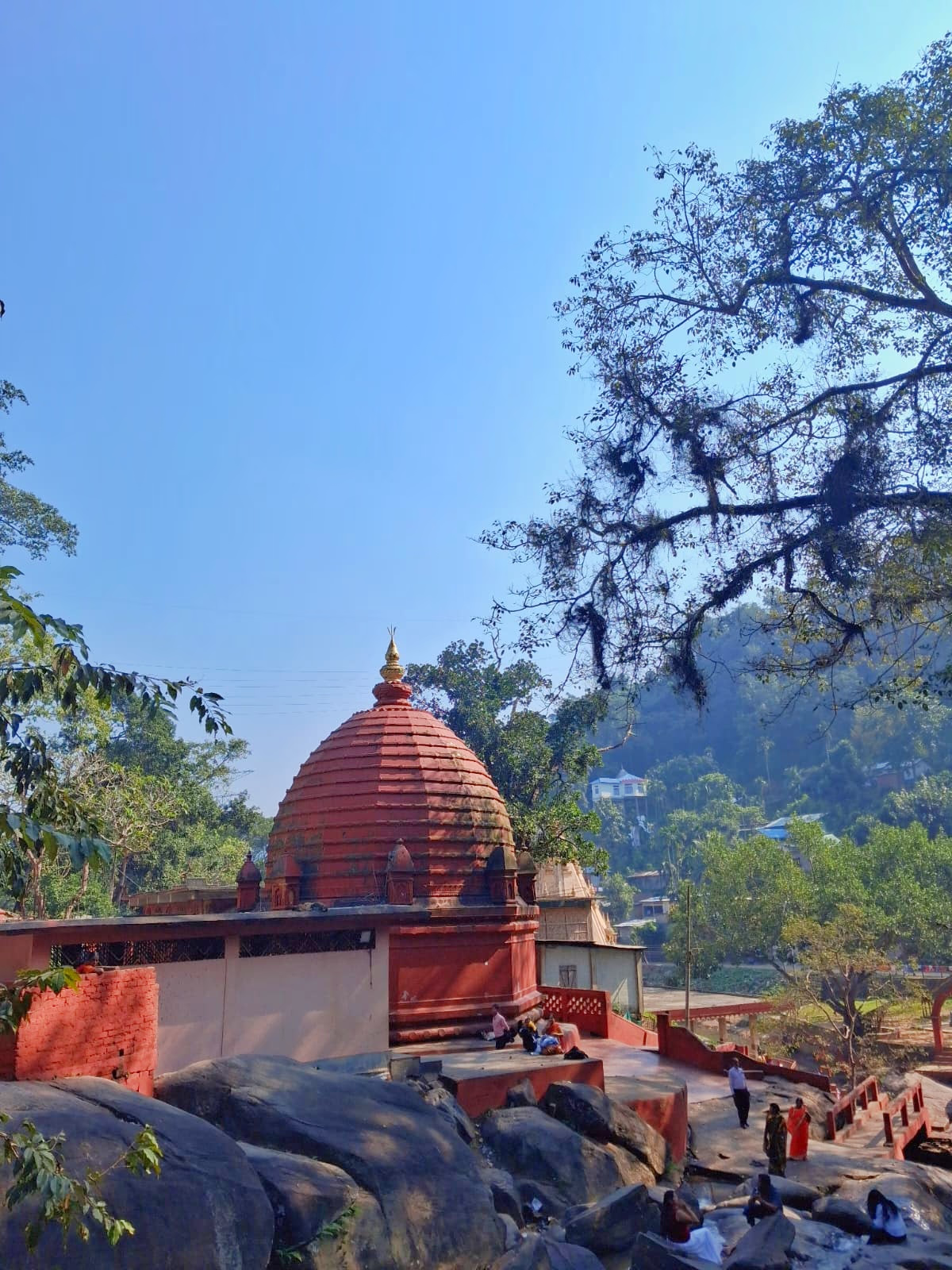
Basistha remains an active temple and a place of quiet resort at the city's edge. The shrine sits among boulders, with the streams running below. It draws worshippers year-round, and the crowds are heaviest at Sivaratri. It is at the southern end of Guwahati, an easy half-day trip. The streams are fullest just after the monsoon, while the drier months make the rocks and pools most approachable. The ashram stands on the edge of the Garbhanga reserve forest, so a visit can be joined to a walk in the hill jungle behind it. It also pairs with the city's other shrines: the great goddess-temple of Kamakhya on the Nilachal hill and the island temple of Umananda mid-river make a natural circuit of the sacred places of the old capital.