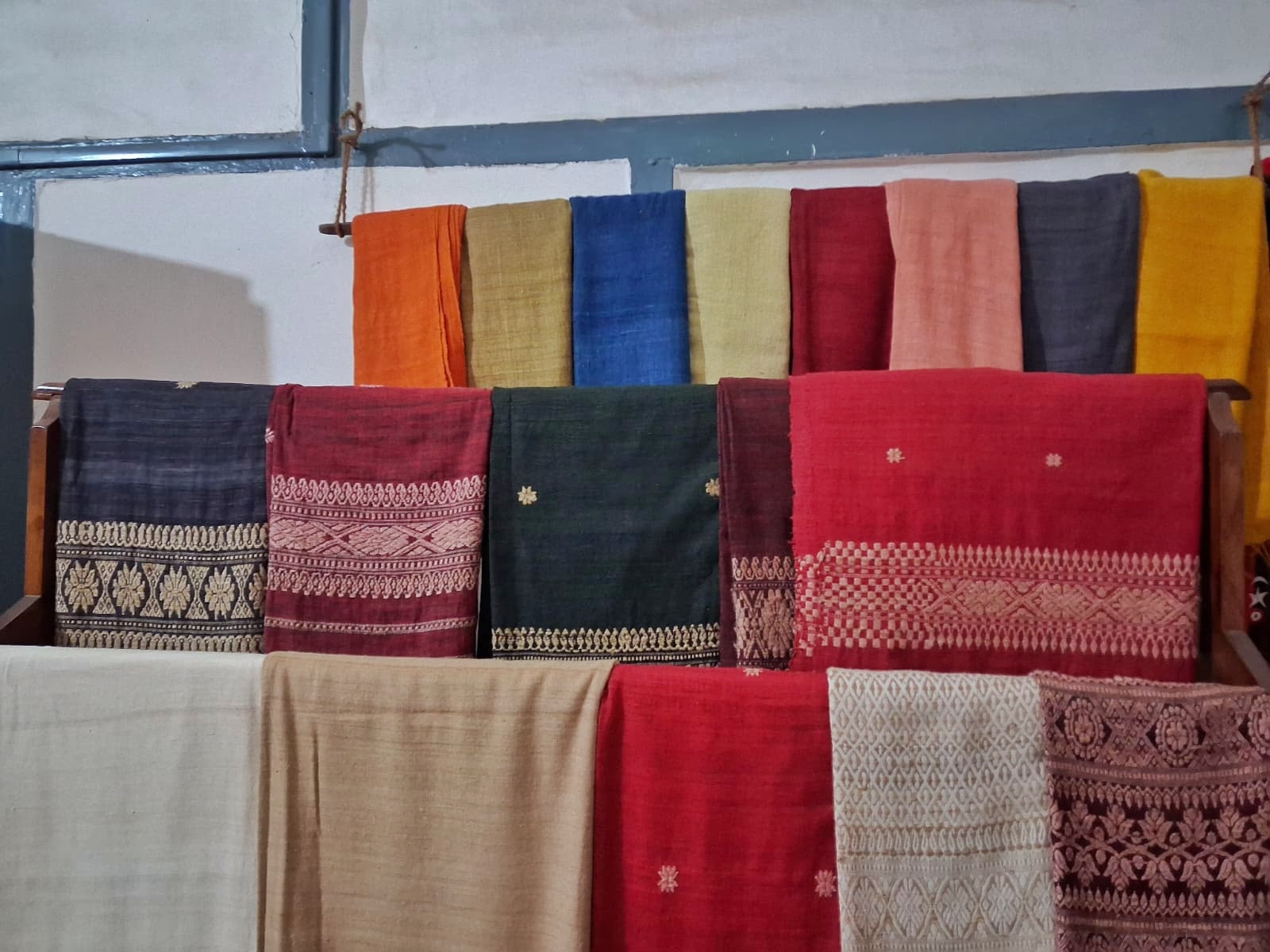
Pat is the white silk of Assam, a lustrous ivory-and-cream cloth that completes the valley's family of three silks alongside golden muga and warm, matte eri. It is spun by the mulberry silkmoth Bombyx mori, the same domesticated worm that has clothed much of the world, and it is the only one of Assam's three silks that is neither native nor wild, being reared instead on the mulberry leaf. Its fine, glossy, brilliant-white filament is reeled rather than spun, which gives it the smooth sheen of classic silk. Above all it is the ceremonial cloth of the valley, the silk of the bride and the festival, the white-and-gold mekhela sador in which an Assamese woman is dressed for her wedding and her great occasions.
The mulberry silk of the valley
Muga is grown out of doors on the som and soalu, and eri on the castor leaf. Pat, by contrast, belongs to the mulberry. So it belongs to the worldwide tradition of sericulture, rather than to anything unique to Assam. The Bombyx mori larvae are reared indoors on mulberry leaf through their feeding life. The tree is the white mulberry, Morus alba, known in Assam as the nuni. It is the same leaf that feeds the mulberry silkworm across India and beyond, so pat is the valley's version of the world's most common silk. When each worm spins its single unbroken cocoon, it is reeled off as one continuous filament. This is the technique that yields silk's characteristic lustre and strength. It is the same reeling that muga undergoes, and the opposite of eri, whose open cocoon must be spun. Like reeled muga, it is also the harder bargain among the three. Drawing a continuous thread conventionally means stifling the pupa within the cocoon before the moth can break it. The reward is a fibre of exceptional fineness and brightness, the whitest and glossiest of the valley's silks. It takes dye cleanly and reflects light, where eri stays soft and muga glows gold.
The cloth of the bride
If muga is the precious everyday gold of Assam and eri the warm, humane wrap, pat is the silk of ceremony. Its bright white is the colour of auspicious occasion in the valley. The white is sometimes left in its natural ivory, and sometimes worked against muga's gold in the same cloth. A mekhela sador in pat, or in pat and muga together, is the dress of the bride, of the festival, and of the formal welcome. The two silks are often paired in a single drape. The white field of pat carries the golden border or motif of muga. In this way the courtly fibre and the ceremonial one are woven into one garment, the most prized cloth an Assamese loom produces.
The looms of Sualkuchi
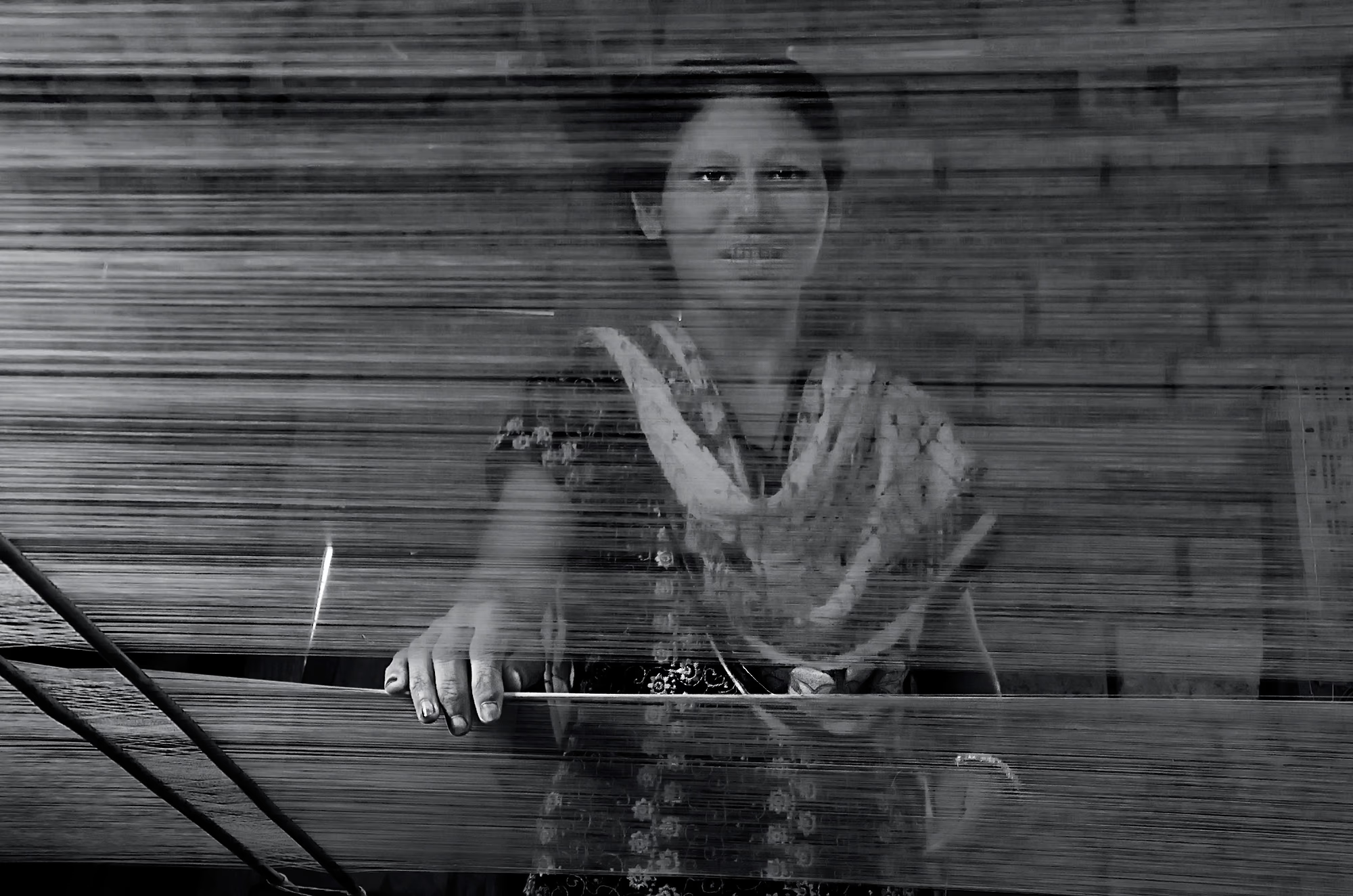
Like the golden silk, pat reaches its finished form at the weaving town of Sualkuchi, on the north bank of the Brahmaputra. This is the silk town of Assam, where the household art of women's weaving is concentrated into a true industry. There the reeled pat thread is woven into the mekhela sador, the stole and the scarf. It is also woven into pat-and-muga cloths in which the white and the gold are combined. The same looms that make Sualkuchi synonymous with muga make it the home of pat as well, so that the two reeled silks of Assam share a single capital. The weaving is traced by tradition to the patronage of the medieval kings. Silk rearing in the valley is old, held by tradition to have been carried in by the early Tibeto-Burman settlers. The cloth that leaves Sualkuchi today is the direct heir of the silks that dressed the Ahom court, the material culture B.K. Barua surveyed for early Assam.
The third of the three silks
Pat is the least singular of Assam's three silks. Yet in the valley's own life it is among the most important, the cloth that closes the triad. Golden muga is Assam's alone, found almost nowhere else and protected by its own Geographical Indication. Eri is the peace silk that no creature dies to make, kin to muga and pat alike. Pat is the bright mulberry silk that the rest of the world also weaves. But Assam has made it its own, as the cloth of the bride and the festival. Held against the other two, it shows what is distinctive about the valley's textile culture. Here one land rears and weaves all three of the great silks at once: the wild and the domesticated, the spun and the reeled, the everyday and the ceremonial. All are gathered onto the looms of a single town.