Eri is the warm, matte silk of Assam. Of the valley’s three great silks, it is the one that no creature dies to make. It is spun from the open cocoon of the domesticated silkmoth Samia ricini, sometimes classed as Samia cynthia ricini. The moth is one of only two silkworms fully domesticated by humans, the other being the mulberry silkworm Bombyx mori. Its cloth is soft, woollen and ivory, long woven on the home looms of the Bodo and the wider valley. Today it is prized far beyond the region as a sustainable, cruelty-free fibre, kin to the golden muga and the white pat that complete Assam’s three-silk triad.
The silk that lets the moth fly
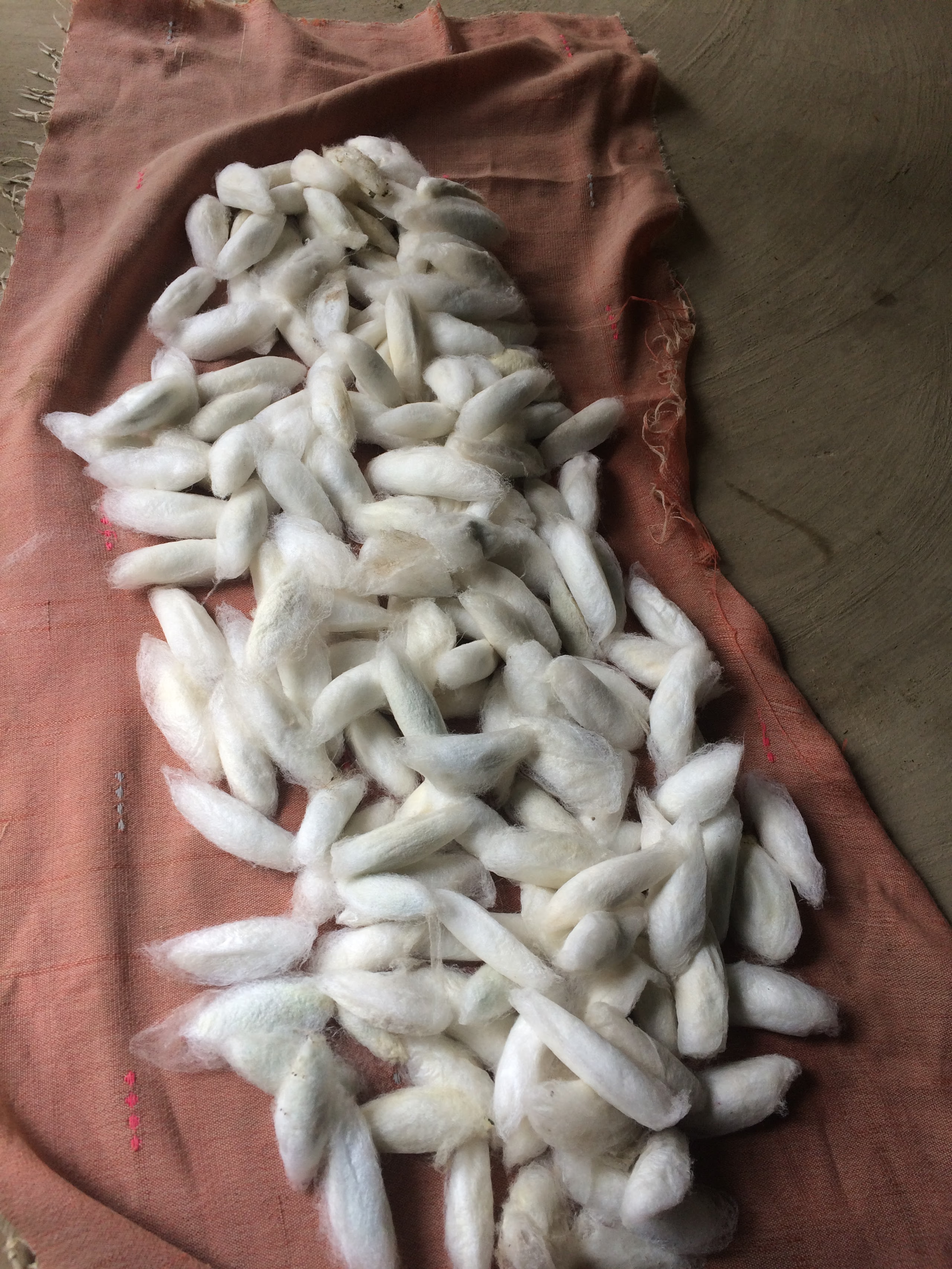
What sets eri apart is the way it is made. Muga and mulberry pat are reeled as a single continuous filament, and that means stifling the pupa inside an intact cocoon. The eri cocoon, by contrast, is open at one end. The moth is allowed to complete its life and fly free, and only then are the empty cocoons gathered. The gap the moth left breaks the filament, so eri cannot be reeled at all. Instead the short, staple fibres are spun, like cotton or wool, into a yarn. That single difference is the whole ethic of the fibre. Nothing is killed for it, which is why it is called the peace silk, or ahimsa silk.
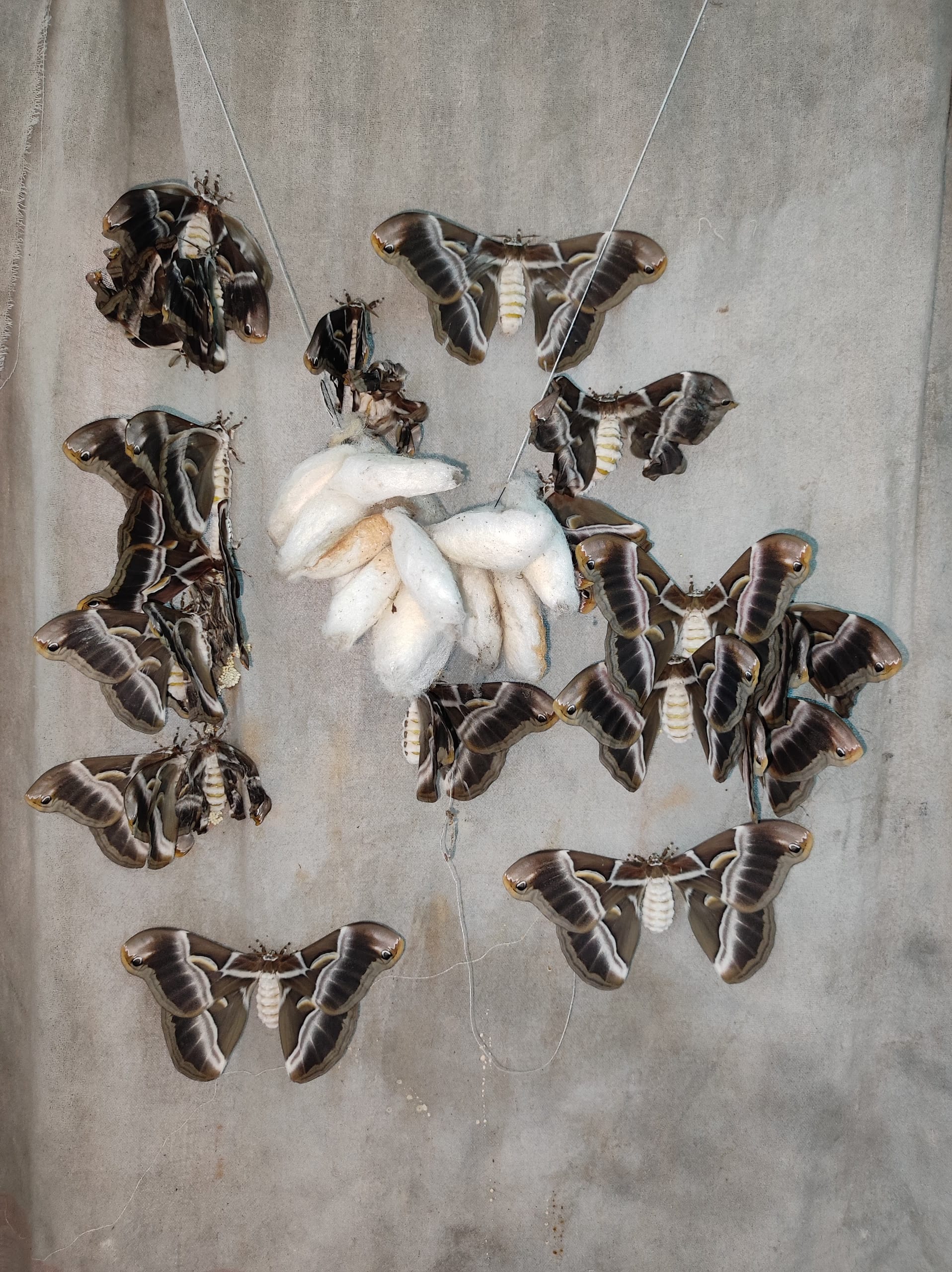
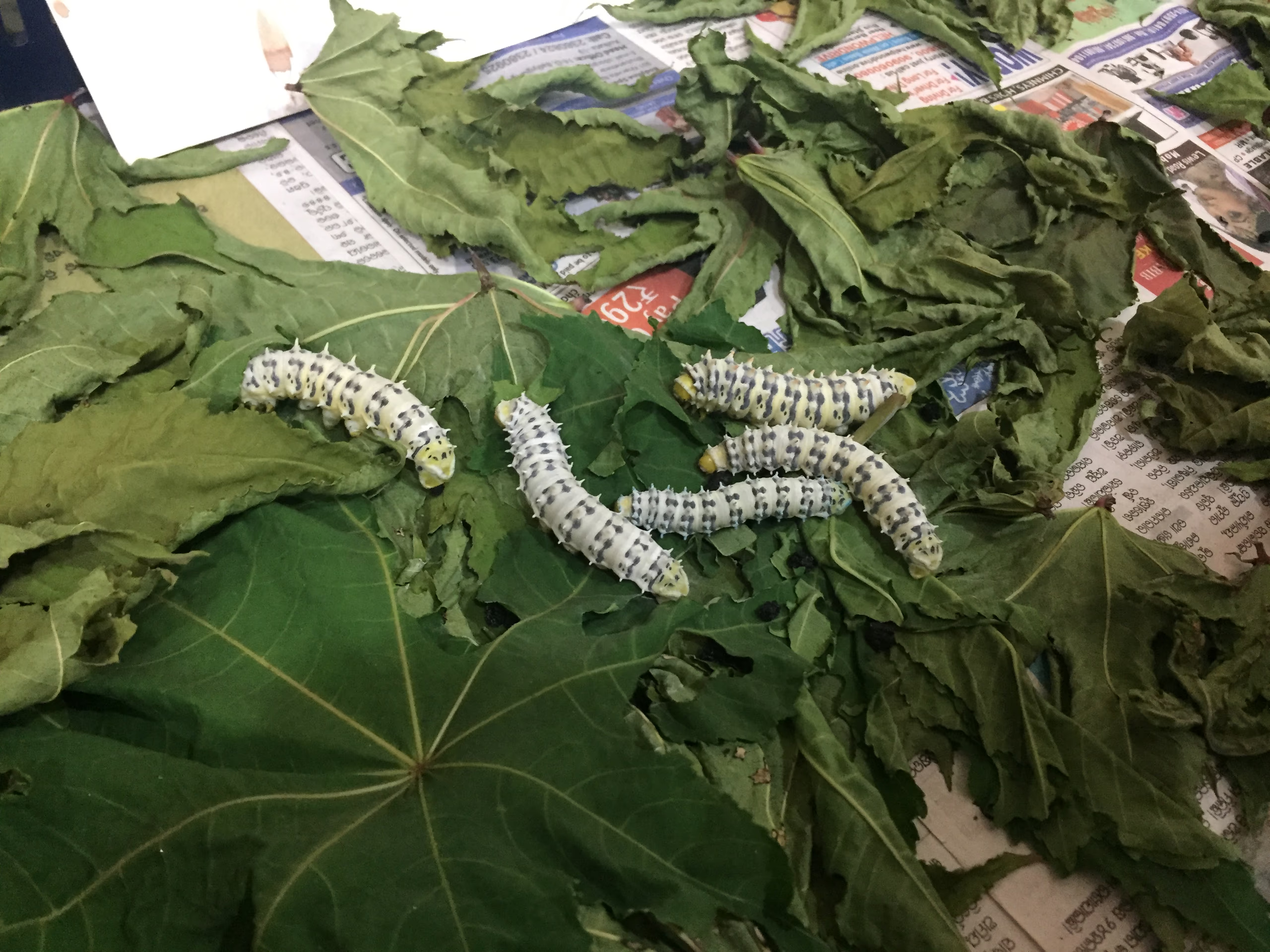
The name carries this origin. Eri comes from the Assamese era, meaning castor, the plant whose leaves the silkworm chiefly feeds on. Among the Bodo the silk is known as endi or indi, and it is also recorded as errandi silk. The worm will also take other leaves, such as those of the kesseru tree, but castor is its mainstay in the valley. The rearing is woven into the agrarian household. The castor is grown in the yard, the worms are tended indoors, and the cocoons are spun and woven by the women of the house. It is a domestic craft so old in the Brahmaputra valley that it is counted among the most ancient of the region’s textiles.
A cloth made to be worn
Eri is valued less for sheen than for comfort. The spun yarn makes a thick, soft, slightly irregular cloth that holds warmth well. That is why it has always been the silk of the shawl, the wrap and the quilt, worn against the cool of the valley’s winter. Yet the same fibre breathes and regulates temperature, so it serves in the heat as well. It is strong and hard-wearing, heavier than mulberry silk, easily dyed in earthy natural colours, and it only grows softer with age. Its own natural shades run from ivory white to a faint gold or rust-red. For generations it was the practical, everyday silk of ordinary households, and it was sometimes called the poor man’s silk, in contrast to the courtly gold of muga.
Assam and the neighbouring hills remain the heart of eri production, though the worm is now reared across much of eastern and central India and was carried as far as Thailand in the twentieth century. India’s eri output makes up by far the largest share of the country’s wild, or vanya, silk. Within that trade eri sits alongside the two other Assamese silks: the reeled golden muga of the wild Antheraea assamensis, and the white mulberry pat, both worked on the famed looms of the weaving town of Sualkuchi.
An old craft with a modern moment
Eri has found a new audience exactly because of what it always was. The market is newly attentive to sustainability and animal welfare, and in such a market a warm, hand-spun, vegetarian silk made without killing the moth is a rare thing. The qualities that once marked eri as the humble, everyday cloth of the household, that it is spun rather than reeled, that it comes from the open cocoon of a fully domesticated moth, and that it is dyed in earthy natural shades, are now the very features that designers and conscientious buyers seek out. Nothing about the fibre itself has changed. Only the values placed on it have.
That shift has carried eri from the village loom onto the design and export stage. As the fibre travels, so does its provenance: eri sits within the wider story of Assam’s cultivated silks, whose reputation the golden muga has done much to carry, and it draws attention back to the weaving households of the valley and to the neighbouring hills where the worm is reared. Its makers, chiefly the Bodo, have won growing recognition for the tradition, and the hand-spinning labour that no machine has replaced remains central to its appeal. At heart, though, eri stays the quiet, humane member of the valley’s family of silks, the clearest example of how an old Assamese craft can answer a thoroughly contemporary conscience.