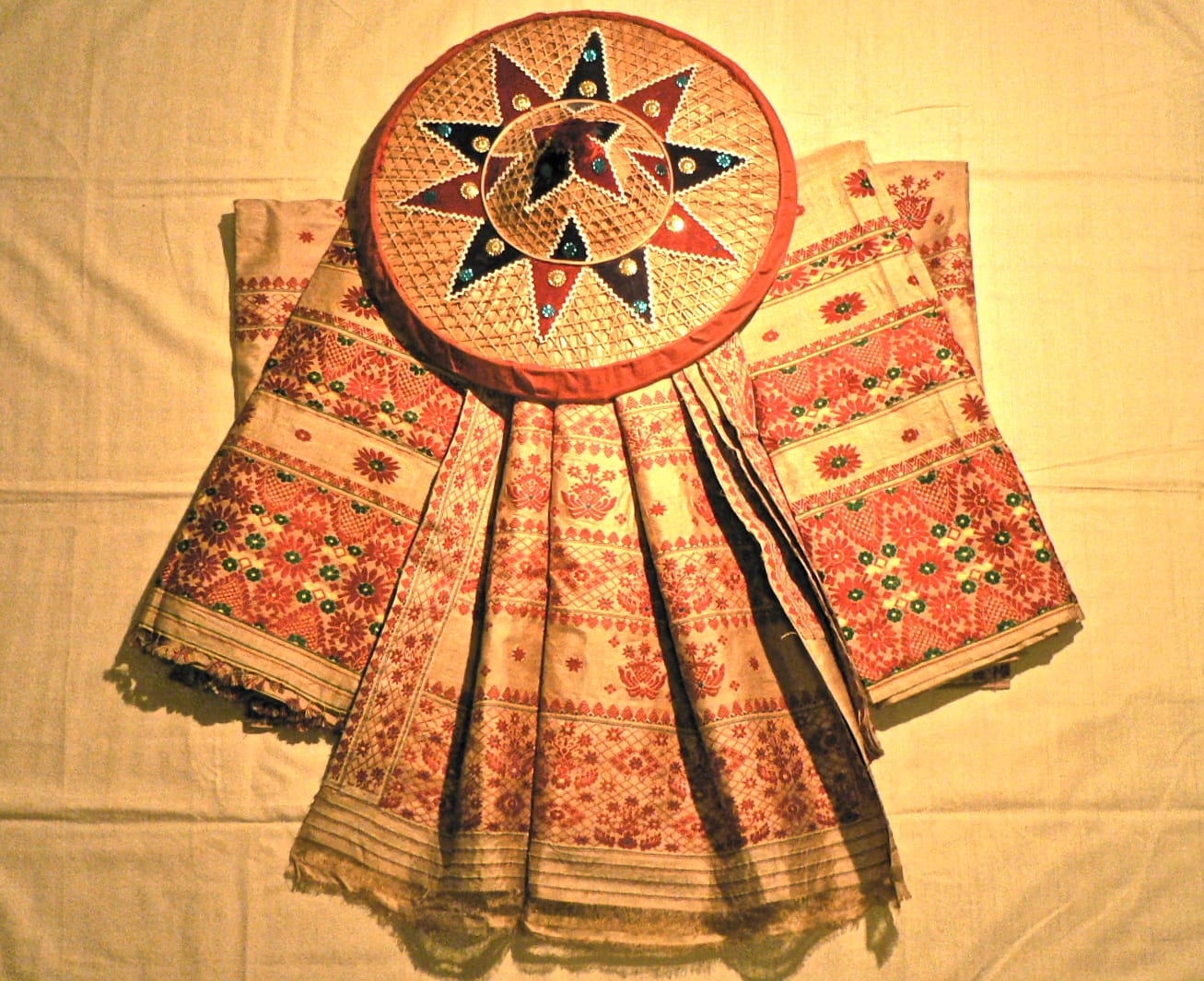
Muga is Assam's golden silk, found almost nowhere else on earth, spun by the semi-domesticated wild silkmoth Antheraea assamensis, the Assam silkmoth. It is prized for a natural golden lustre that deepens with every wash, and for a strength that lets a muga cloth outlast the person who first wears it, and it is the most celebrated of the valley's three silks. Assam's golden thread is recorded from deep antiquity. The lustrous Kamarupa fabric named in Kautilya's Arthashastra around the third century BC is generally taken for muga, and later notices appear in the Harshacharita, the Amarakosha and the Kalika Purana. The cloth was vividly described again in the seventeenth-century chronicle of Shihabuddin Talish, who came up the valley with the Mughal campaign and set the silk of Assam down among the things worth remarking. In 2007 muga became one of the first Assamese products to win a Geographical Indication, the legal recognition that genuine muga can come only from this valley.
A silk grown on living trees
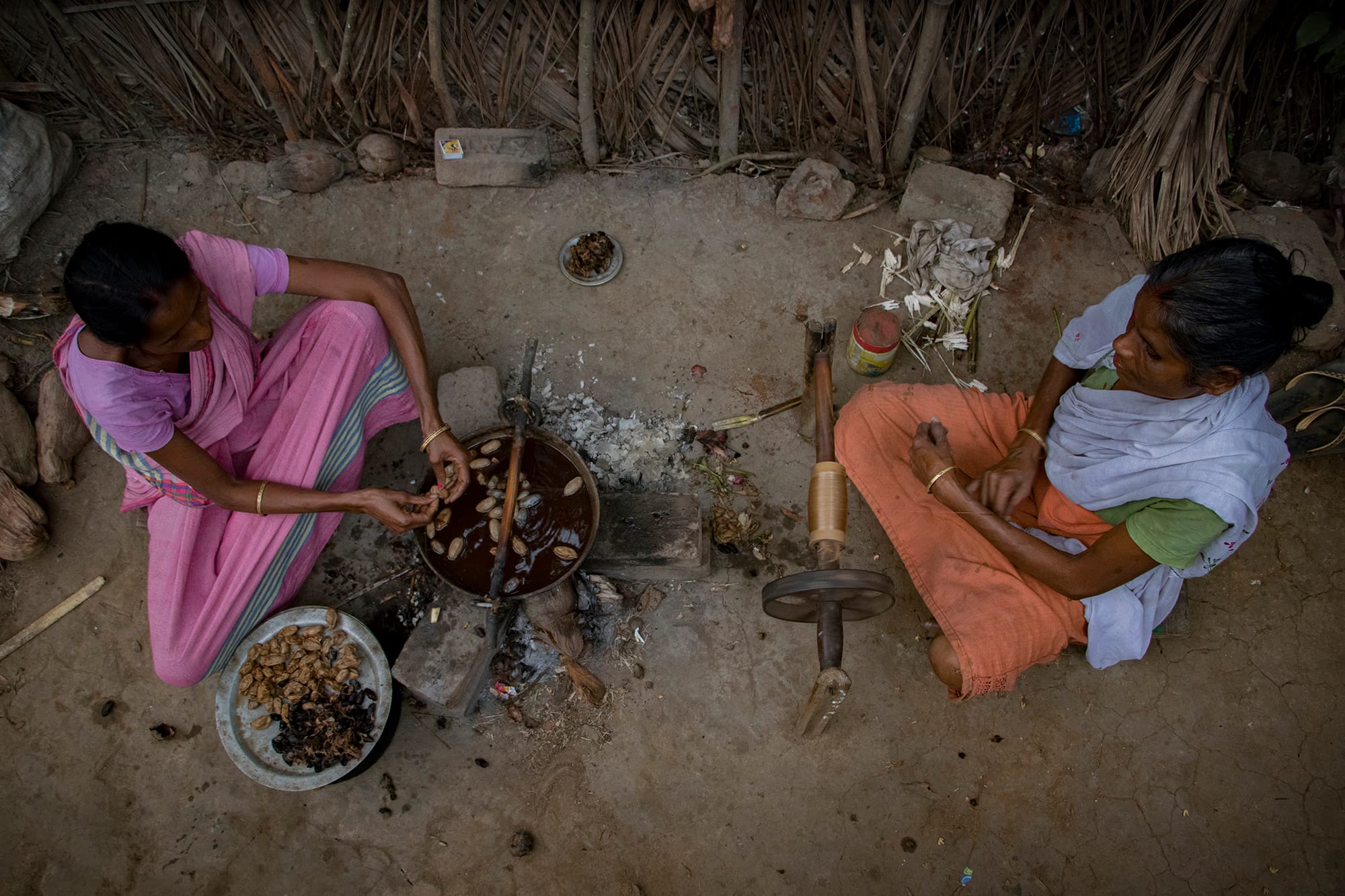
Unlike mulberry silk, muga is an outdoor crop. The Antheraea assamensis moth is only semi-domesticated. Its larvae are reared in the open on the leaves of the som and soalu trees. These are the aromatic laurels generally identified as Persea bombycina (som) and Litsea (soalu). When a tree is stripped bare, the worms are gathered in a bamboo sieve, the chaloni, and carried to the next. The moth broods several times a year. But it is the Jethua crop of April and May that yields the commercial silk. The whole cycle of pre-rearing, rearing and reeling is intensely laborious and exposed. The crop is vulnerable at every stage to weather, disease and predators. That dependence on particular host trees and a particular climate is exactly why muga has never travelled. It is tied to the land that grows it.
The three silks, and the question of non-violence
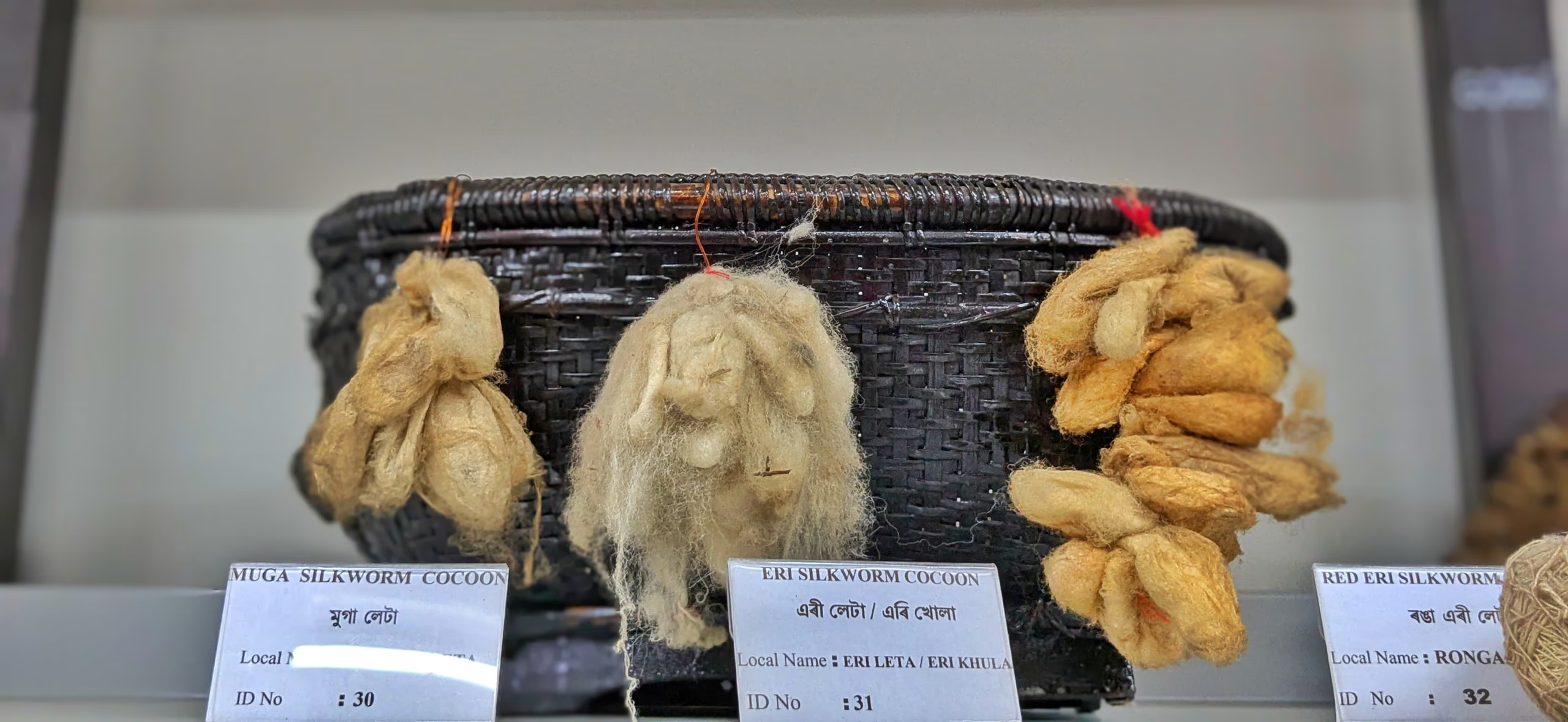
Assam is one of the rare places that cultivates several distinct silks at once: golden muga, white mulberry pat, and warm, matte eri. The three are not only different fibres but different ethics. Eri is the valley's true non-violent or ahimsa silk. Its cocoon is open at one end, so the moth flies free before the cocoon is spun rather than reeled. Nothing is killed to make it. Muga, by contrast, is conventionally reeled as a continuous filament. This usually means stifling the pupa in the cocoon. Non-violent muga is now being attempted, reeled only from cocoons the moth has already left. It is a distinction worth keeping straight. The peace silk of Assam is eri, while muga is the precious, harder bargain.
The looms of Sualkuchi
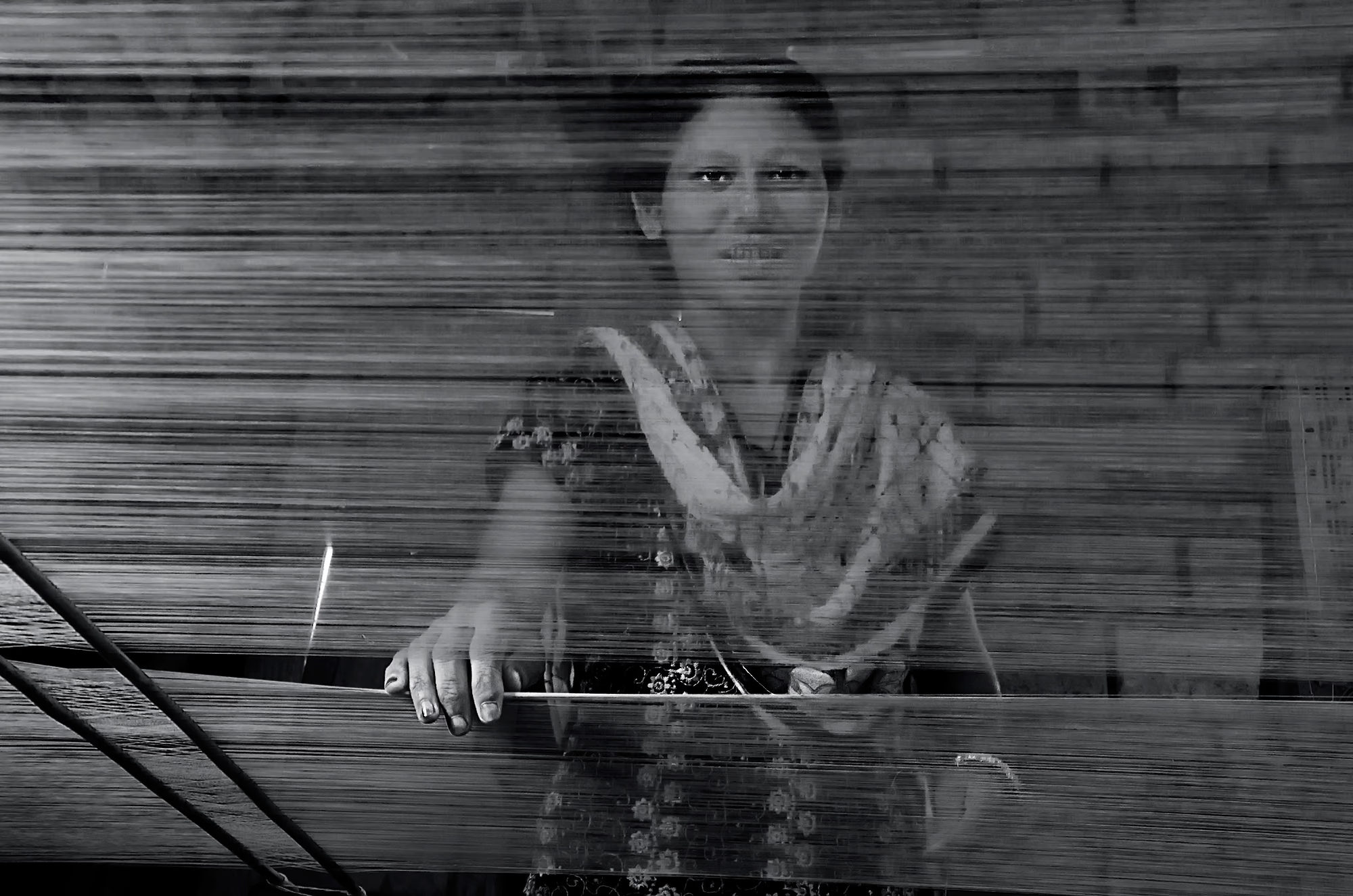
Weaving in Assam has long been a household art. It was practised by women across the valley at looms set under the house, so that a girl's skill at the loom was long held to be a measure of her accomplishment. That domestic tradition is concentrated into a true silk town at Sualkuchi, on the north bank of the Brahmaputra in Kamrup. Here weaving is not a spare-time chore but the trade of the whole town: household after household turns its front rooms over to the loom, and Sualkuchi is commonly called the Manchester of the East for the density of that industry. The town's silk weaving is traced by tradition to the patronage of the medieval kings, and it grew again under later royal encouragement into the concentrated weaving community it remains.
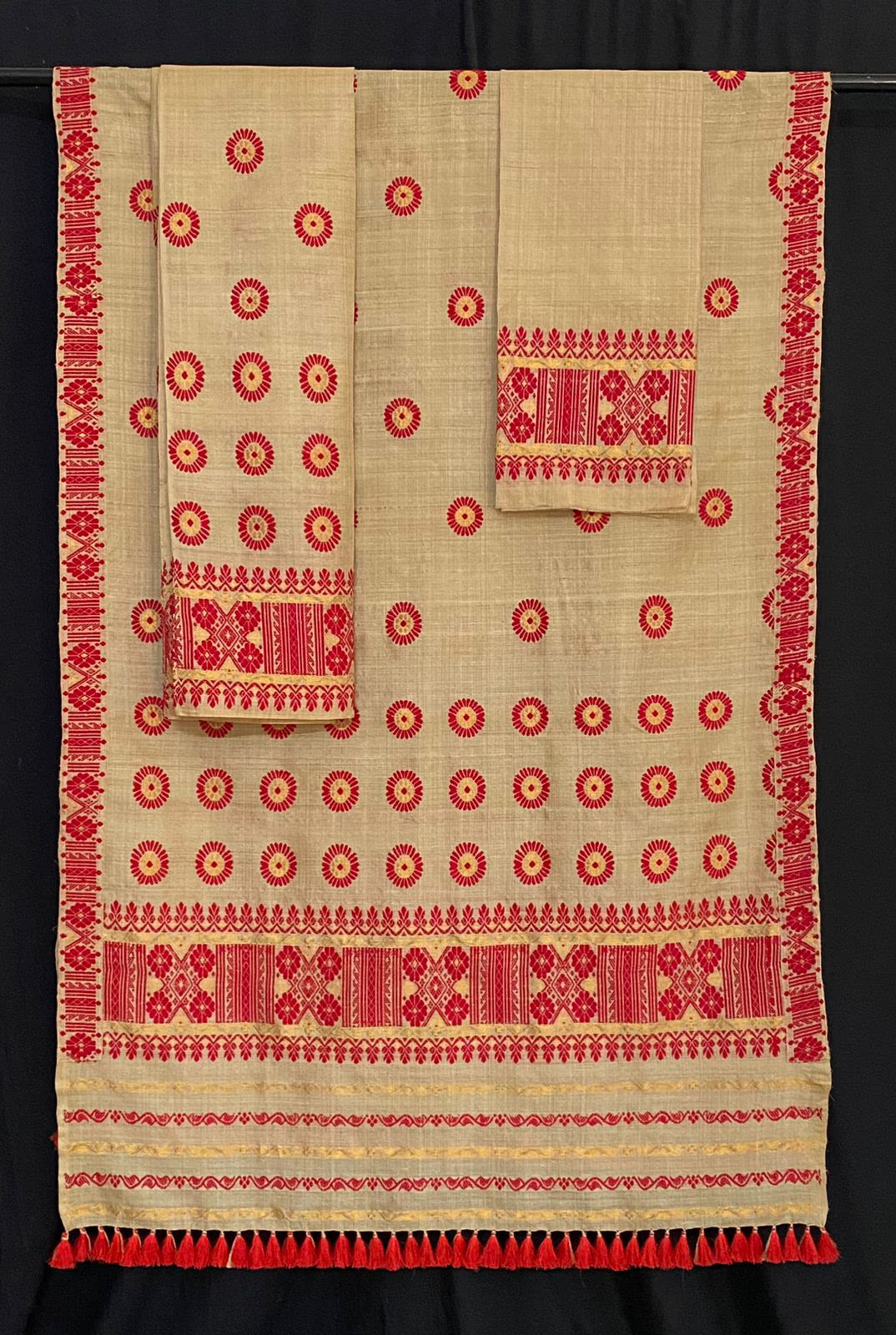
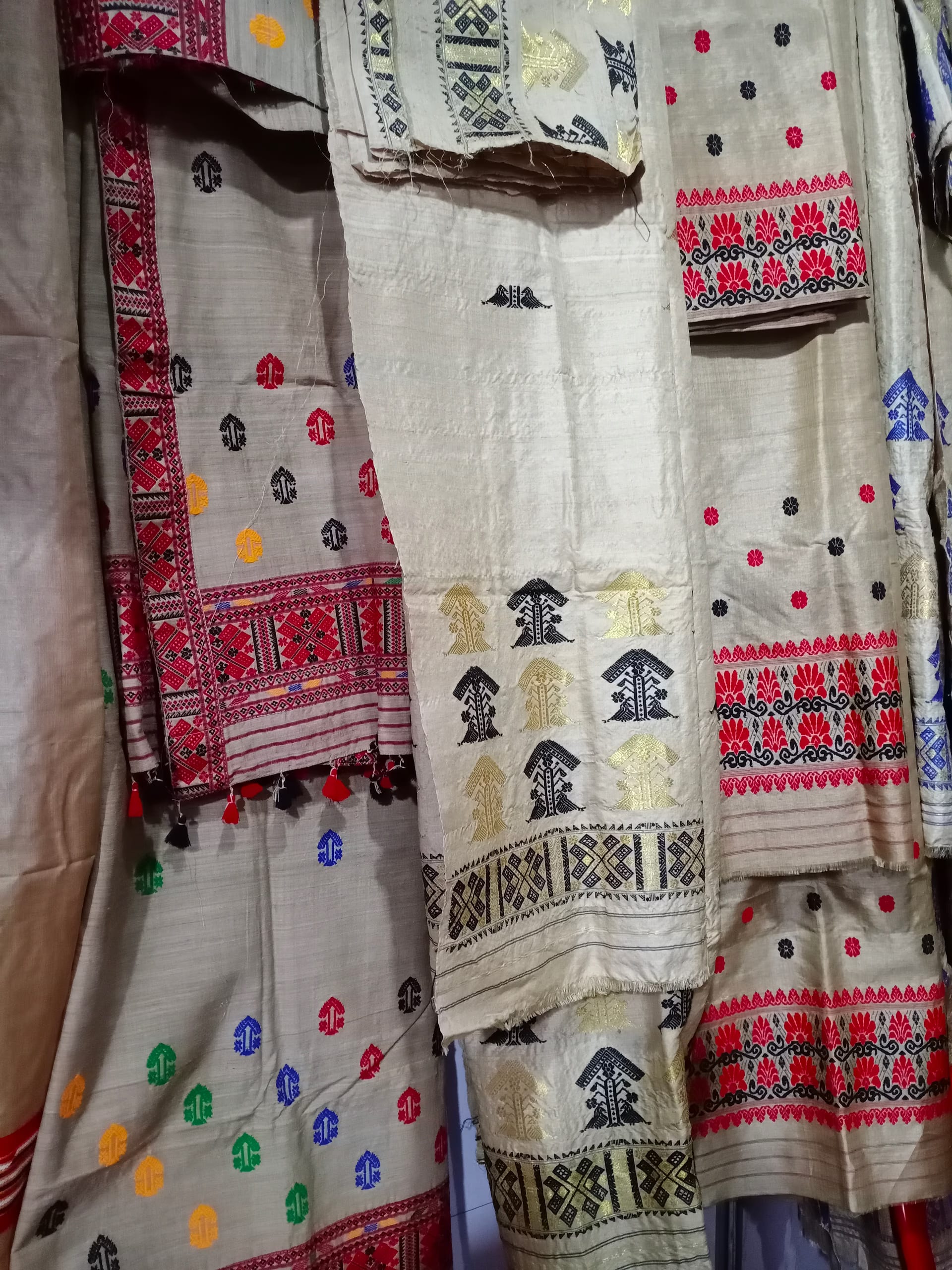
There the muga thread is woven into the mekhela sador, the two-piece Assamese drape. It is woven too into the gamosa and the stole, and into the fine silk saris and lengths that carry the town's name. These are the finished cloths in which the golden silk reaches the world. The looms of Sualkuchi work not only muga but the white pat and, increasingly, mulberry silk drawn from beyond the valley, so that the town has become the point where Assam's thread, its own and imported alike, is turned into cloth. It is this that makes Sualkuchi the public face of the craft, the place where the reeled golden filament of the countryside becomes, on the loom, the drape and the gamosa in which Assam recognises itself.
Heritage and pressure
Muga today is at once a secure heritage and a craft under real strain. It is woven deep into Assamese identity and protected by its GI, yet it is squeezed on every side, by the cost and short supply of cocoons, by cheap imitation, by the shrinking of the som and soalu forests, and by a warming, less predictable climate that the delicate moth feels first of all. The legal protection has been pressed further over time, and a distinctive GI logo introduced in 2014 now marks certified genuine cloth, drawing a visible line against the dyed silks, power-loom lengths and synthetic substitutes sold under the muga name to buyers who cannot tell the difference at a glance. The silkworm and its rearing have become the subject of sustained scientific research and conservation, much of it centred on the Central Muga Eri Research and Training Institute at Jorhat under the Central Silk Board, precisely because the whole tradition rests on so specialised and so fragile a living creature. For all that pressure the golden thread runs unbroken from the textiles of the Ahom court, the material culture B.K. Barua surveyed, down to the handloom of today, and it remains one of the clearest continuities between old Assam and new.