When a Swargadeo of the Ahom died, the kingdom did not weep in public. It did not move in daylight either. The body of the god-king was carried out of the capital by night. The route was kept secret on purpose. It led to a low range of green hills in the far east of the valley, where his ancestors already lay under earth. That place was Charaideo, the first capital fixed by Sukaphaa around 1253. Over nearly six centuries it became the necropolis of the dynasty. It was a landscape of grass-covered mounds raised over the dead of the longest-ruling line the Brahmaputra valley ever knew. On the twenty-sixth of July 2024, at the forty-sixth session of the World Heritage Committee, those mounds became the first cultural property of India’s northeast inscribed on the UNESCO World Heritage List. They were inscribed under the name the Moidams, the mound-burial system of the Ahom dynasty. It had taken the world three centuries to see what the valley had always known, that the green hills of Charaideo were among the great royal cemeteries of Asia.
The mound and the chamber
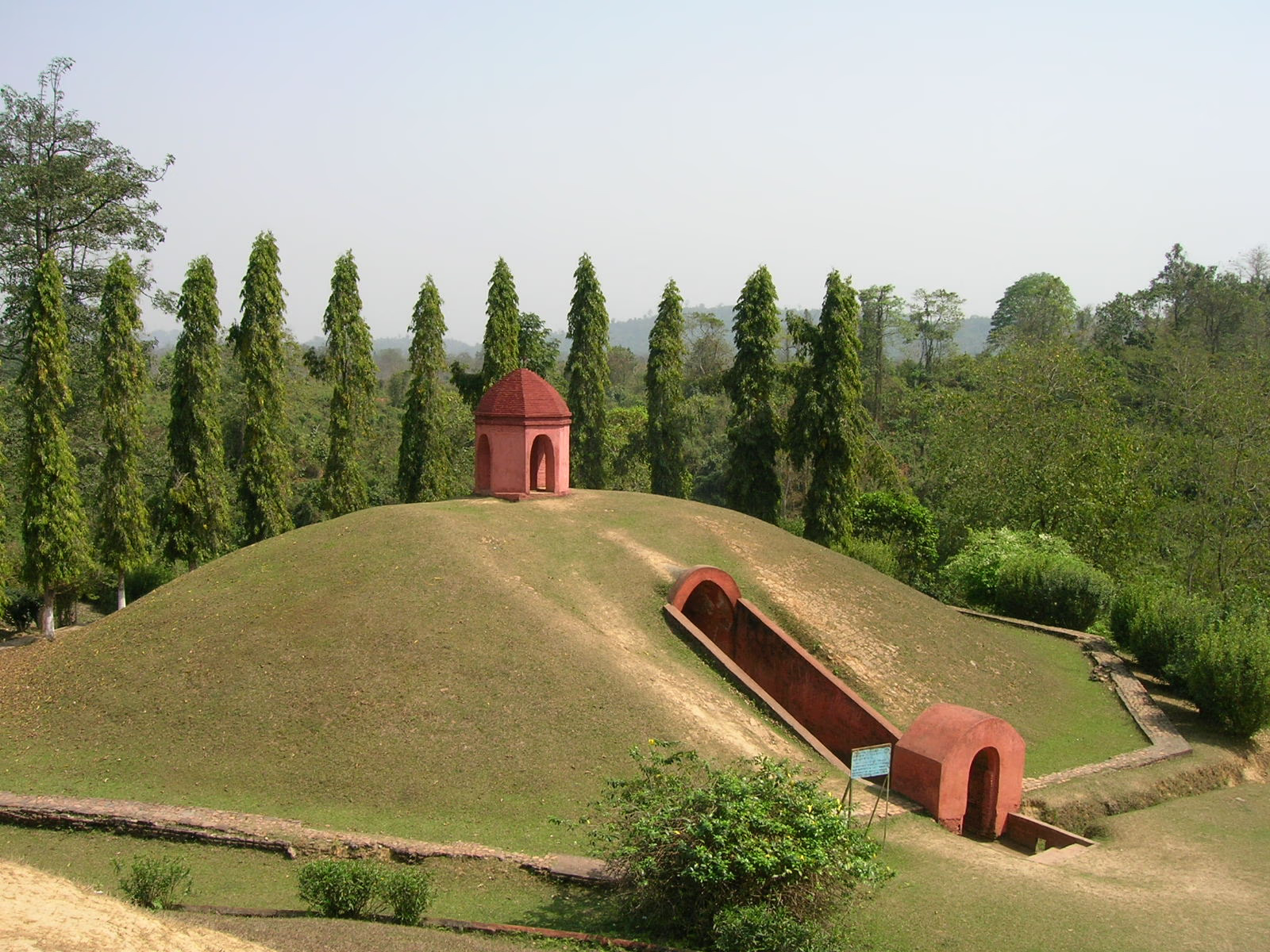
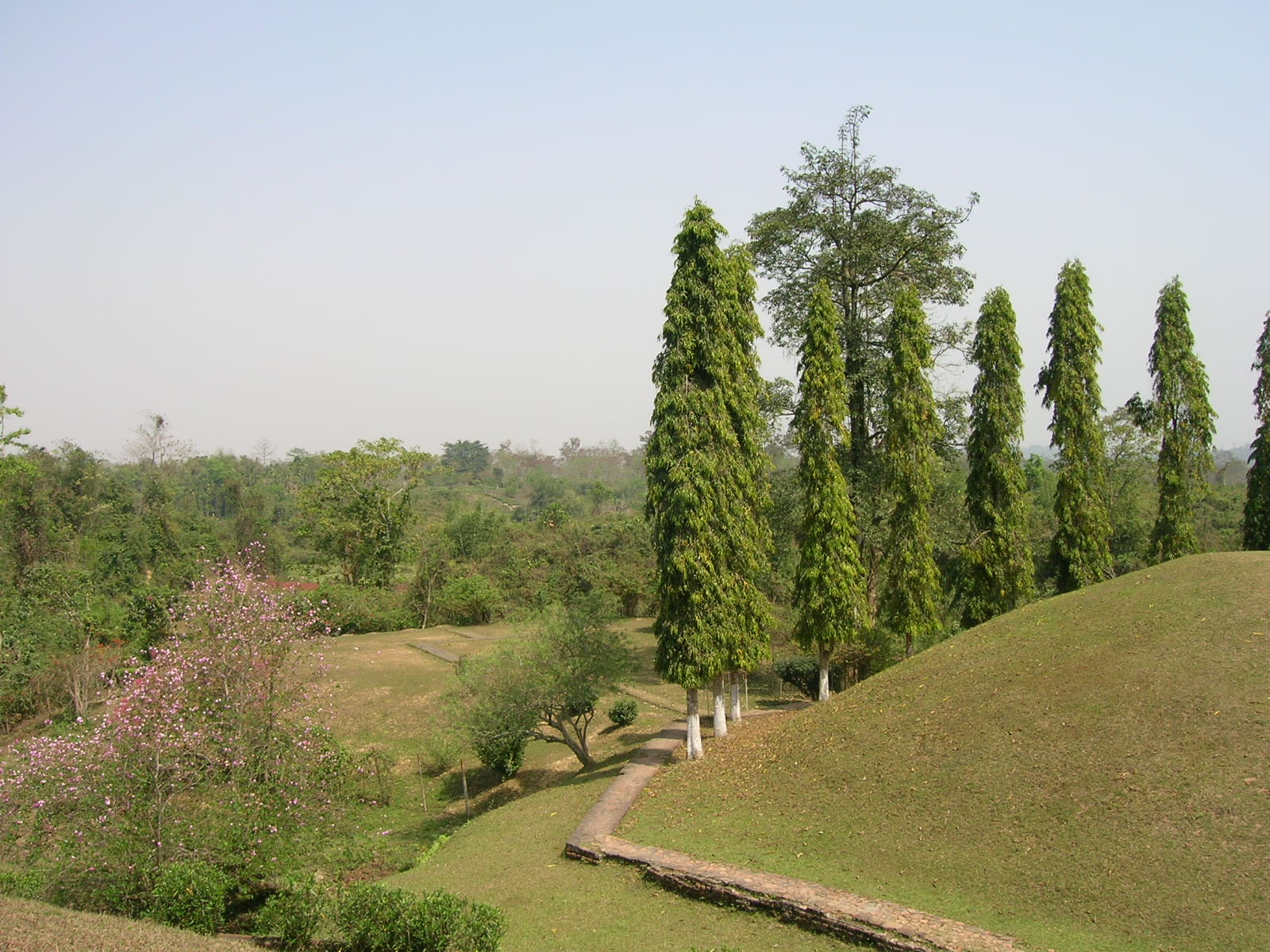
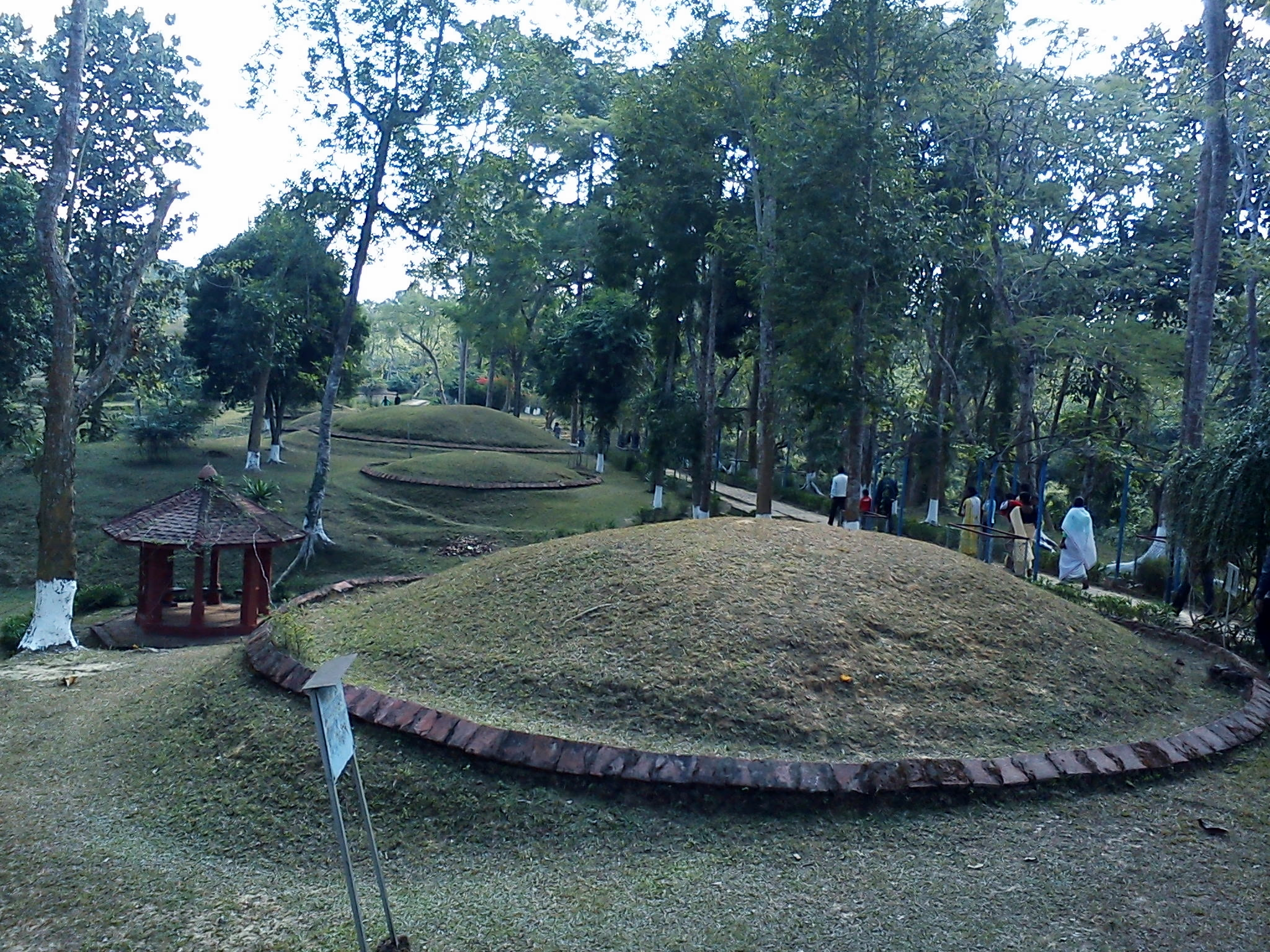
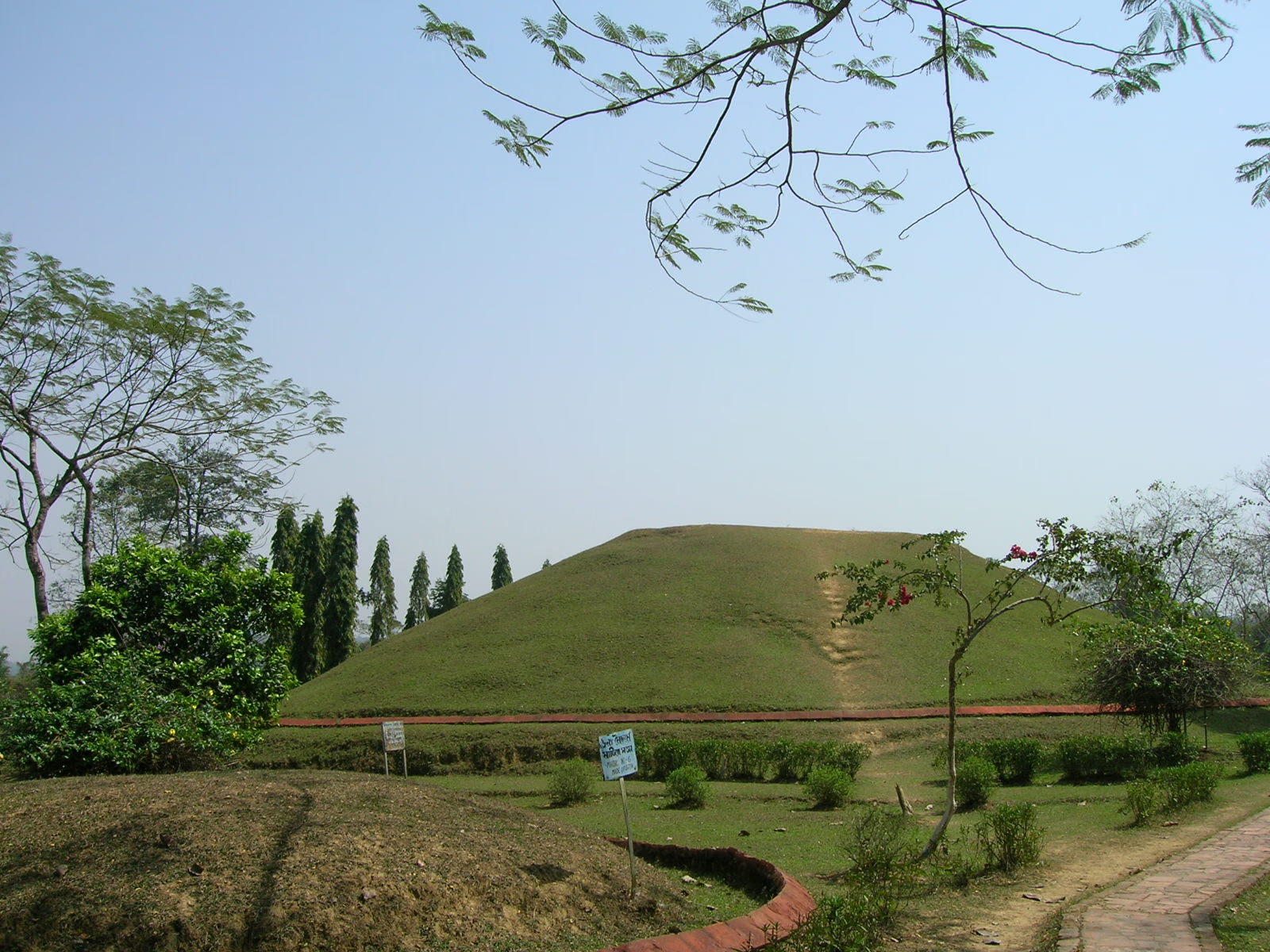
A moidam, in the spelling the world now uses, or maidam as Assam long wrote it, was not a grave. It was a vaulted house for the dead. Below the visible hill lay a chamber. In the earliest centuries it was built of timber poles and beams. In the later ones it was built of dressed brick and stone, sometimes with more than one chamber. Over that chamber the labourers heaped a great hemispherical mound of earth. They crowned it with a small open pavilion, the chow chali. The whole was ringed at its base by an octagonal dwarf wall. The grandest of the royal mounds rise like green pyramids out of the Charaideo ridge. Early visitors wrote of them in exactly those terms, as objects of wonder. It is the core of royal mounds on the hill that was inscribed as the UNESCO World Heritage property. They are the survivors of a far larger field. By tradition there were once more than a hundred and fifty mounds in all at Charaideo. Only about thirty are protected today. The rest are worn, encroached upon, or quietly lost.
A king laid down with his world
The custom the Ahoms buried by was not Hindu. They had carried it across the Patkai from the Tai world to the east. There the dead of the Tai-Ahom were laid in the ground rather than given to fire. At Charaideo it became kingship’s deepest rite. A dead Swargadeo went into the earth with the things a life had needed: food and drink, dress and ornament, weapons, the implements of daily use, and the betel and areca of the tamol-pan. All of it was set down in the belief that the dead king went on using them in the country beyond death.
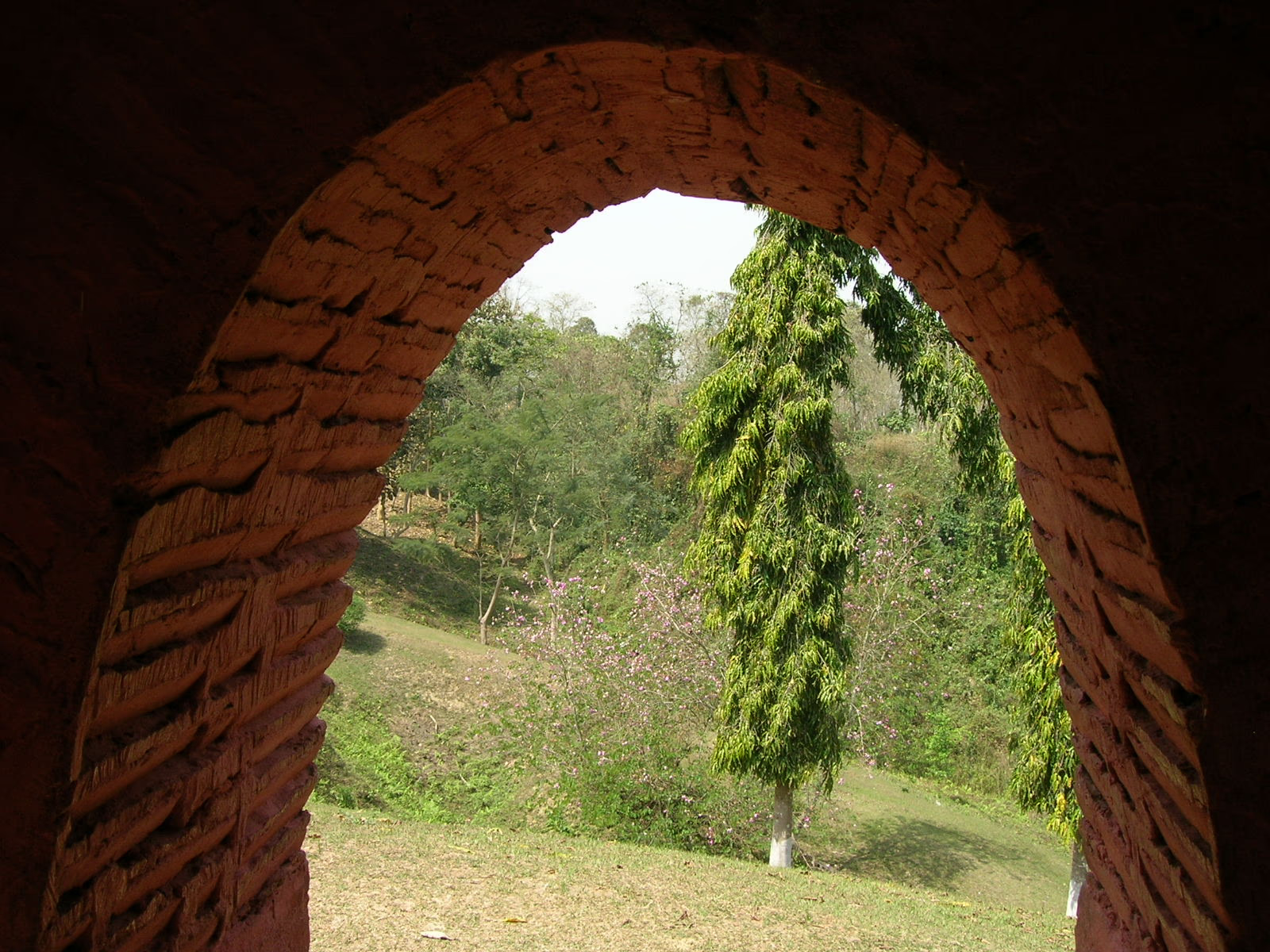
The archaeology has recovered a little of that buried world. The chamber known as Maidam No. 2 was excavated between 2000 and 2002. Its vault and mound were raised in burned brick, and its arched door opened on the western side. From it the diggers drew out ivory carvings worked with elephants, peacocks and flowers, a range of wooden objects including a xorai shaped like a pillar, an ivory panel bearing the royal Ahom insignia, and the skeletal remains of five people. It was one ruler’s household for the afterlife, held under the earth for close on three hundred years.
The attendants in the dark
Here the record turns harder, and honesty asks that the seam be shown. By a tradition long repeated, the king did not go down alone. The chronicles and the older accounts hold that in the early centuries living attendants were sealed into the maidam with their dead master. His servants and caretakers, his horses and his elephants were laid in chambers of their own, so that he should not lack a household in the afterlife. Some tellings put the number of the buried living at no fewer than ten. This is the part of the story to weigh with care. The claim of live burial sits in oral memory and the chronicle tradition more firmly than in any document that can be dated. It should be read as the custom a people remembered rather than a thing finally proven. What is not in doubt is the principle behind it: that a god-king crossed into death as he had lived, with his goods, his beasts and the people of his service gathered around him.
The secret road and the bathing tank
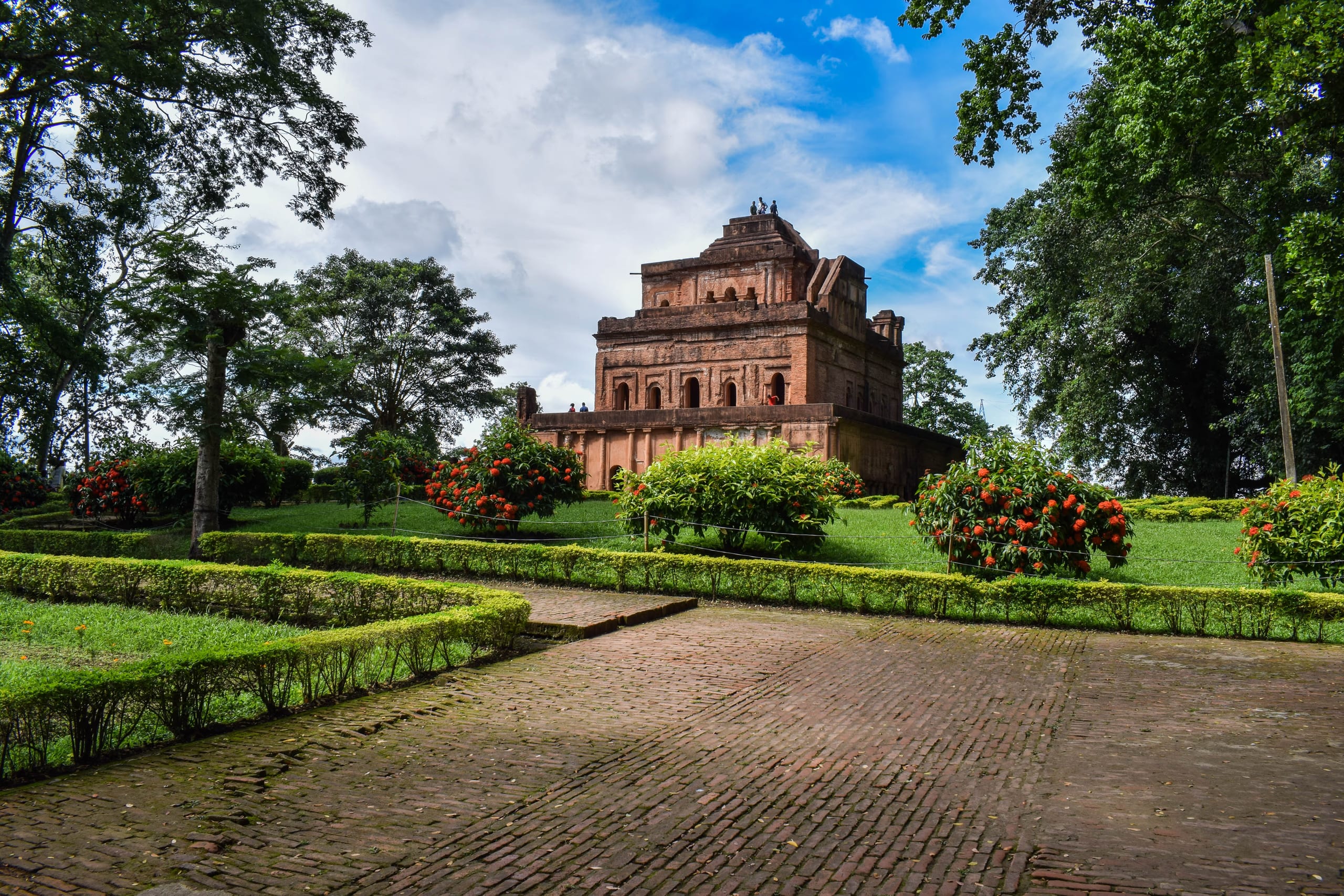
The funeral itself followed a fixed and guarded path. A dead Swargadeo was borne out of the working capital, from Garhgaon in the earlier period and later from Rangpur. The route was deliberately kept secret, leading north of the Rajagarheng, the royal palace. The body was bathed at a tank reserved for that one purpose. Only then was it carried east to Charaideo, for the long burial rituals that committed it to the mound. The secrecy was not only ceremony. A dead king was a kingdom briefly without a head, the succession not yet settled. The road that carried him was a road worth guarding against an enemy or a rival prince who might read a funeral as an opening.
The mounds robbed
A king laid down with gold and ivory and the wealth of a reign makes a promise to the afterlife. It also makes a target. The maidams of Charaideo were robbed, again and again, across the centuries. The plunderers came, by the record, from every quarter, from Mughals to the British to the people of the country itself. The most famous of the early spoilings is laid at the door of the Mughal general Mir Jumla, who broke into the kingdom and briefly held its capital in 1662. A second wave is placed with the British, who took Assam in 1826 and dug into the royal mounds in the years that followed.
The proof of the robbing is in the ground. When archaeologists came to open the chamber called Maidam No. 2, they found a hole already broken through its roof, the mark of an earlier thief who had gone in from above long before them. What that thief had carried off can only be guessed. The old chronicles list the goods that should have lain with the dead, and some of what they name was simply not there when the diggers reached the chamber. The secret road and the guarded funeral had kept the king safe on the one night the kingdom feared for him. They could not keep him safe for three hundred years.
The ancestors who became gods
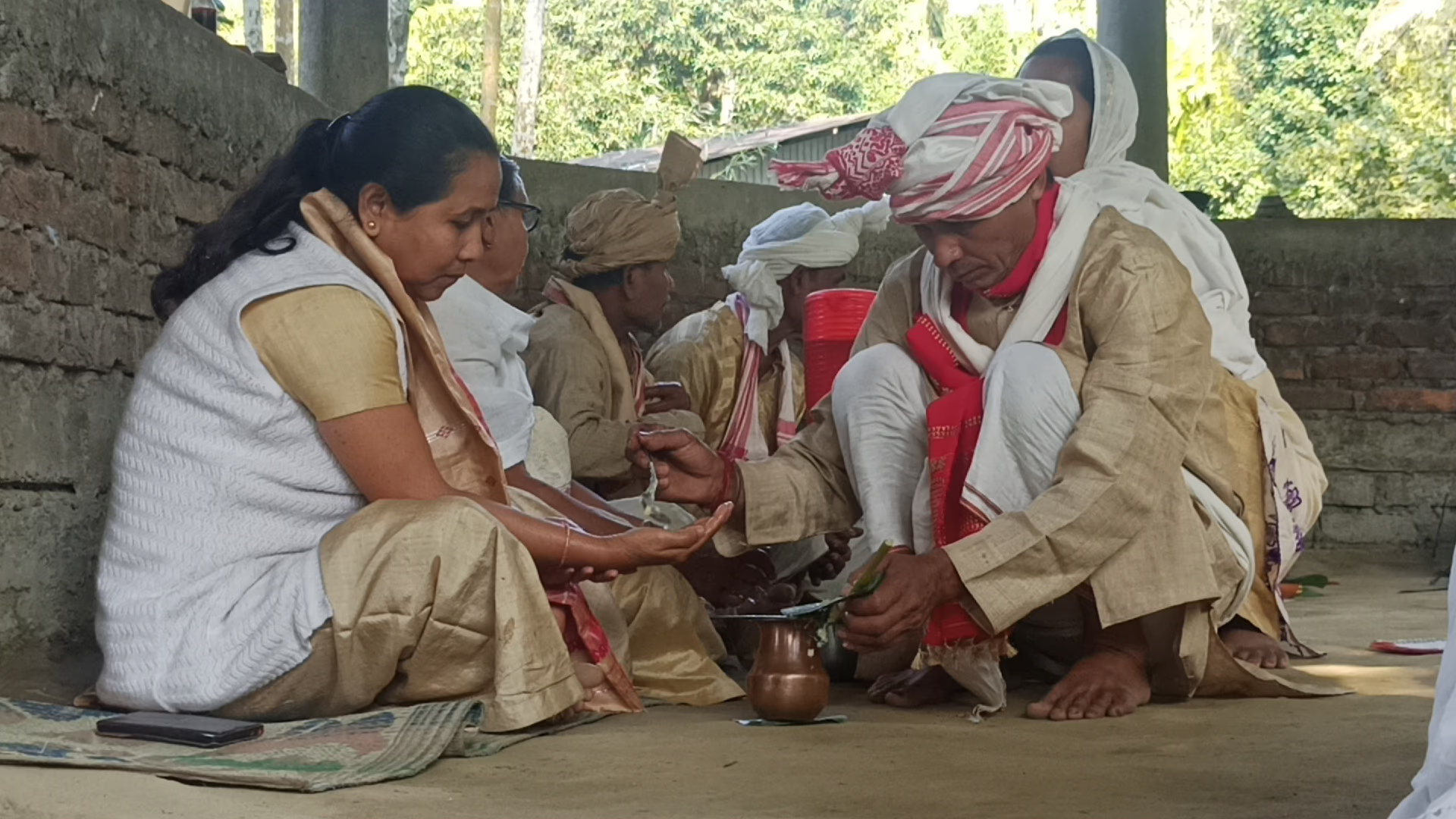
Burial was only the beginning of the relationship between the Ahoms and their dead. In their belief the dead did not simply depart. The Tai held that a person, once dead, remained an ancestor for a season and then passed into godhood. The living owed that ascent its rites. From this grew the ancestor-worship at the centre of the Tai-Ahom rites. Its greatest public expression was Me-Dam-Me-Phi, whose very name gathers the idea: an offering, to the dead, who are become gods. The Ahom kings performed it after victories in war and for the safety of the state. The priests welcomed the spirits with rice, fowl and the rice-beer of the country, fed them, and bade them farewell. The maidams of Charaideo and the festival are two halves of one faith: the mound that held the ancestor and the rite that fed him.
When the kings turned to fire
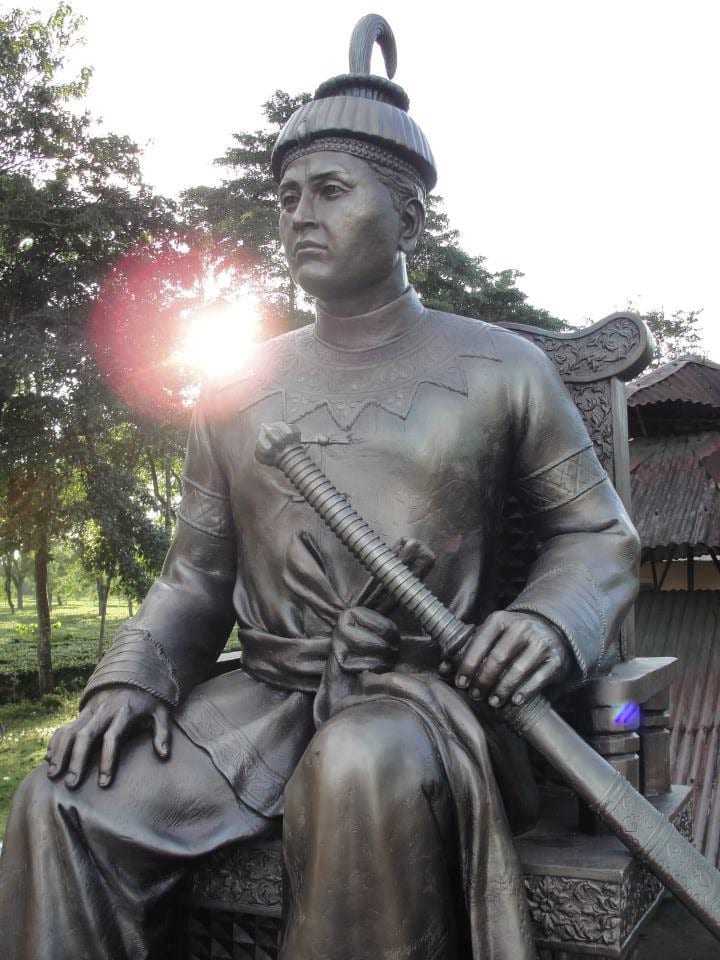
The faith did not hold unchanged. Through the later seventeenth and the eighteenth centuries, the dynasty drew Hindu learning and Hindu priests into its court. With that, the rite of the dead began to turn from earth toward fire. Rudra Singha reigned from 1696 until his death at North Guwahati in August 1714. Late in life he leaned toward Shaktism. He summoned a Bengal Brahmin, Krishnaram Bhattacharya of Nabadwip, to the kingdom. On his deathbed he counselled his sons to take initiation, and under his son the court became formally Hindu. The tradition that the abolition of live burial belongs to Rudra Singha is told in the same breath.
With Hinduisation the body itself was no longer laid whole in the ground. It was burned by Hindu rite, and only the ashes and bone were carried up to Charaideo to lie beneath the mound. By tradition Rudra Singha's own remains went east this way after his cremation. The change was in the rite, not in the chamber that received it. The brick burial vault was by his reign no novelty. The oldest chambers had been built of solid wood, of poles and beams heaped over with earth, but from the time of Gadadhar Singha and the kings who followed him the dressed-brick and stone vault had already replaced that older timber one. What was new under the mound in Rudra Singha’s day was not the brick but the rite. The king was interred not as a body laid down whole with his world but as a handful of ash. The mound endured. What it covered had changed, from a buried king to the ashes of one.
The grass-covered hills of Charaideo still hold both kinds of king. There are the older ones, laid down whole with their world, and the later ones, burned and gathered into a handful of ash. They sit together now under one World Heritage name. It is the longest argument in stone and earth that the valley keeps about how a Tai people who came over the mountains slowly became something else, while never quite letting go of the custom that had carried their kings into the dark. If the burial rite was the first faith of the Ahoms, the mounds are its last, unanswerable witnesses. The building of a single royal mound is set down in the Changrung Phukan's records, the state accounts of construction, as a vast labour of brick and earth. They were raising not tombs so much as the memory of gods.