Pobitora is the rhino park you can reach before breakfast. It lies a morning’s drive east of Guwahati, on the Brahmaputra’s south bank in Morigaon district. Into a sliver of grassland and marsh smaller than forty square kilometres, it is said to hold one of the highest densities of the greater one-horned rhinoceros anywhere on earth. So a visitor who has only a day, and cannot reach the great spaces of Kaziranga, can still stand within a few hundred metres of wild rhino grazing in the open. It is often called a miniature Kaziranga. But that comparison undersells what makes Pobitora distinctive. It is not a smaller version of a large wilderness. It is more an experiment, willing or not, in just how much wild megafauna a tiny, hemmed-in grassland can be made to hold.
A grassland engineered by the river
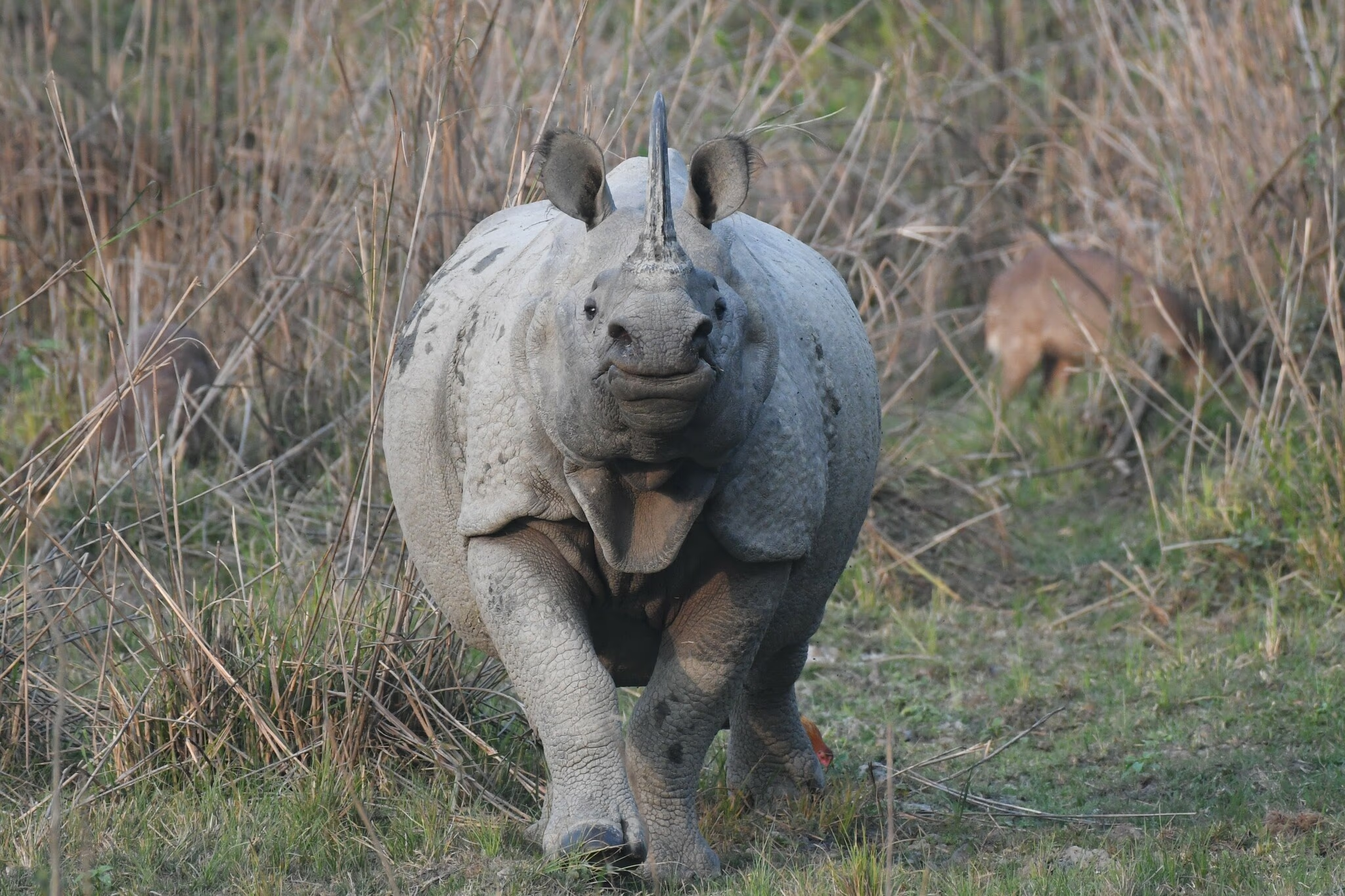
The sanctuary was constituted in 1987 over about 38.8 square kilometres of alluvial country. But the wildlife concentrates in a much smaller core of open grassland. The rest is a mosaic of beels, the oxbow lakes and marshes that hold water through the dry months. Through it run stands of tall cane and elephant grass and patches of open woodland. This is the same kind of floodplain habitat that the Brahmaputra builds all along its course: grazing lawn, permanent water, and cover, laid down and renewed by silt. Here it is compressed into so small a compass that the grazing is exceptionally rich. Field studies of the rhino’s diet in Pobitora have catalogued a long list of food plants, the grasses, sedges and aquatic herbs of the seasonal wetland. They tie the herd’s remarkable density directly to the abundance of that fodder on so little ground. Alongside the rhino the grassland carries wild water buffalo, leopard, wild boar and lesser cats. In winter its beels draw thousands of migratory waterbirds. So the same shallows that water the rhino at dusk are crowded at dawn with ducks, storks and waders down from the north.
The dilemma of a crowded sanctuary
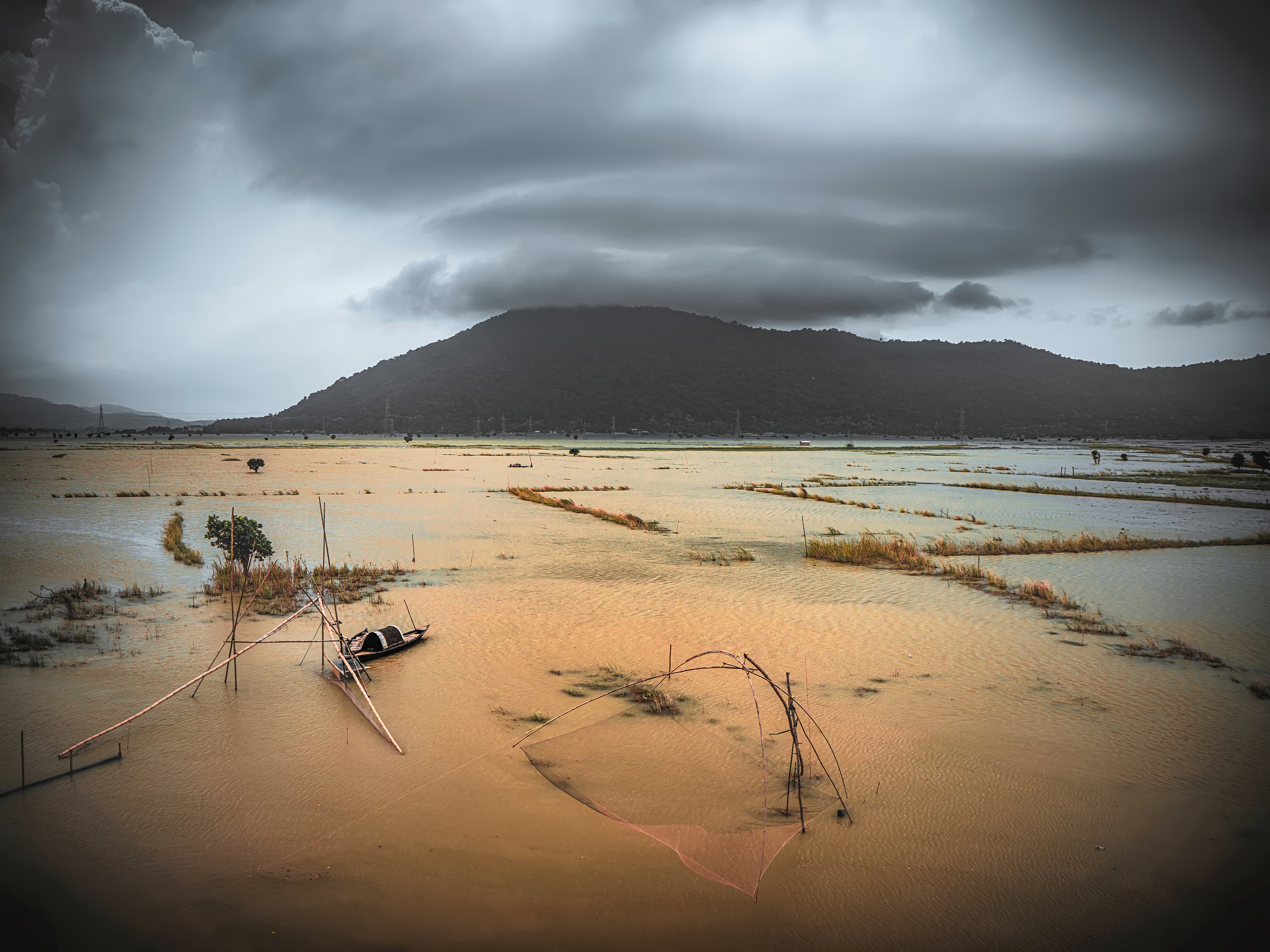
That very success is Pobitora’s central problem. A grassland this small has a ceiling, and the herd long ago pressed against it. There are far more rhino than the core can comfortably feed. So animals push out past the boundary into the paddy and mustard of the villages that ring the sanctuary. The encounters between a two-tonne grazer and a cultivator’s field run in both directions: crops trampled, people hurt, and rhino exposed beyond the guarded grass to the poacher’s rifle. Kaziranga’s threat is the scale of its floods. Pobitora’s is the arithmetic of carrying capacity. It is the question of what a conservation island does when it fills up. That question is set against the steady pressure of a populous, farmed landscape on every side, and a city growing closer year by year. The annual flood of the Brahmaputra complicates it further. It pushes the animals onto the few patches of high ground, the Rajamayong hillock chief among them, and out along the corridors toward the river, where they are most at risk.
A nursery for the rhino’s recovery
The answer the foresters reached was to turn Pobitora’s crowding into a resource. Indian Rhino Vision 2020 was a programme to spread the one-horned rhino back across more of its historic range, so that no single flood, epidemic or poaching wave could imperil the whole species at once. Under it, rhino were captured here, and reportedly at Kaziranga too, and carried west to repopulate Manas, where the insurgency years had shot the rhino out altogether. The sanctuary that could barely hold its own herd thus became a source for another’s. So Pobitora took its place in the larger truth of the state’s conservation turn. Assam’s rhino now survives not as one wild stock but as a single managed population. It is spread deliberately across a handful of guarded grasslands, moved between them by lorry and crane as the risk ledger demands. To keep the core in the open condition the grazers need, the grassland is burnt and cut in patches through the dry season. The herd is watched from towers near the Rajamayong hill, where the rhino come out to feed in the first and last light.
In the country of Mayong
Pobitora sits in a corner of Assam thick with its own lore. The villages at its edge belong to Mayong, a tract on the south bank long famous across the region as a land of magic. A folk tradition of tantra, charms and healing has earned it the name of a country of sorcerers. That tradition is rooted in the same Sakta currents that run through lower Assam. The Rajamayong hill that shelters the rhino in flood is said by tradition to carry that older story too, of a petty hill chiefship and its shrines. So a visit to the sanctuary lands the traveller in a landscape where the wild grassland, the great river and a deep vein of belief lie side by side. For the birdwatcher, the same beels that make Pobitora a rhino park make it, in winter, one of the easiest great waterbird gatherings to reach from the capital. It is a half-day’s outing into the same migratory wealth that crowds the wetlands all down the valley.
Visiting
For all its small size, the sanctuary rewards a careful, early visit, and a little planning makes the difference between a glimpse and a long look.
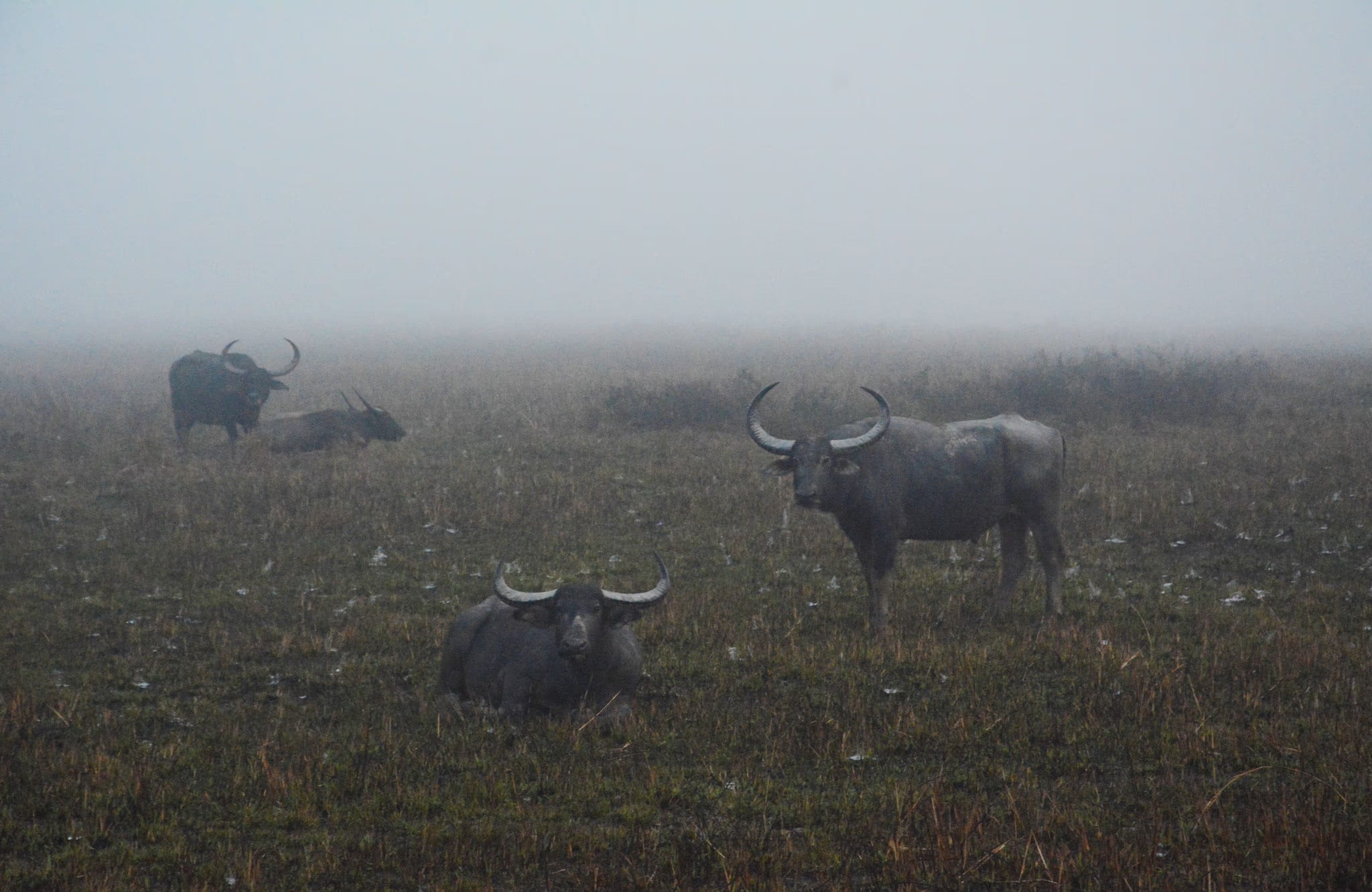
Pobitora is an easy day trip east of Guwahati, near Mayong in Morigaon district. It is close enough to be done comfortably in a morning. The cooler, drier months from November to April are the season. The receding flood concentrates the rhino on the open grassland, and the migrants fill the beels. The heat and high water of summer close the grass off. Game-viewing is by jeep safari and by elephant-back ride at dawn, when the mist still lies on the grass and the rhino feed in the open. It is also possible from the watchtowers overlooking the core. Permits and an authorised guide are arranged at the range office or through a lodge. Keep a respectful distance. Treat the rhino, for all its apparent calm, as the wild and unpredictable animal it is.