UNESCO World Heritage

Kaziranga National Park

UNESCO World Heritage site since 1985. Tall elephant grass, the Brahmaputra's southern bank, and a conservation success that began in 1905.

Kaziranga is, before it is anything else, a floodplain. It is a stretch of the Brahmaputra's southern bank. Here the river's annual flood makes and remakes a mosaic of tall grassland, wetland, and woodland. That mosaic supports one of the densest concentrations of large mammals on earth. It is a UNESCO World Heritage Site and a tiger reserve. It is also the home of the world's largest population of the greater one-horned rhinoceros.

Loading map
In Assam

The floodplain and its flood

The park lies on the alluvial plain of the Brahmaputra, in the Golaghat and Nagaon districts, with additions extending toward the Karbi Anglong hills to the south. It is a landscape of three interlocking habitats: vast tracts of tall “elephant” grassland, the numerous beels (oxbow lakes and marshes) that hold water through the year, and patches of semi-evergreen and riverine woodland. This combination of open grazing, permanent water, and cover is packed into a relatively small area, and it is what lets Kaziranga carry the animal densities it does.
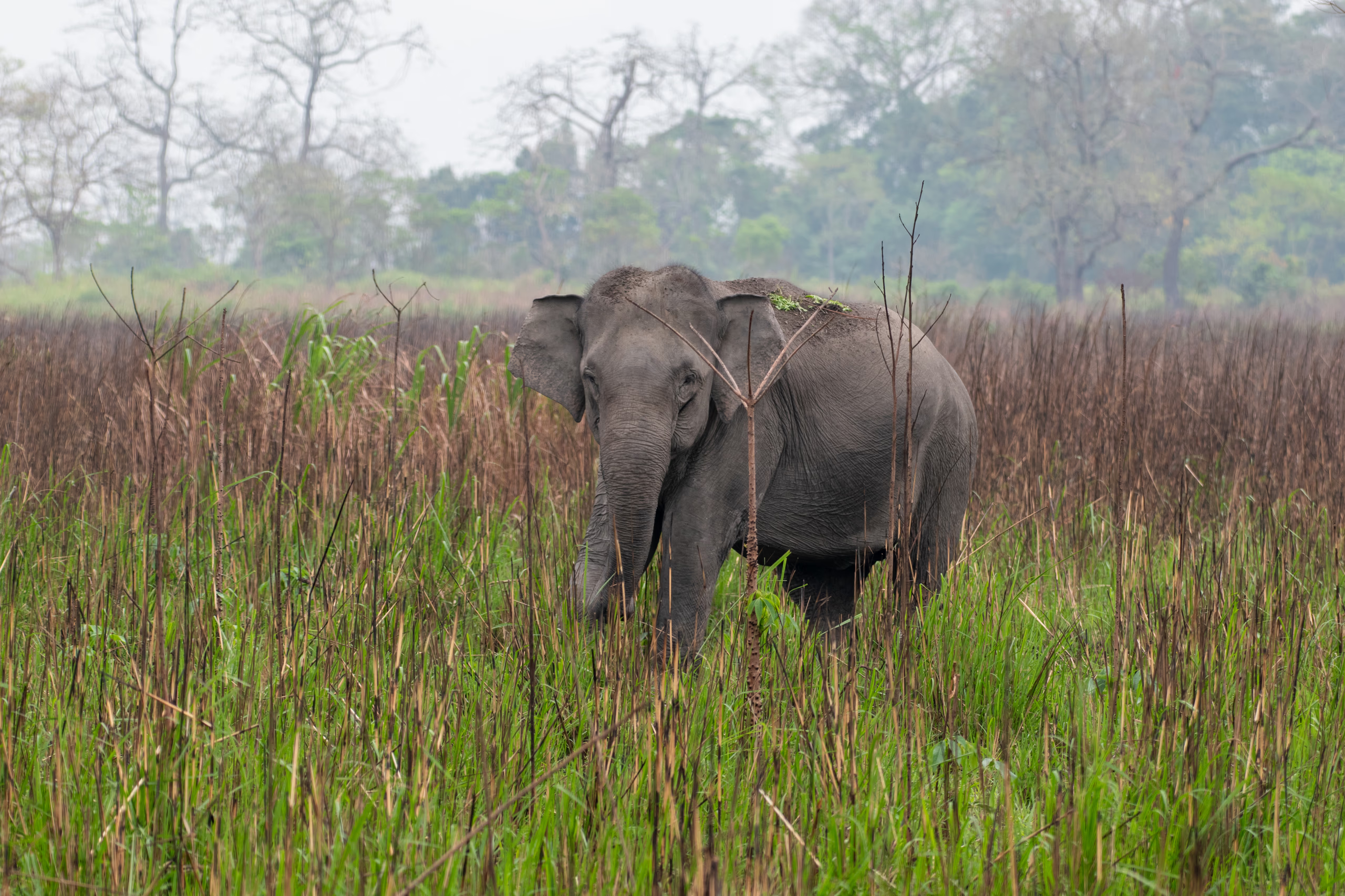
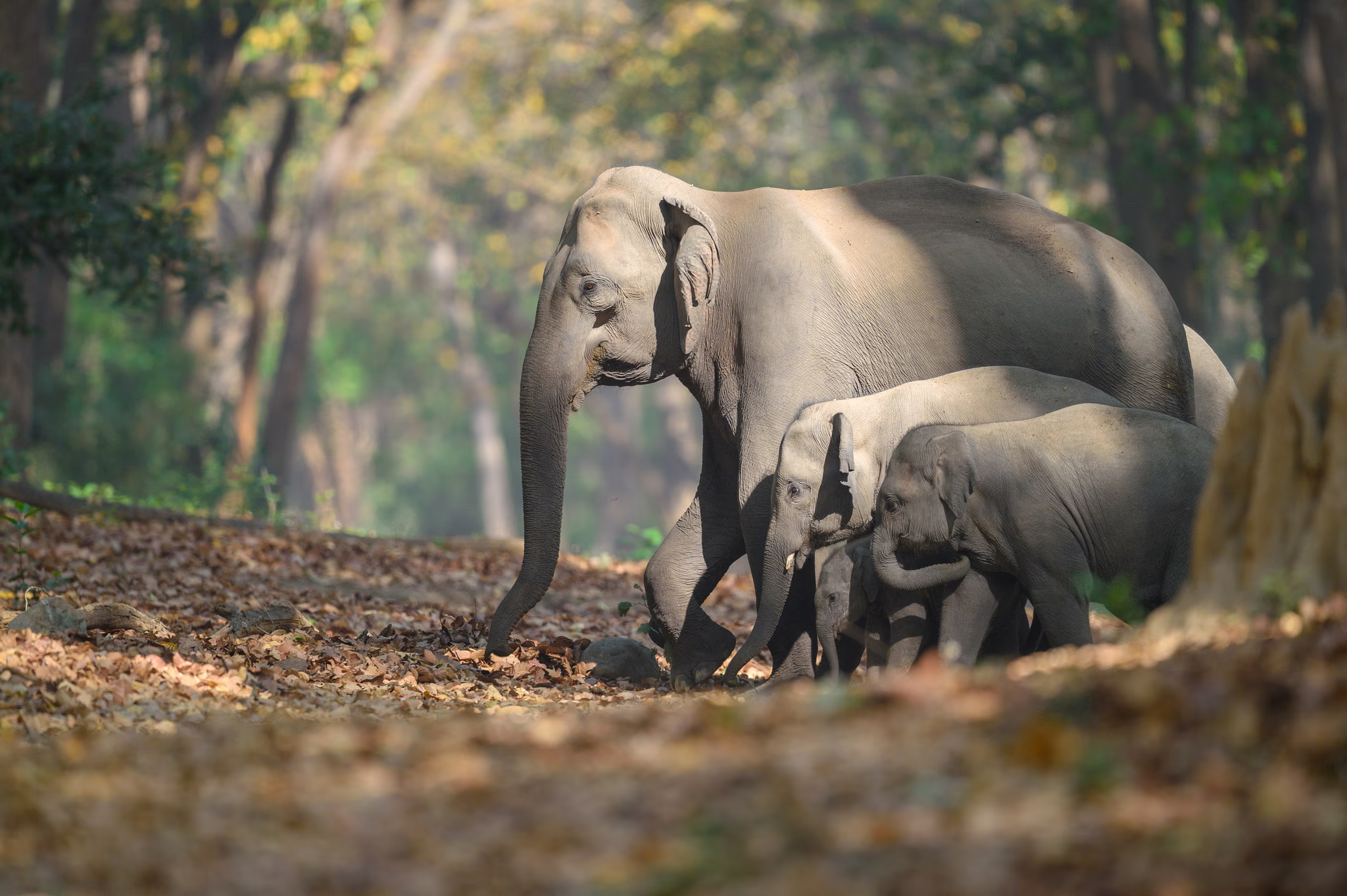
A wild Asian elephant standing amid tall elephant grass at Kaziranga, woodland behind in soft mist
Plate 1.A wild elephant in the tall floodplain grassland. A wild elephant in the tall grass of Kaziranga, woodland behind. Grass, water and tree cover packed close together let the floodplain carry its density of large animals.Photograph: Rohit Sharma · CC BY-SA · Wikimedia Commons

What renews the mosaic is the annual monsoon flood, the central ecological fact of the park rather than an interruption of it. Each year the Brahmaputra spills across the plain, depositing the silt that keeps the grassland fertile and resetting plant succession before any one habitat can take over. The same rising water drives the animals onto higher ground, including the Karbi Anglong highlands across the southern boundary, so the corridor south is not a scenic luxury but a lifeline the herds depend on. Yet the flood is also a periodic catastrophe: it drowns animals and pushes them across the highway into traffic. The force that makes the habitat is the same one that, in the worst years, threatens everything living in it.

The rhino and the flagship species

Kaziranga is, above all, rhino country. It holds by far the largest population of the greater one-horned rhinoceros in the world, well over two-thirds of the species' surviving wild total at this single site. It also holds the largest population of true wild water buffalo anywhere, on the order of fifty-seven percent of the world's wild buffalo, massive and dangerous animals whose horns sweep wider than a person is tall. It has the eastern swamp deer, the dolhorina (whose overwhelming majority survives here, with a small population also at Manas), resident elephant herds, and one of the highest tiger densities anywhere. These five, the rhinoceros, the tiger, the elephant, the wild water buffalo and the swamp deer, are celebrated together as the Big Five of Kaziranga. It is for this assemblage of threatened large mammals, sustained by the floodplain, that the park is internationally significant. The species, with their conservation status and links to the IUCN Red List, are catalogued in the searchable list below.
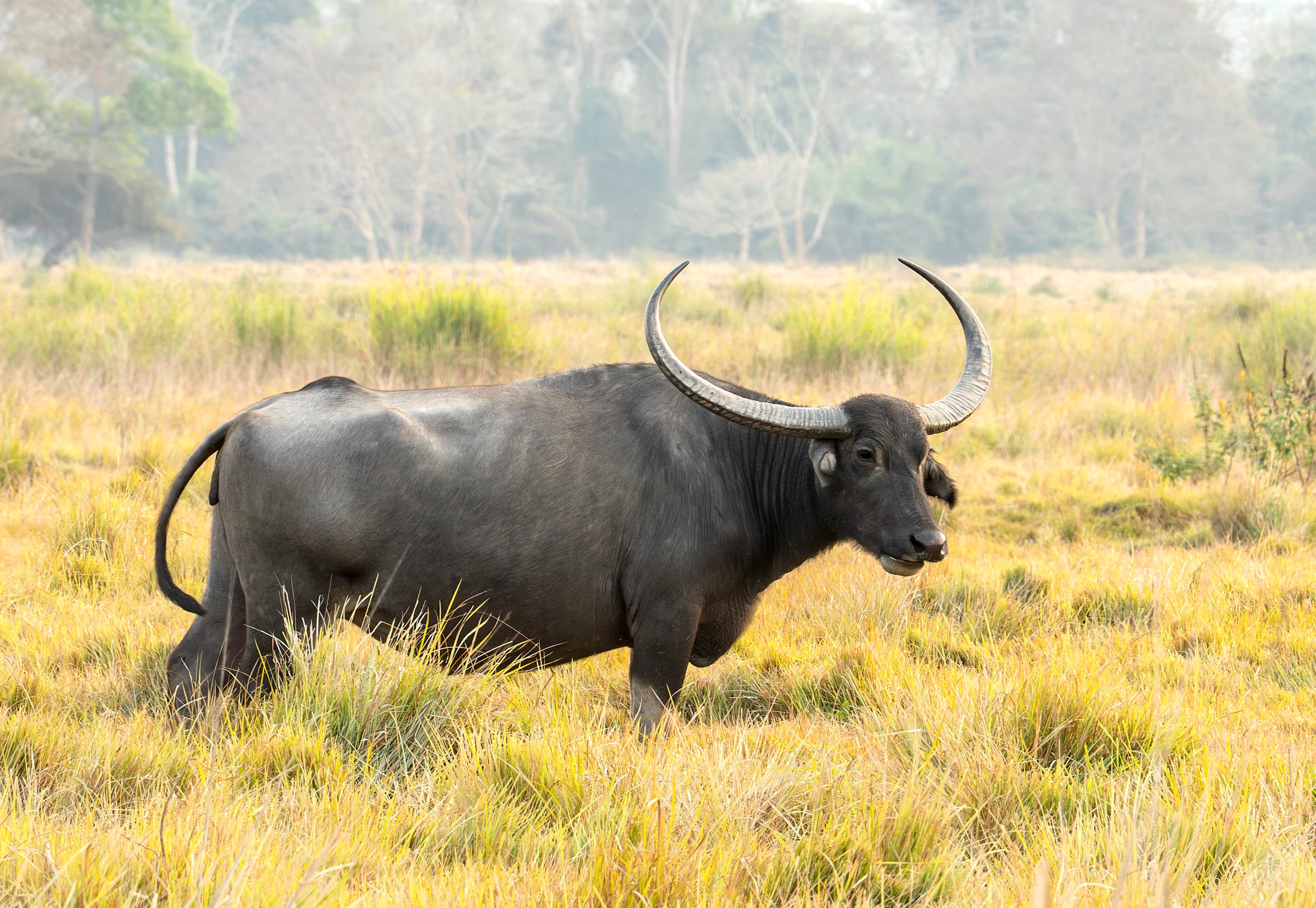
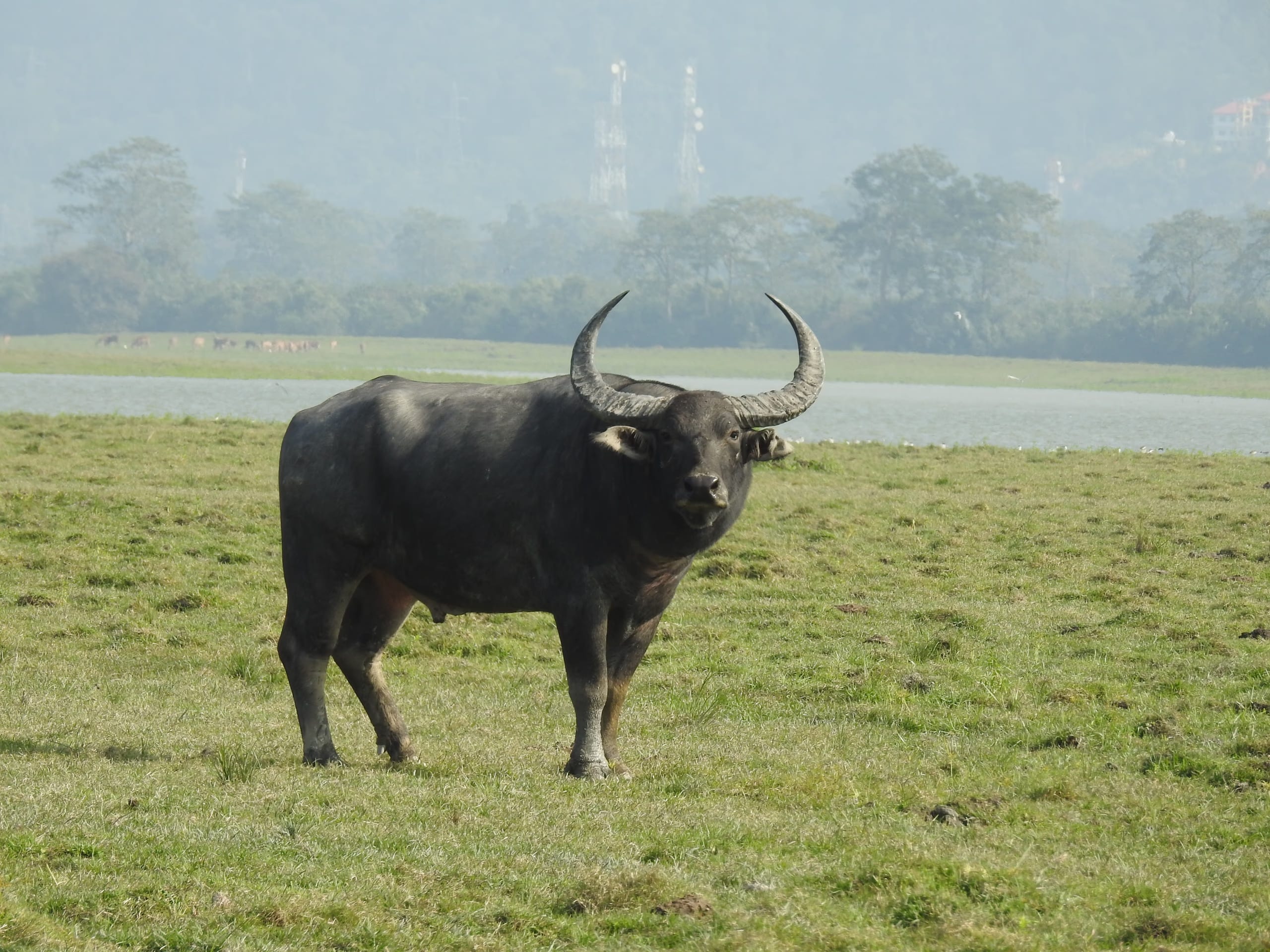
A wild water buffalo bull with large sweeping horns standing in grassland in Kaziranga National Park
Plate 2.Wild water buffalo. A wild water buffalo (Bubalus arnee) in the grassland. Kaziranga holds the largest population of true wild water buffalo anywhere, on the order of half the world's total.Photograph: Joydeep Chakraborty · CC BY-SA · Wikimedia Commons
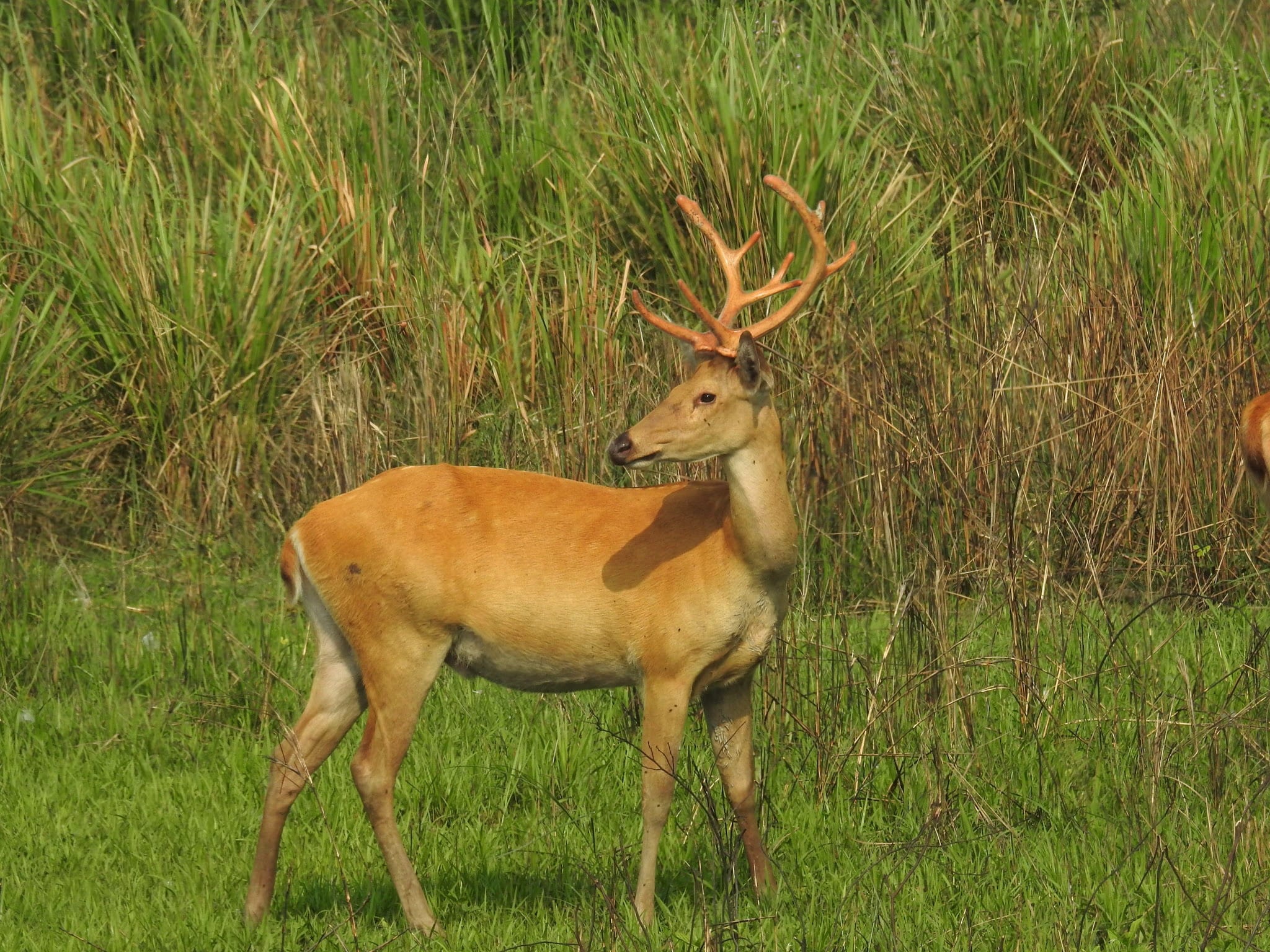
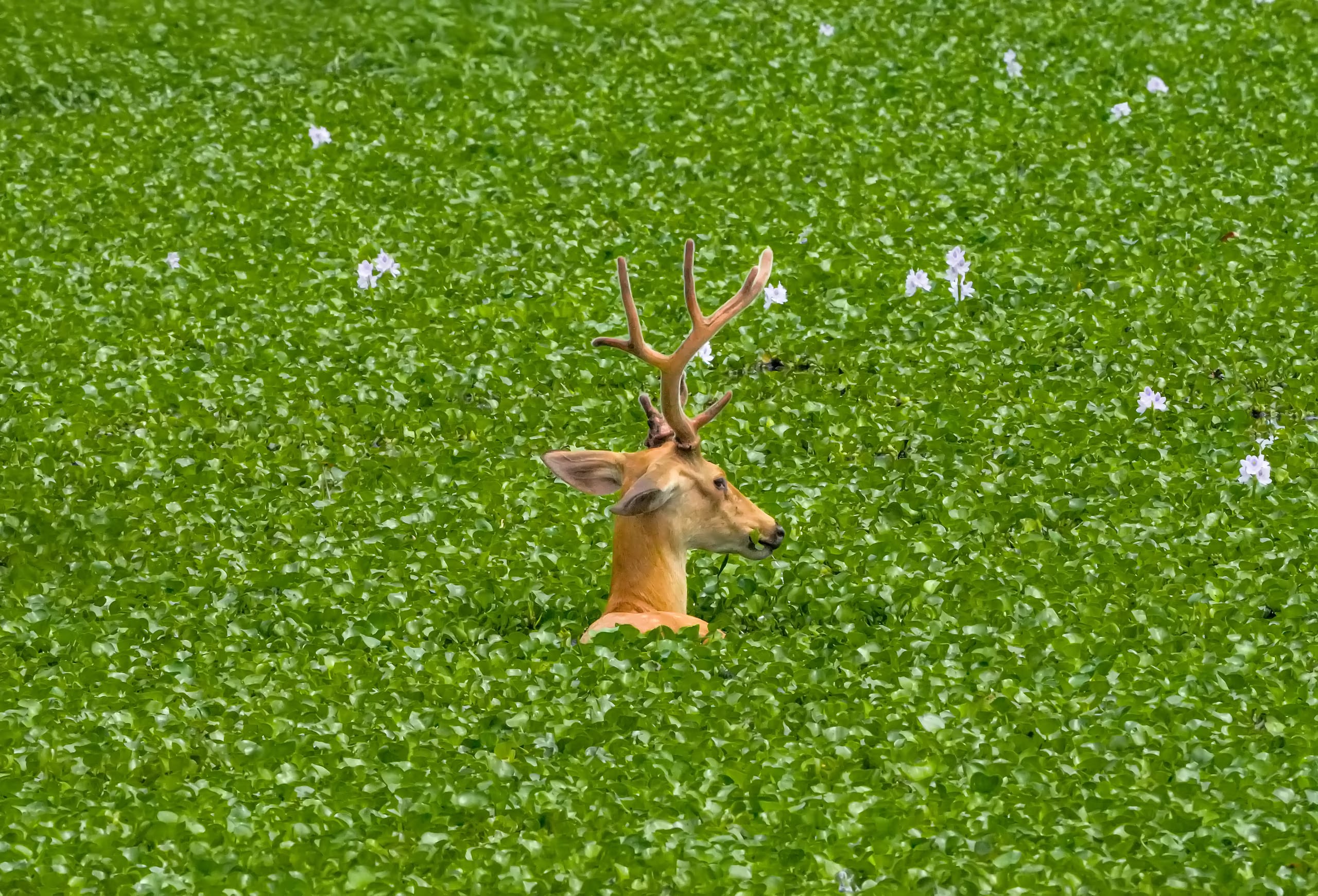
An eastern swamp deer stag with antlers raised above a green water-meadow of floating vegetation in Kaziranga National Park
Plate 3.Eastern swamp deer. An eastern swamp deer stag in a green water-meadow. The subspecies is now effectively restricted to Kaziranga, where wetlands and grassland sustain it.Photograph: Donvikro · CC BY-SA · Wikimedia Commons

From reserve to World Heritage Site

The conservation history begins in the colonial period. In the conventional founding story, Mary Curzon, wife of the Viceroy Lord Curzon, travelled to Assam in 1904 to see rhino and found none, and her concern, conveyed to her husband, helped prompt the forest administration to act. The Kaziranga Proposed Reserve Forest was notified in 1905, considerably smaller than the present park. Reserve Forest status forbade hunting but built no real protection regime, and recovery began only after the upgrade to a Game Sanctuary in 1916.

I have come back without seeing one. It seems they are not to be found here either. Something must be done.
Words attributed to Mary Curzon, 1904, paraphrased from the family correspondence and from P.D. Stracey, Wild Life in India (1963). The precise wording is disputed.

From there the park was re-statused step by step as the law itself changed, each stage adding administrative force. Arupjyoti Saikia sets this trajectory within the wider forest and ecological history of Assam. It became a Wildlife Sanctuary in 1950 and gained full National Park status under the Assam National Park Act, 1968, formally notified on 11 February 1974. It was inscribed on the UNESCO World Heritage List in 1985, for its ecological processes and its habitats of threatened species, and declared a Tiger Reserve in 2006-07, part of the wider conservation turn in the state's recent history.

A century of recovery, and its limits

The rhino censuses tell the institutional story in a single column. At the start of the twentieth century, there were an estimated 200 individuals across the northeast, and across the decades the Kaziranga population alone climbed to over 2,600 in the 2022 census. This is the headline conservation success of South Asia, and Kaziranga is where most of it was produced. Forest officers and naturalists such as P.D. Stracey and E.P. Gee, and the photographer Robin Banerjee, did much to make the rhino's cause legible to a wider public through their writing and images.

That success has not closed the story so much as raised the stakes of keeping it. Flooding has intensified, and the worst recent years have drowned rhinos, deer, and elephants in numbers that undo a season's gains. Poaching for rhino horn rises and falls in cycles rather than ending. And the buffer with the Karbi Anglong plateau, the high ground the animals depend on during the flood, is under steady development pressure from highway and infrastructure projects along the southern boundary, narrowing the very corridor the flood makes essential. The institutions that carried Kaziranga through one century are visibly under load as the second begins.

The four ranges

For the visitor, Kaziranga is not one place but four. The park is divided into tourism ranges. Each has its own gate, its own character of country, and its own likeliest sightings, and a serious visit takes in more than one. The Kohora or Central Range is entered from Mihimukh on the main highway. It is the busiest and the classic introduction: open grassland and beels close to the road, the surest rhino-watching anywhere, with elephant and, with luck, tiger. The Bagori or Western Range, a short way west, is the other great grassland circuit. It is wide and easy to scan, heavy with rhino and wild buffalo and crossed by large herds of hog deer. Many regard its early-morning light over the grass as the finest in the park.

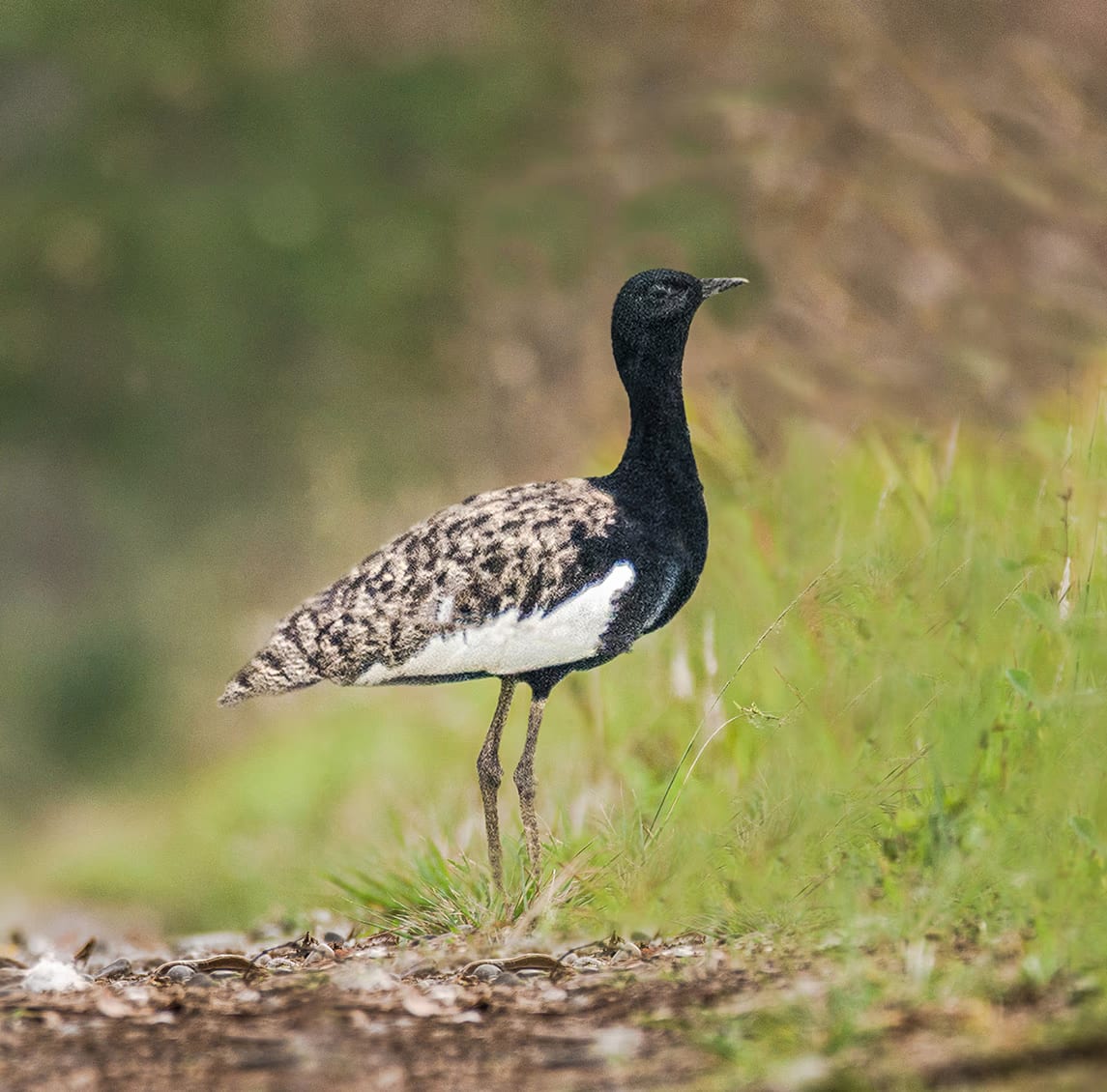
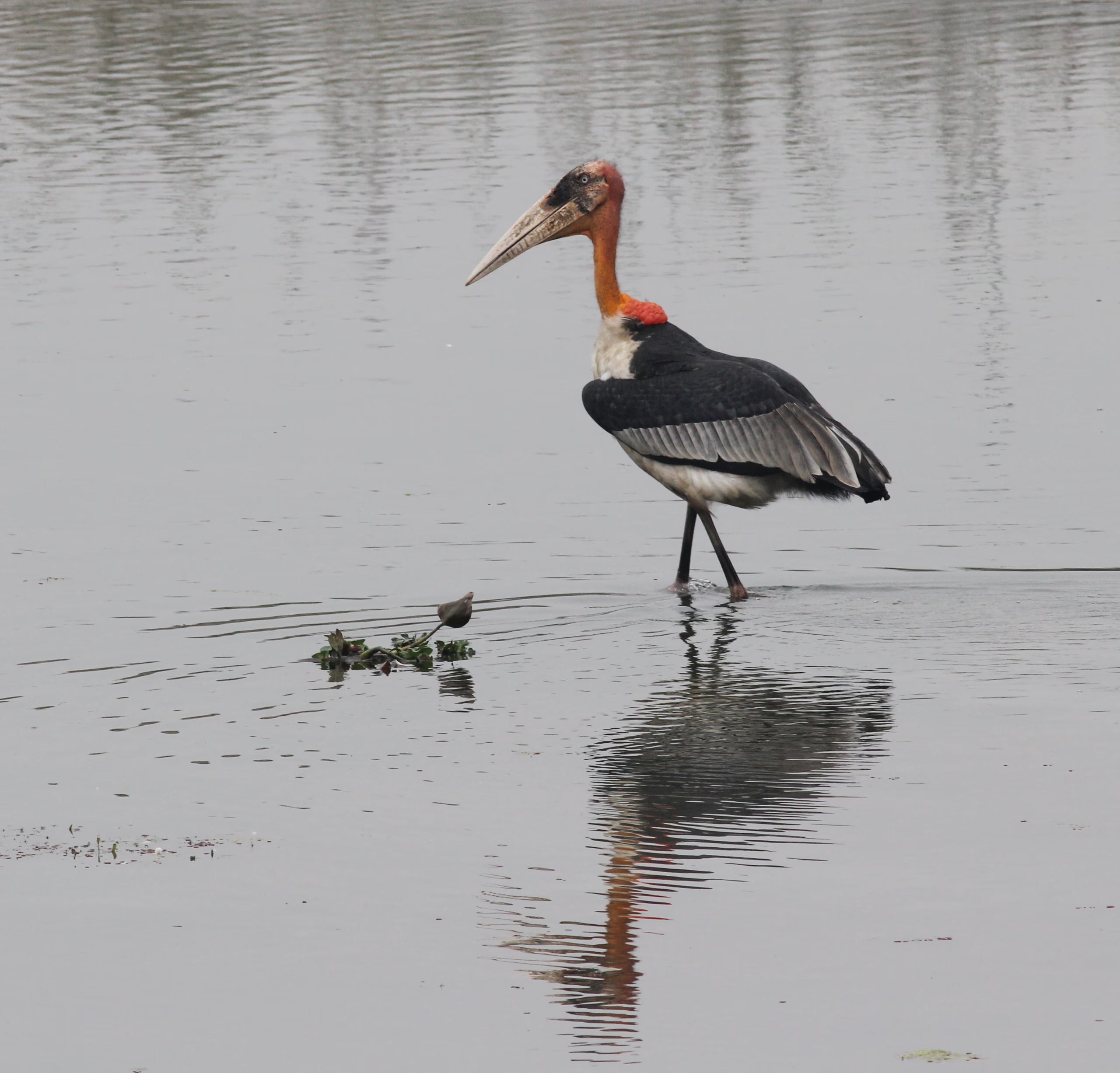
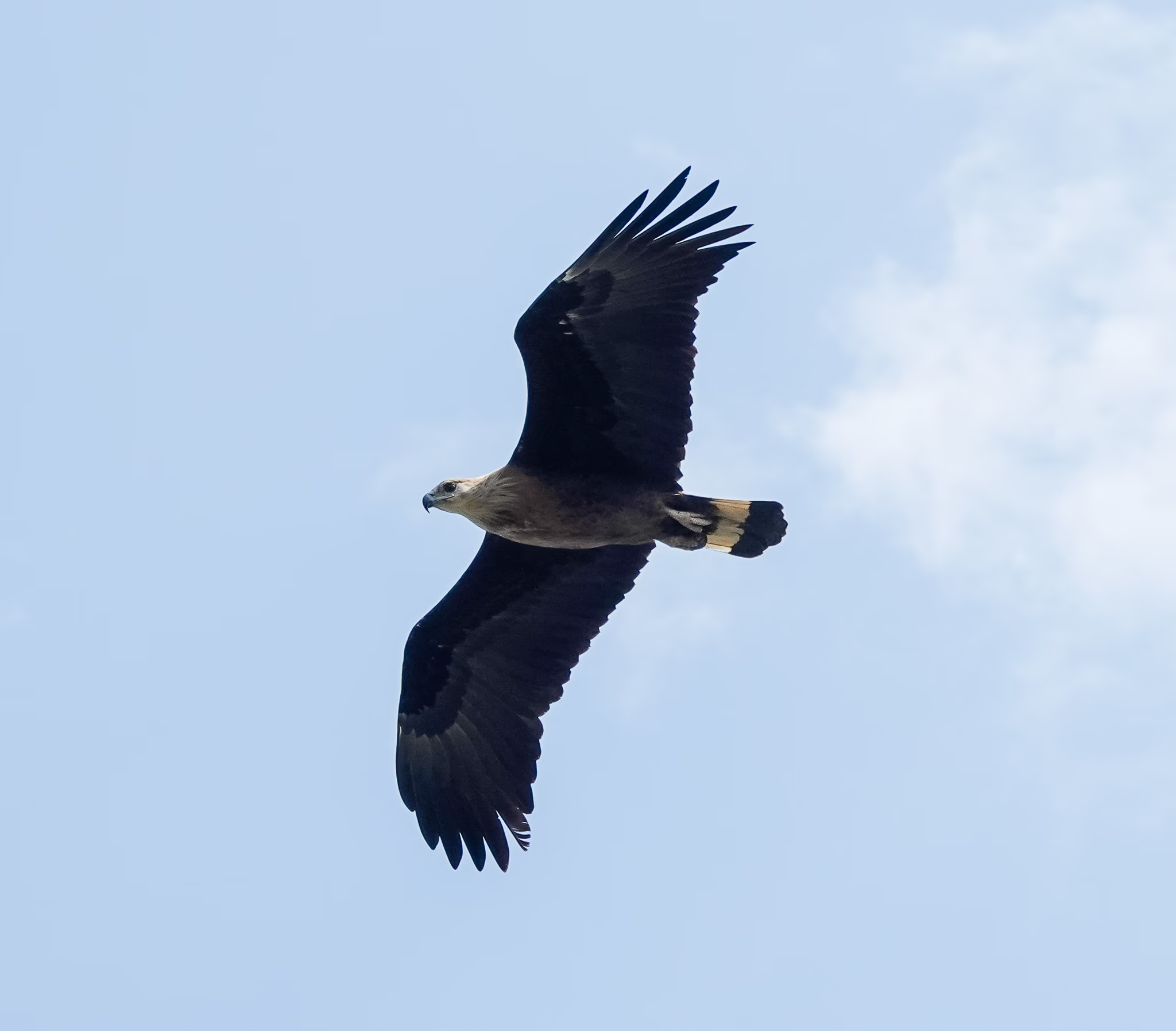
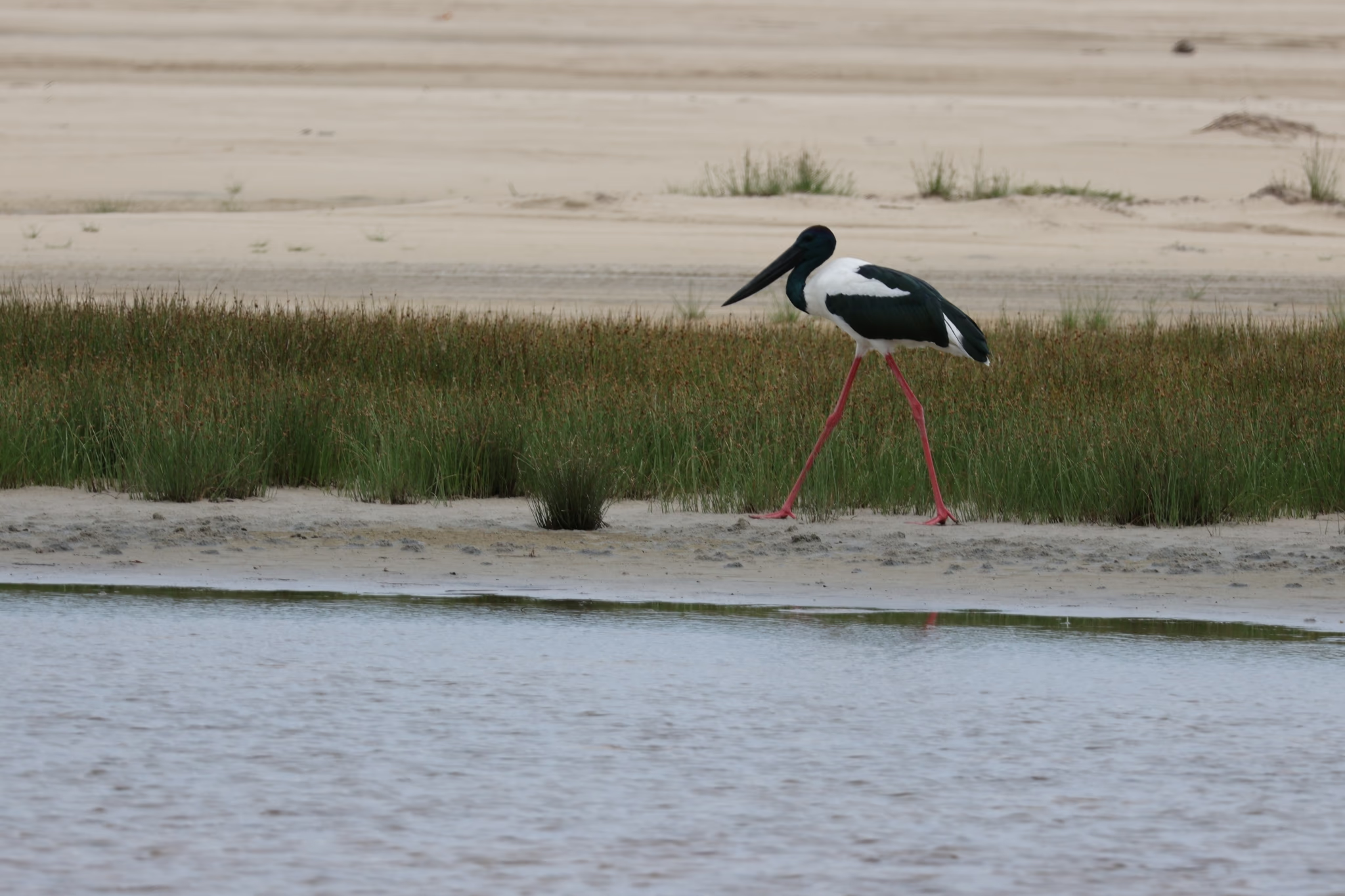
The Agoratoli or Eastern Range, reached further east, is the quiet, watery one. It is a mosaic of beels and woodland that is the park's birding heart. Pelicans, storks, eagles, and the winter migrants gather on its lakes, the crowds thin out, and rhino and buffalo come down to the water. The floodplain grass is also one of the best places on earth to find the rare and declining Bengal florican, a bustard of the wet grassland.
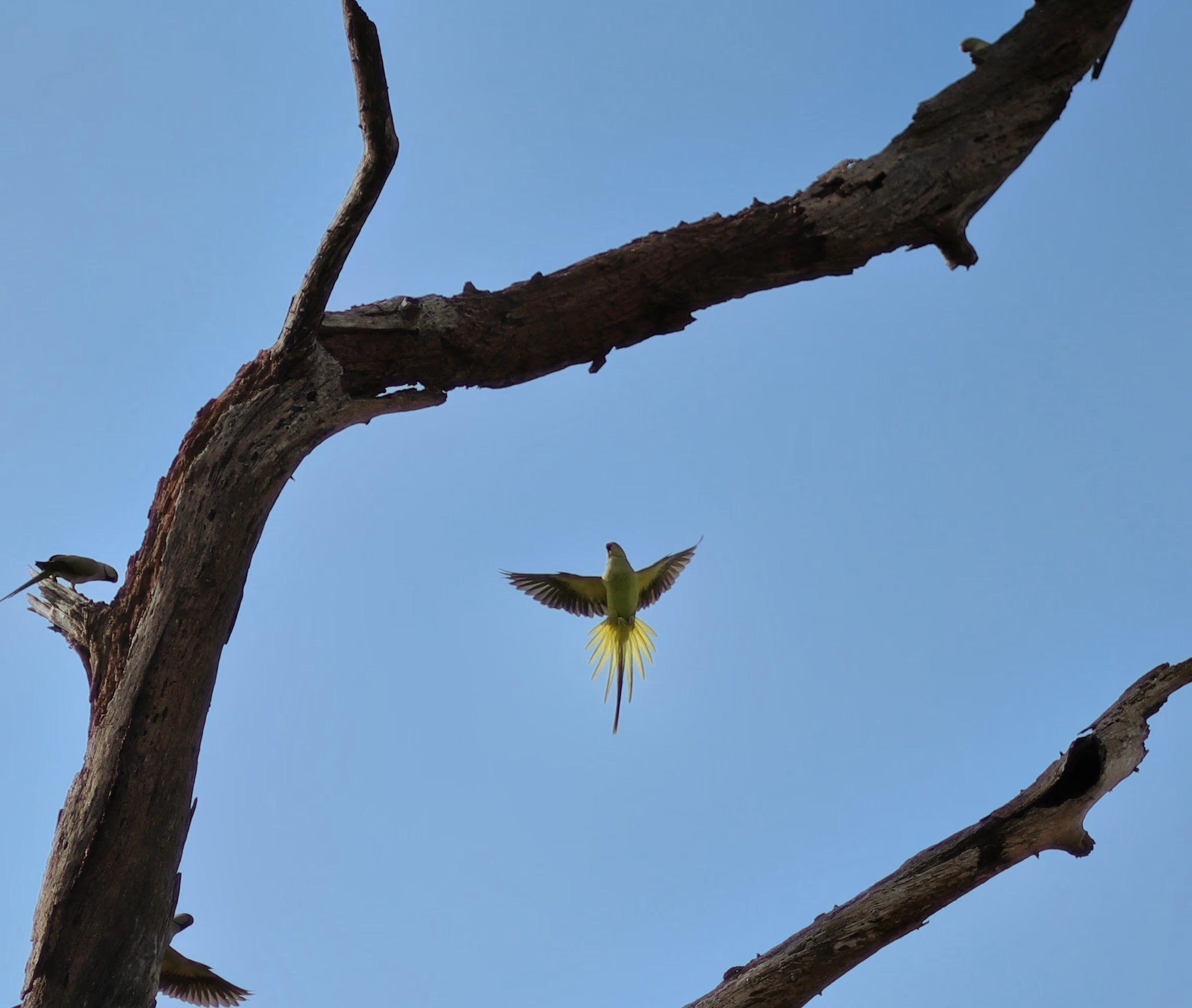
Two long-tailed green parakeets in flight against a clear blue sky around a bare, weathered tree, one bird below with wings and yellow-edged tail fully spread, others perched on the dead branches
Plate 4.Parakeets in the Agoratoli range. Parakeets about a dead tree in the Agoratoli range, the watery eastern corner of Kaziranga that is the park's birding heart, where the lakes draw pelicans, storks and eagles.Photograph: Monimoy Bujarbaruah · CC BY-SA · Storied Assam

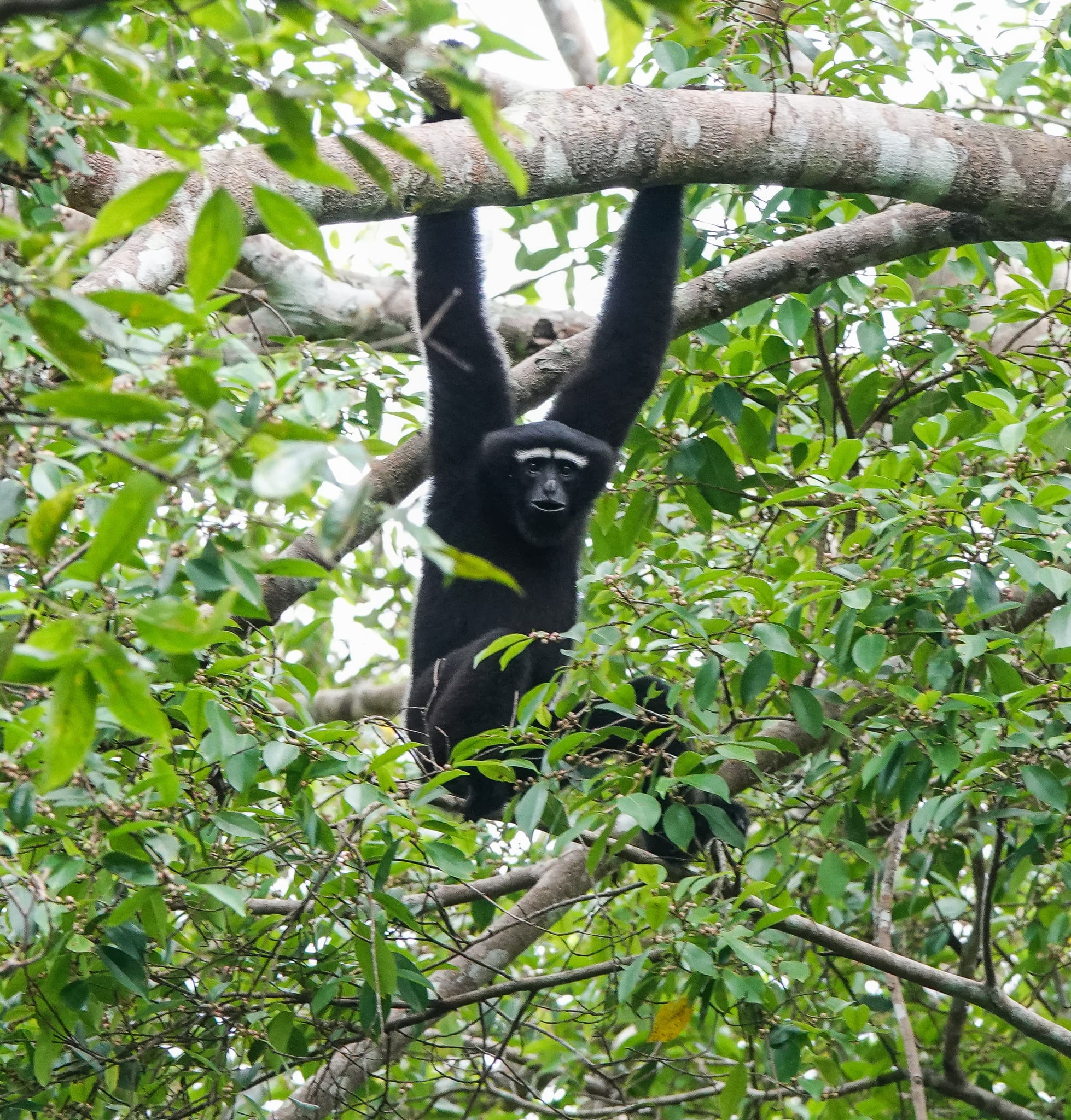
The Burapahar Range, at the western end, is entered through the Ghorakati gate. It is the odd one out, hilly and forested rather than flat grassland. It is the place to look for primates, including the hoolock gibbon, India's only ape, and for forest birds such as the hornbills and the white-cheeked partridge. Between them the four ranges hold nearly the whole range of the park's habitats. That is why no single safari sees all of Kaziranga.
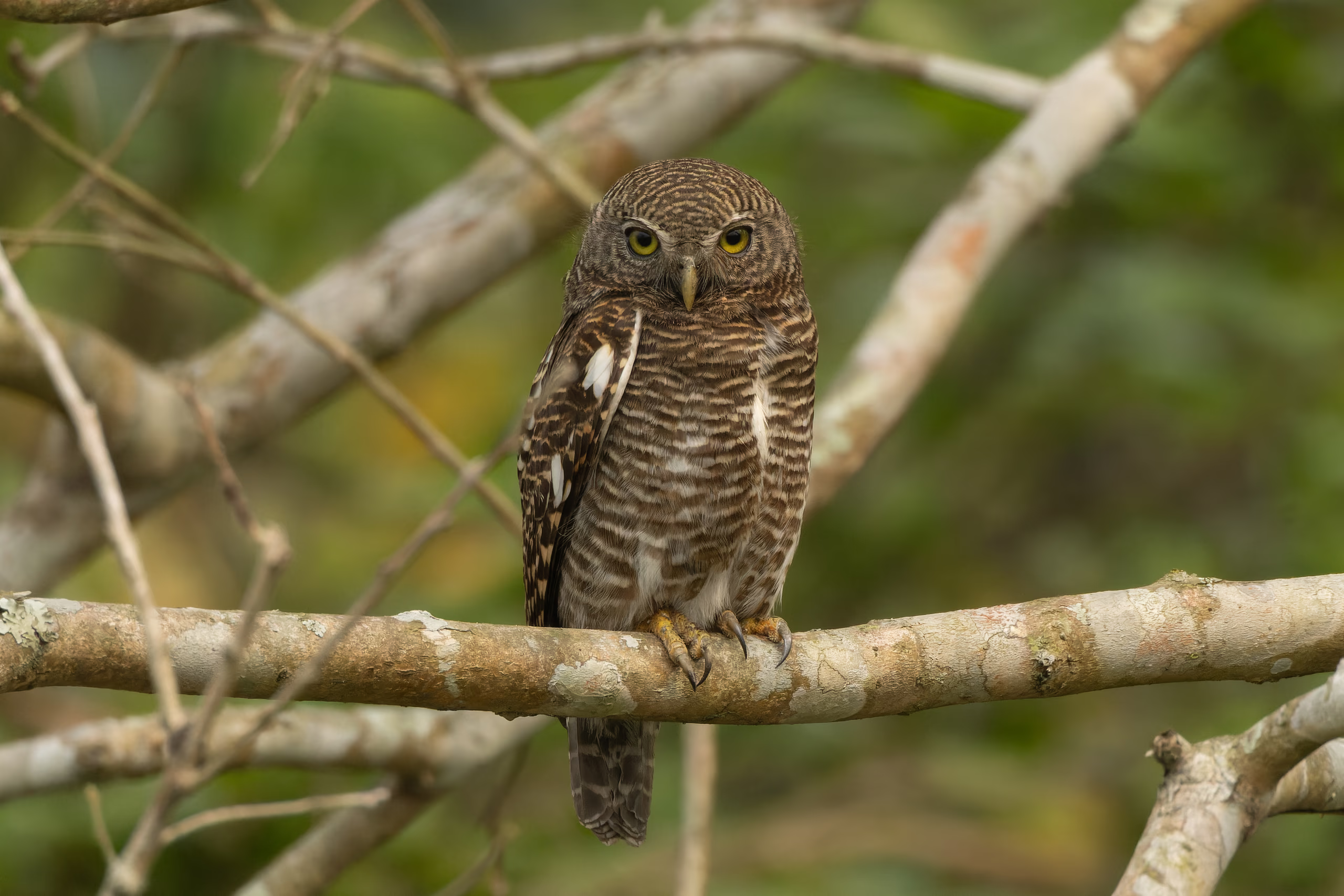
An Asian barred owlet perched on a lichen-covered branch, facing the camera with both bright yellow eyes, its finely barred brown-and-white plumage sharp against soft green foliage
Plate 5.An Asian barred owlet in the forest. An Asian barred owlet (Glaucidium cuculoides) watches from a branch. Beyond the rhinos, Kaziranga is a great birding ground, holding well over 450 recorded species.Photograph: Tisha Mukherjee · CC BY-SA · Wikimedia Commons

Visiting

Kaziranga lies along the Brahmaputra in central Assam, on the main road between Guwahati and Jorhat. It is an easy half-day's drive from either, and most lodges cluster around Kohora. The park is open in the dry season, roughly November to April, and closed through the monsoon flood. Game-viewing is by jeep safari in all four ranges, in a morning and an afternoon slot of one to three hours each. It is also by elephant-back ride at dawn in the Kohora and Bagori ranges, where it is permitted. The early morning, with the mist still on the grass, is the prime time. Permits, vehicles, and an armed forest guard are arranged through the range office or a lodge. The species catalogue below lists what may be seen, with best months and conservation status.
Relevant stories1

The narratives that run through this page. Each weaves several people, places and kingdoms into one story, follow any of them and keep pulling the thread.

The River That Made Assam

The wild Brahmaputra and the land

Assam is the land the Brahmaputra made. Follow the great river from a Tibetan glacier to a modern monsoon, and the whole valley assembles around you.

Notable species16

A selection of the species this place is known for, not an exhaustive list. Tap any card for a longer description and the best months to see it.

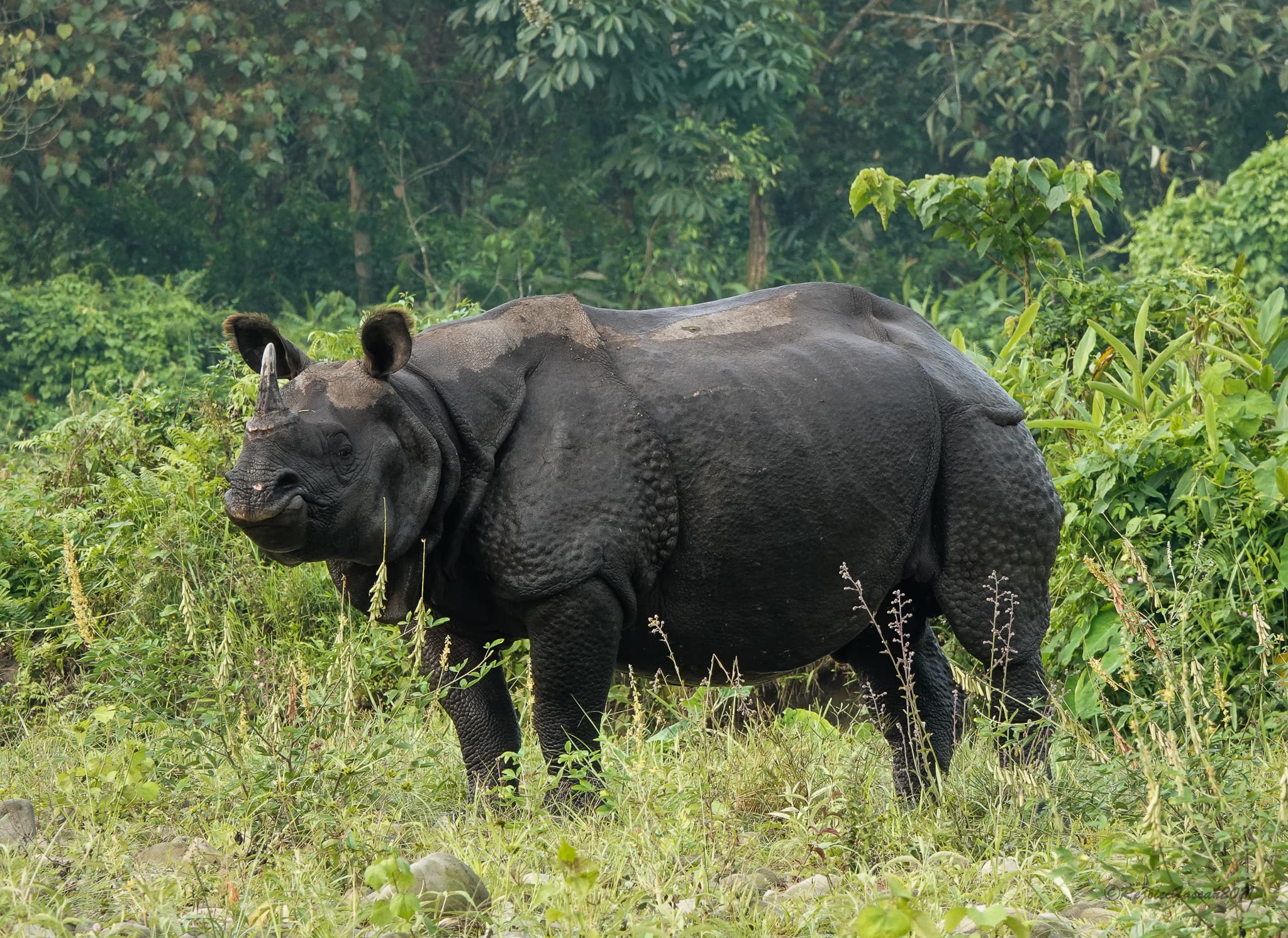
A greater one-horned rhinoceros standing broadside in grassland, its single horn and folded armour-plate skin clearly visible
Mammals
VU

Indian One-Horned Rhinoceros

Rhinoceros unicornis· Gor

Single horn, armoured-plate skin; the great grazer of Assam's floodplain grasslands.

An adult Bengal tiger, orange coat marked with black vertical stripes and a white belly, striding in profile through tall golden grass
Mammals
EN

Royal Bengal Tiger

Panthera tigris tigris· Bagh

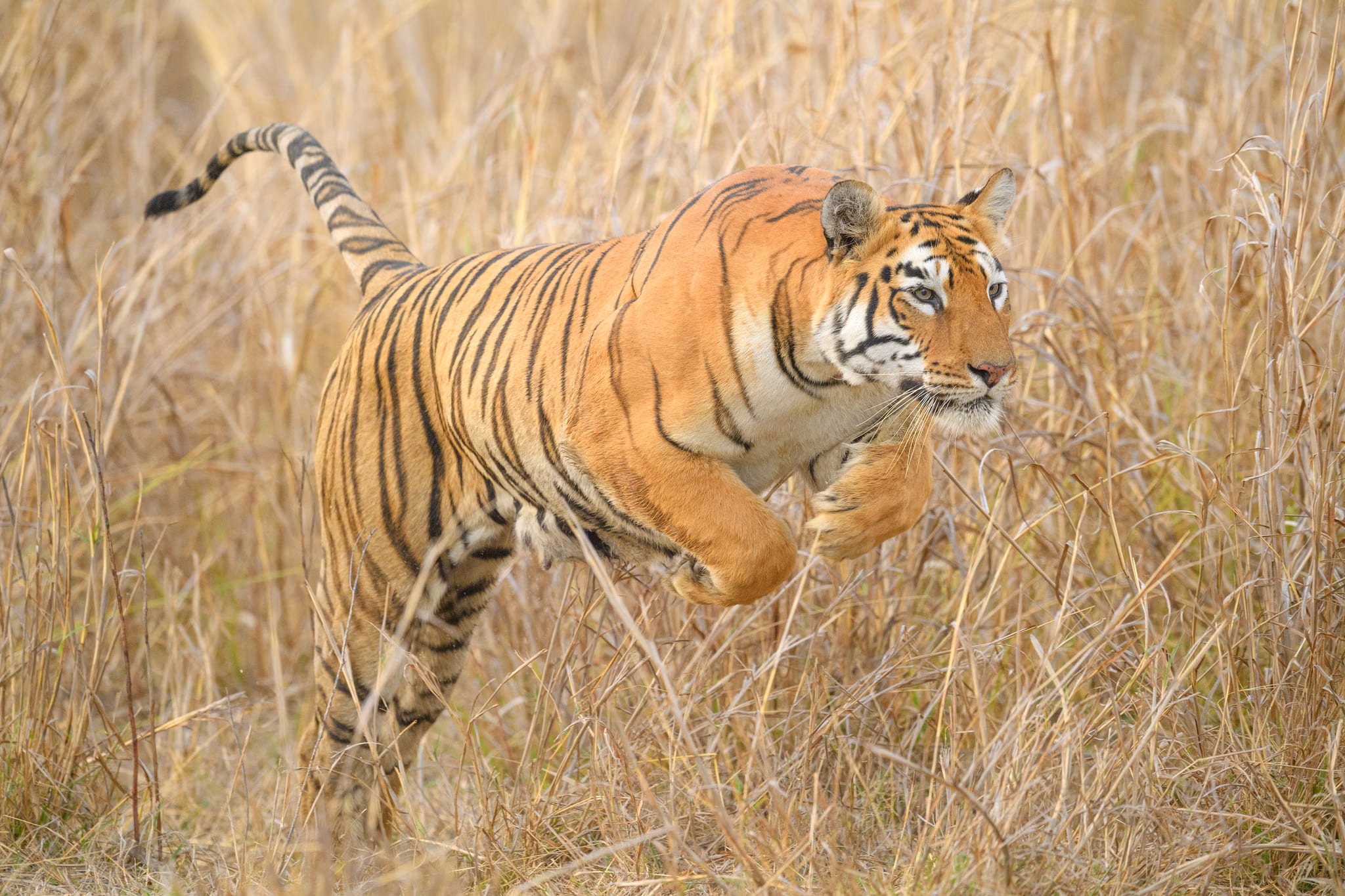
Top predator of Assam's grasslands and forests; rarely seen.

An adult female Asian elephant walking a leaf-strewn forest floor with two calves close at her side, dappled forest behind.
Mammals
EN

Asian Elephant

Elephas maximus· Hati

Matriarchal herds ranging across Assam's forests and grasslands.

A massive grey-black wild water buffalo stands broadside in open green grassland, head turned toward the camera, its very wide crescent of pale-tipped horns sweeping out against a hazy backdrop of a wetland and distant low hills.
Mammals
EN

Wild Water Buffalo

Bubalus arnee

True wild buffalo, distinct from domestic stock. Massive horns.

A reddish-brown swamp deer stag standing in profile in tall grassland, its head raised, carrying a pair of slender, many-tined branched antlers
Mammals
VU

Eastern Swamp Deer

Rucervus duvaucelii ranjitsinhi· Dolharina

Barasingha of the eastern floodplain. Now restricted to Kaziranga.

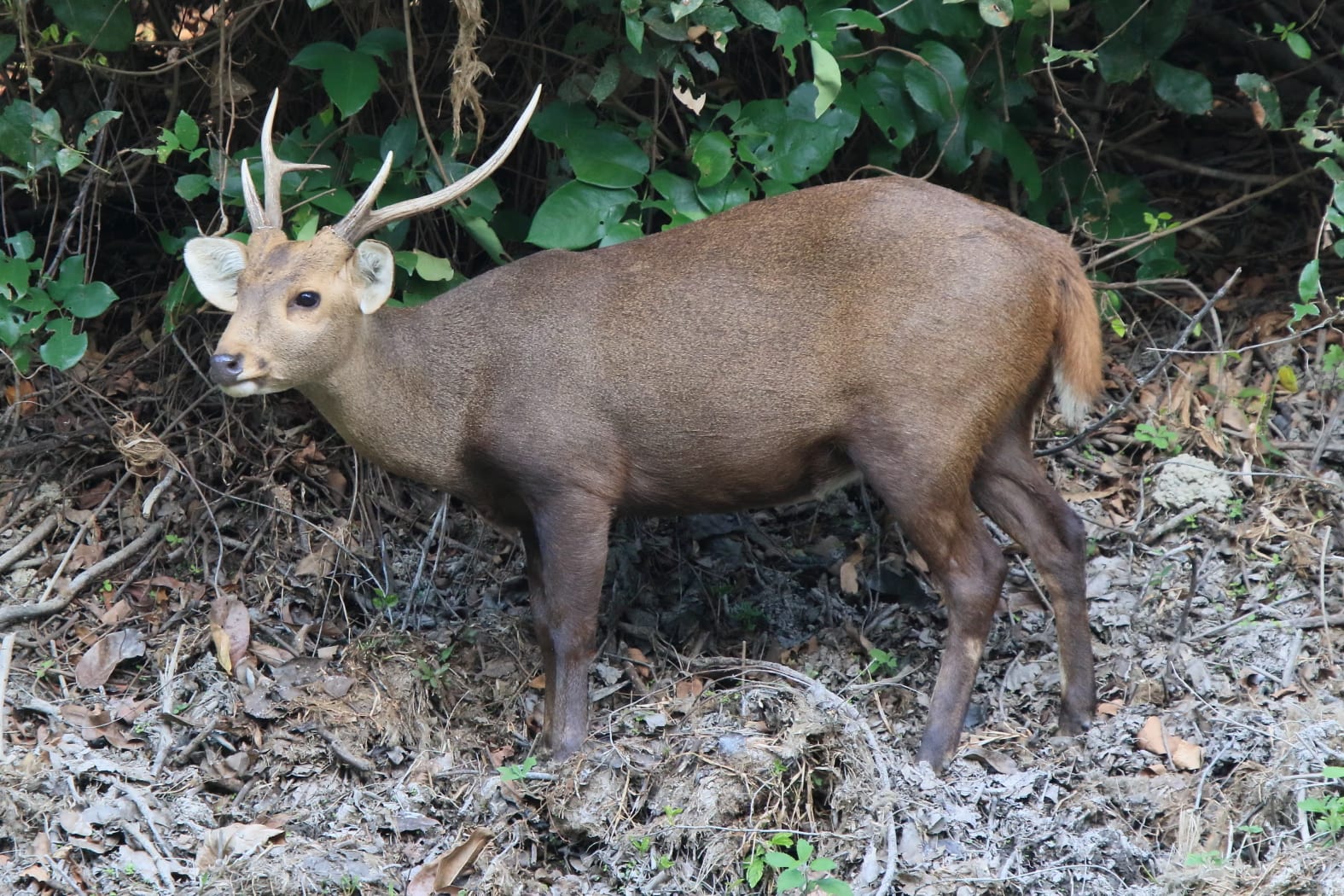
A small, low-slung brown deer standing in profile at the edge of grassland and scrub, with simple slender antlers and a stout hog-like body.
Mammals
EN

Hog Deer

Axis porcinus

Compact grassland deer, often seen feeding in small groups.

A black, tail-less ape with very long arms hangs by both hands from a forest branch, a white band across its brow above a dark face, surrounded by green canopy leaves
Mammals
EN

Western Hoolock Gibbon

Hoolock hoolock

India's only ape. Loud territorial song at dawn.

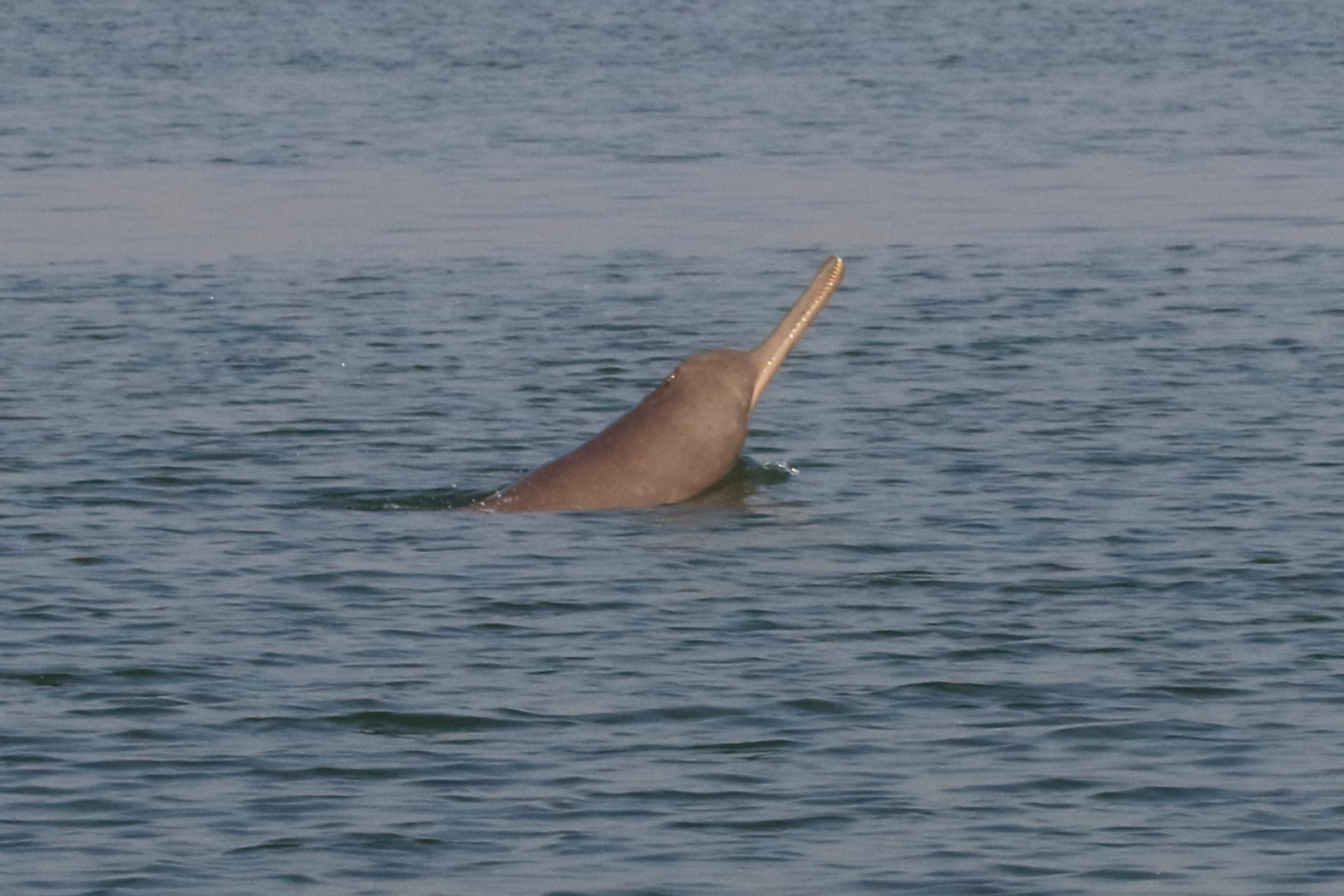
A grey-brown river dolphin surfacing in calm water, its long narrow beak and rounded forehead lifted clear above the body, with a low ridge along the back
Mammals
EN

Gangetic River Dolphin

Platanista gangetica· Sihu

India's national aquatic animal. Surfaces sideways in the Brahmaputra.

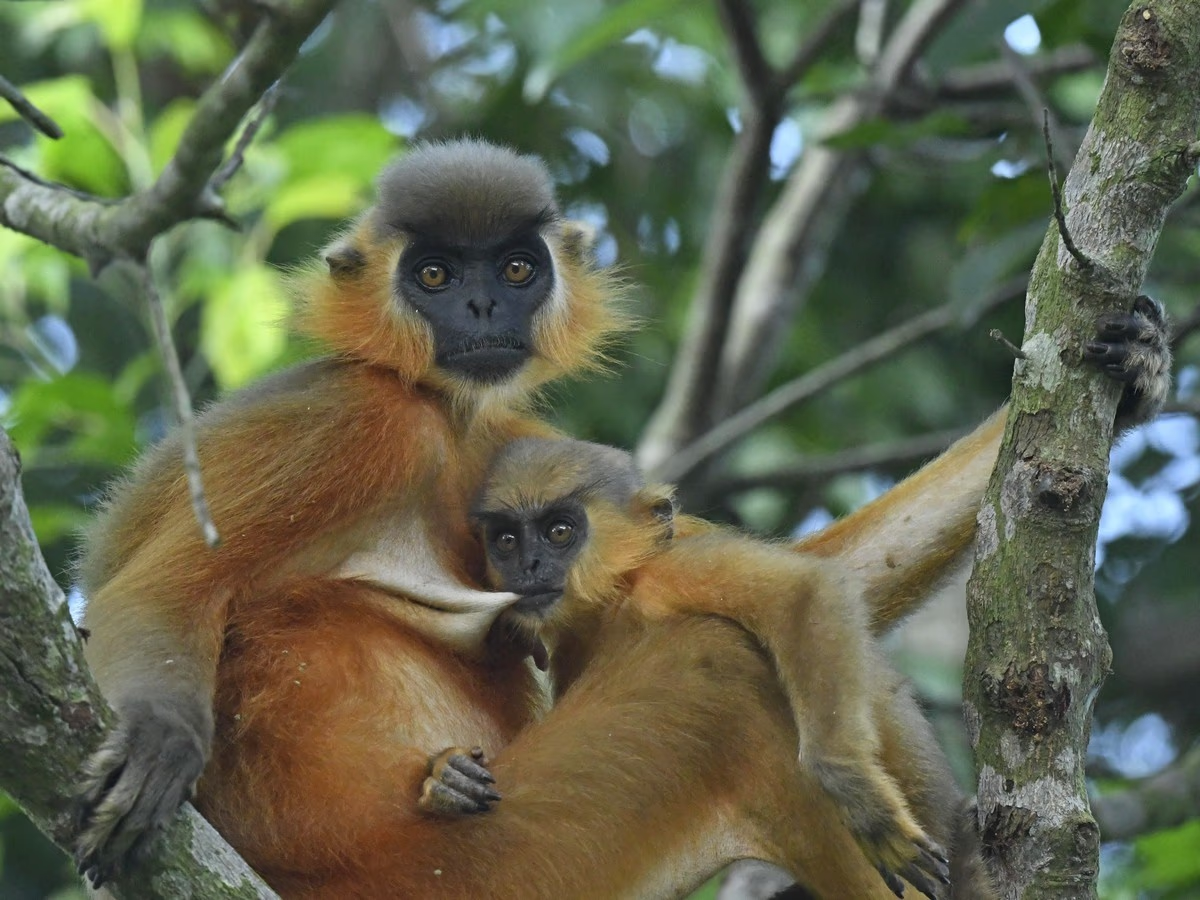
An adult capped langur with a dark grey crown cap, dark bare face and golden-orange underparts perched in a tree, clutching an infant against its chest, its long tail trailing down a branch.
Mammals
VU

Capped Langur

Trachypithecus pileatus

Arboreal leaf-monkey of the riverine and foothill forests of the east.

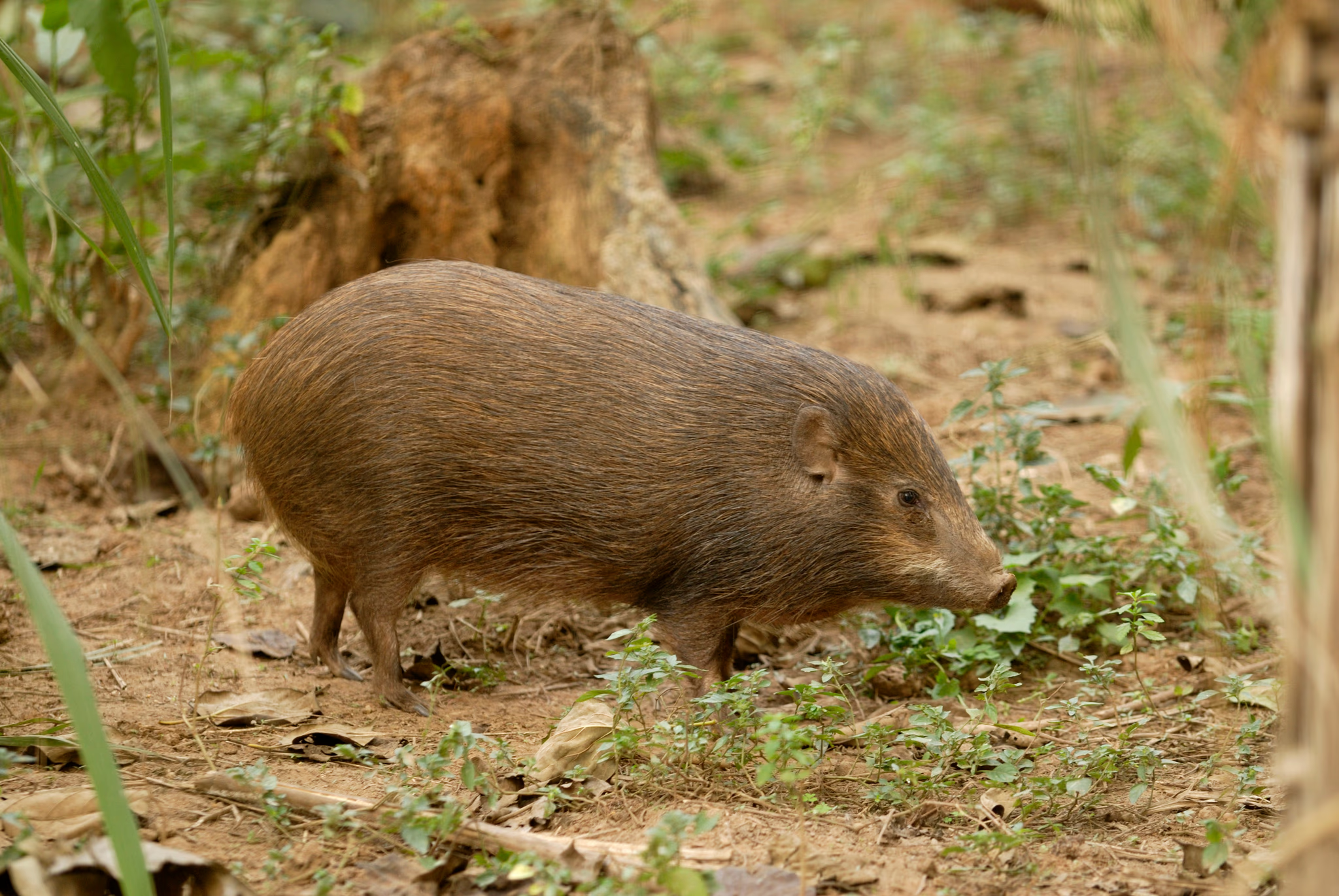
A small dark-brown wild pig in side profile, standing on bare earth among grass and leaves, with a short pointed snout, small ears and short legs
Mammals
EN

Pygmy Hog

Porcula salvania

World's smallest and rarest wild pig; a flagship of the Manas grasslands.

A breeding male Bengal florican stands in profile on a grassy verge: jet-black head, neck and underparts, a buff-and-black finely mottled back, a bold white wing panel along the folded wing, and long bare legs.
Birds
CR

Bengal Florican

Houbaropsis bengalensis

Critically endangered grassland bustard. Spectacular display flight.

A greater adjutant stork wading in shallow open water, its heavy wedge-shaped bill, bare pinkish head, orange neck pouch and dark folded wing-cloak over pale underparts mirrored in the still surface
Birds
EN

Greater Adjutant Stork

Leptoptilos dubius· Hargila

Massive, prehistoric-looking stork. The Hargila of Guwahati.

A large eagle in flight against a pale sky, wings spread, with a buff-pale head, dark brown body, and a broad white band across its dark tail
Birds
EN

Pallas's Fish-Eagle

Haliaeetus leucoryphus

Endangered fish-eagle. Pale head, dark body, deep-water hunter.

A tall black-necked stork strides along a grassy sandbar at the edge of shallow water; glossy black head and neck, white body, dark folded wing, heavy black bill and long pinkish-red legs.
Birds
NT

Black-necked Stork

Ephippiorhynchus asiaticus

Tall, glossy black-and-white stork with a heavy black bill.

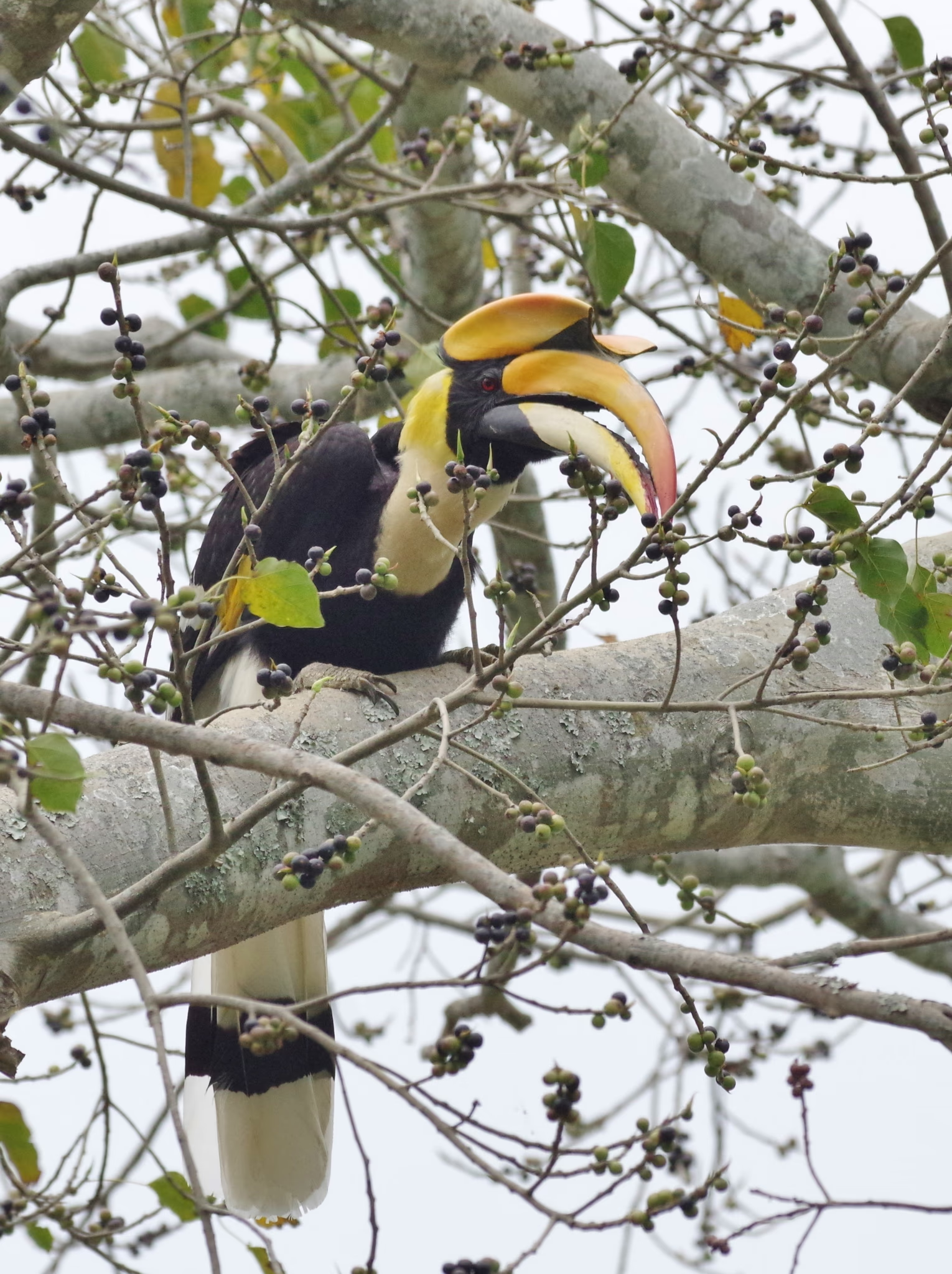
A great hornbill perched among fruiting fig branches against a pale sky, its massive yellow bill topped by a concave yellow casque, with glossy black plumage and a white lower belly and tail.
Birds
VU

Great Hornbill

Buceros bicornis· Roja-dhonex

India's largest hornbill. Casque, deep flight whoosh, fruit-disperser.

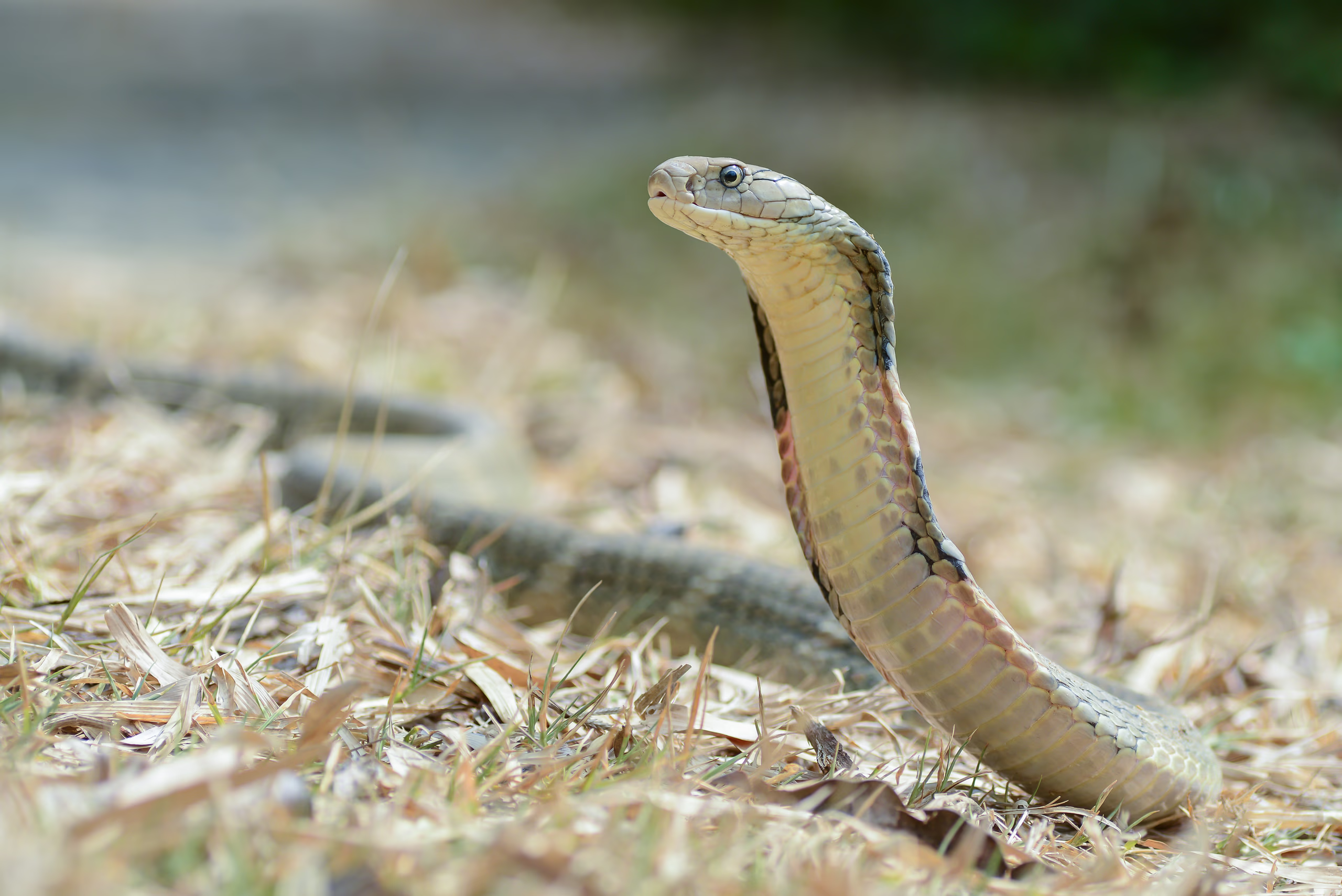
An adult king cobra rears its raised forebody off the dry forest floor, holding its head up with the narrow, elongate hood of the neck slightly spread; the snake is olive-tan to grey-brown with faint darker crossbands, its long body trailing across pale dry grass.
Reptiles
VU

King Cobra

Ophiophagus hannah· Sankhachur

World's longest venomous snake. Eats other snakes.

Conservation status for each species follows the IUCN Red List of Threatened Species , click any status badge for that species' assessment. This park's World Heritage designation is recorded in its UNESCO inscription. This is a selection of the place's notable species, not an exhaustive list; population notes are kept qualitative and it is open to correction.