Assamese cuisine is framed between two poles, khar, the alkaline preparation, and tenga, the light sour curry, and a full meal is built to run between them. It opens with the khar as its first course, moves on through the greens, the dal and the fish, and closes on the tenga, ending clean and cool on the tongue. By older custom the two extremes were not served in the same meal at all, and though that strict rule has relaxed in most kitchens, the shape it describes still governs the everyday logic of Assamese cooking. To understand khar and tenga is to understand the whole of this food, minimally spiced and led by its ingredients, read directly off the river and the field rather than off the spice-box.
Khar, the alkaline dish
Khar gives Assamese cooking its name as much as its character, and the Assamese are affectionately called khar-eaters, khar-khowa, for their devotion to it. The traditional preparation is the kola khar, an alkaline filtrate whose name comes from kol, the local word for the banana, and the best of it is drawn from the bhim kol, the hardy stout plantain of the homestead. The cook burns the sun-dried skin or the pith of the banana trunk down to a pale ash, passes water slowly through it, and gathers the liquor that drips out. That liquor is the khar. It is not itself a dish but the agent that makes one, cooked into raw papaya and pulses, into a mash of greens, or into fish, most classically the fish head, and eaten first of all because it is held to open the appetite, cleanse the palate and ease the digestion of the meal to come.
The alkaline family runs wider than the single dish. The pungent kharoli is made from fermented mashed mustard sharpened with a little khar and a few drops of raw mustard oil, and the bitter xukoti, also written xôkôta, cooks the khar together with dry jute leaf and urad bean into one of the more austere tastes of the kitchen. In the villages the khar is a store-cupboard staple, kept ready in a bottle and reached for through the year, and where the banana-ash filtrate is not to hand the modern town kitchen falls back on ordinary cooking soda in its place, though every cook agrees the taste is not the same and the true kola khar has a roundness the shortcut cannot reach. This is the everyday cookery that B.K. Barua recorded among the customs of the Assamese, a food that carries a whole identity in a single filtered spoonful.
Tenga, the sour curry
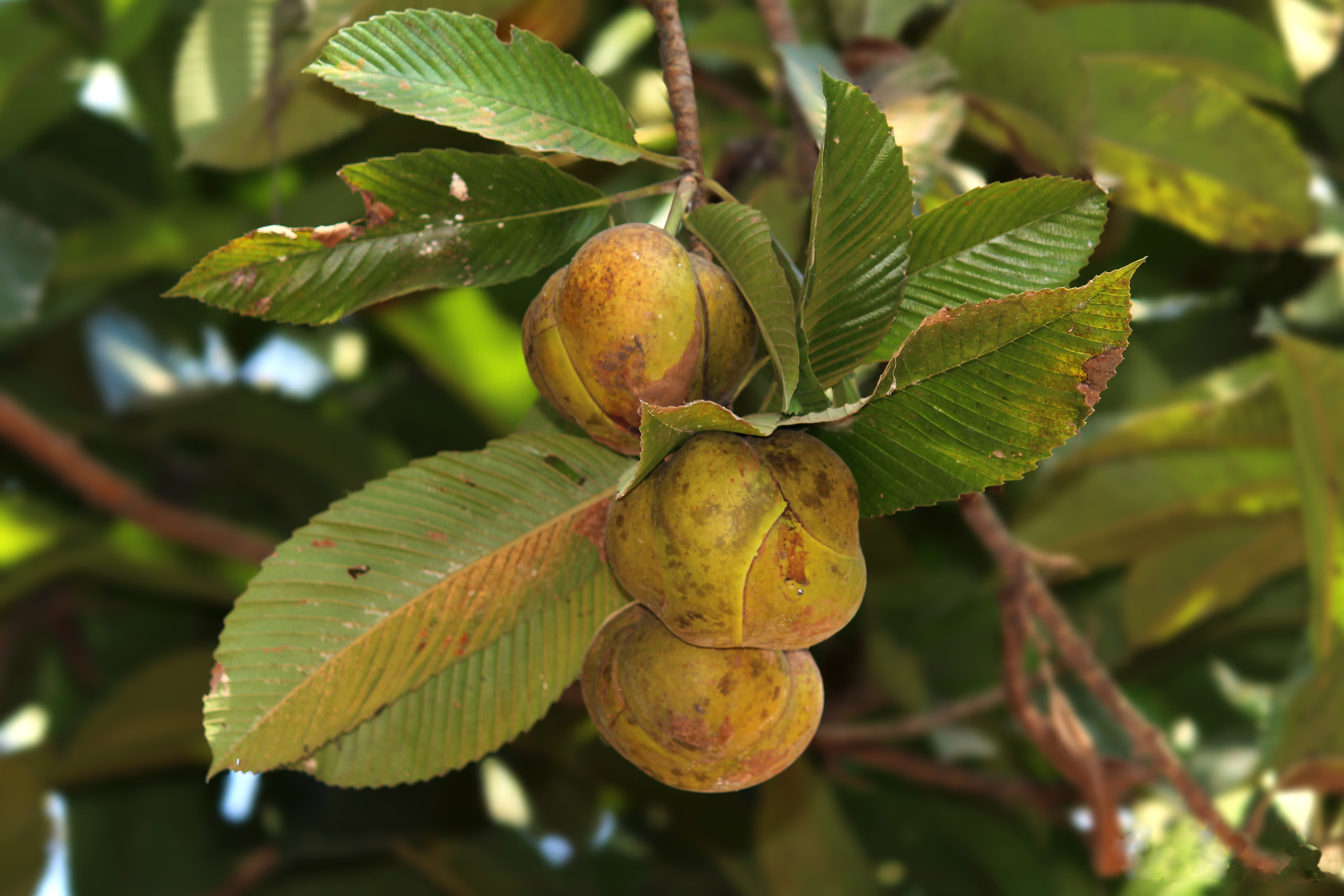
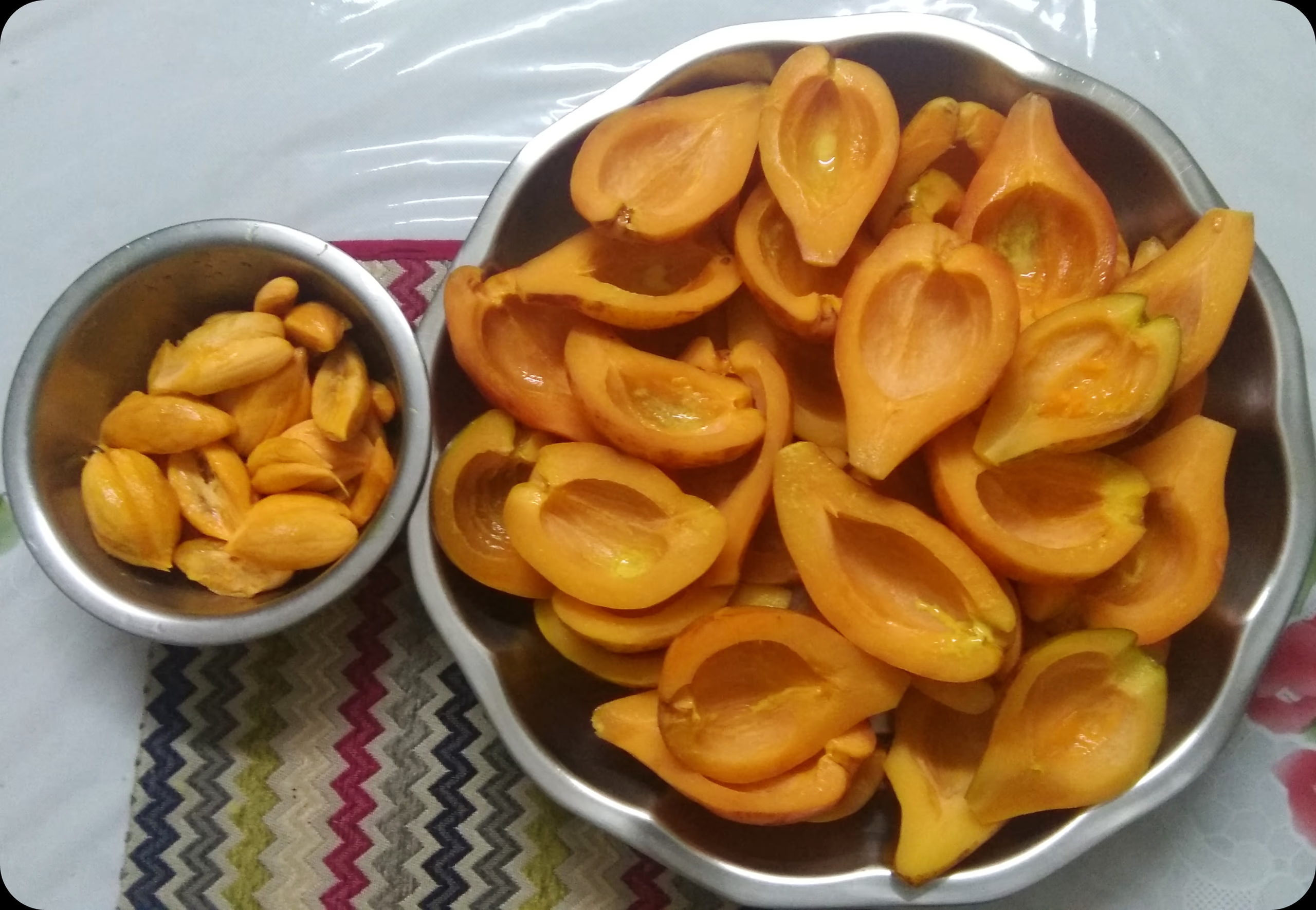
At the far pole stands tenga, the light and tangy curry that closes the meal, and its most celebrated form is the masor tenga, the sour fish curry that has become a signature of the entire cuisine. It is usually built on a river fish such as the rohu, cooked thin and clean with almost no oil and no heavy spice, so that everything turns on the source of its sourness, and in that choice the cook's hand shows. The sourness may come from the tomato, now the most common, or from the juice of the fat rough-skinned Assam lemon, the kaji nemu, or the dried mangosteen-rind thekera that villages sun and store for the year. It may come from tamarind, from the roselle leaf tengamora, from the starfruit kordoi, and above all from the distinctive elephant-apple, the ou-tenga, whose hard fragrant segments give the most prized sour curry of the season.
Cooling and astringent, tenga is the staple of the warm months, when it is eaten with the fermented cold rice poita bhat to carry a household through the heat, and it is the deliberate counterpoint to the alkaline khar at the other end of the meal. Between the two lies the balance that defines Assamese cooking, an interplay of the alkaline and the sour that is reached not through spicing but through restraint, letting a handful of clean tastes stand clear against the rice.
A cuisine of the river and field
Khar and tenga together express the deeper character of the food that lies between them. Its foundation is rice, the single most important ingredient of the valley, kept in many forms from the everyday boiled grain to the soaked and fermented poita and the scented winter joha, and next in weight after it comes freshwater fish, the near-universal protein of a plains kitchen set among rivers, ponds and flooded fields. Around that core sit the seasonal greens, the xaak, gathered wild and grown alike, among them the fiddlehead fern dhekia and the many mustard and herb leaves, and custom holds that a hundred and one different xaak are eaten together at the spring Rongali Bihu for the health of the coming year.
The cooking is dressed in pungent mustard oil and given the lightest possible hand with spice, and tellingly the frying of a spice paste in hot oil before the dish is built, the bhuna that anchors so much of Indian cooking, is largely absent here. The freshness of the ingredient is made to matter more than the complexity of the masala. Beside this savoury core sit the sharper fermented and smoked preparations of the plains, and the distinct smoked and leaf-wrapped hill kitchens of the tribal communities, while the festival days bring the sweet pitha and the great communal eating of Magh Bihu. A proper meal is served on bell-metal, the kanh ware of the valley, and it closes not on a sweet but on tamul-paan, the areca nut and betel leaf offered from the pedestalled xorai. In every part of it, from the ash-filtered khar to the elephant-apple in the fish, this is food read straight off the Brahmaputra's plenty.