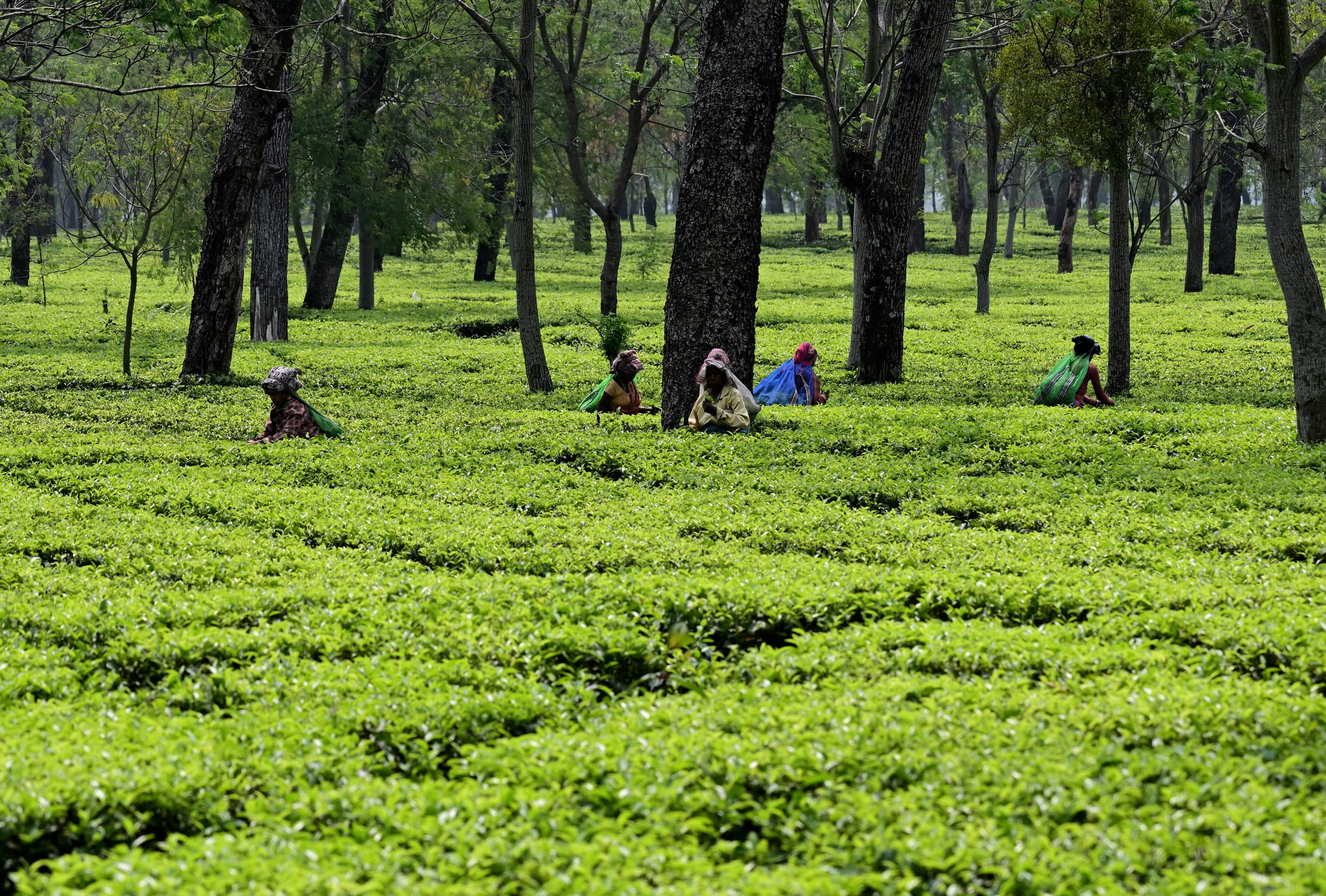
Assam is the largest tea-growing region on earth. The drink it gives the world is strong, bright, and maltily full-bodied. It is the base of the morning cup from Kolkata to London. The valley's tea is grown on the alluvial flats of the Brahmaputra. It comes from close to a thousand estates and the smallholdings around them. In volume, it is the single thing Assam is best known for abroad. Yet for all that it feels timeless, the industry is barely two centuries old. It was an invention of the colonial nineteenth century. It remade the economy, the landscape, and the very population of the region.
A plant already growing
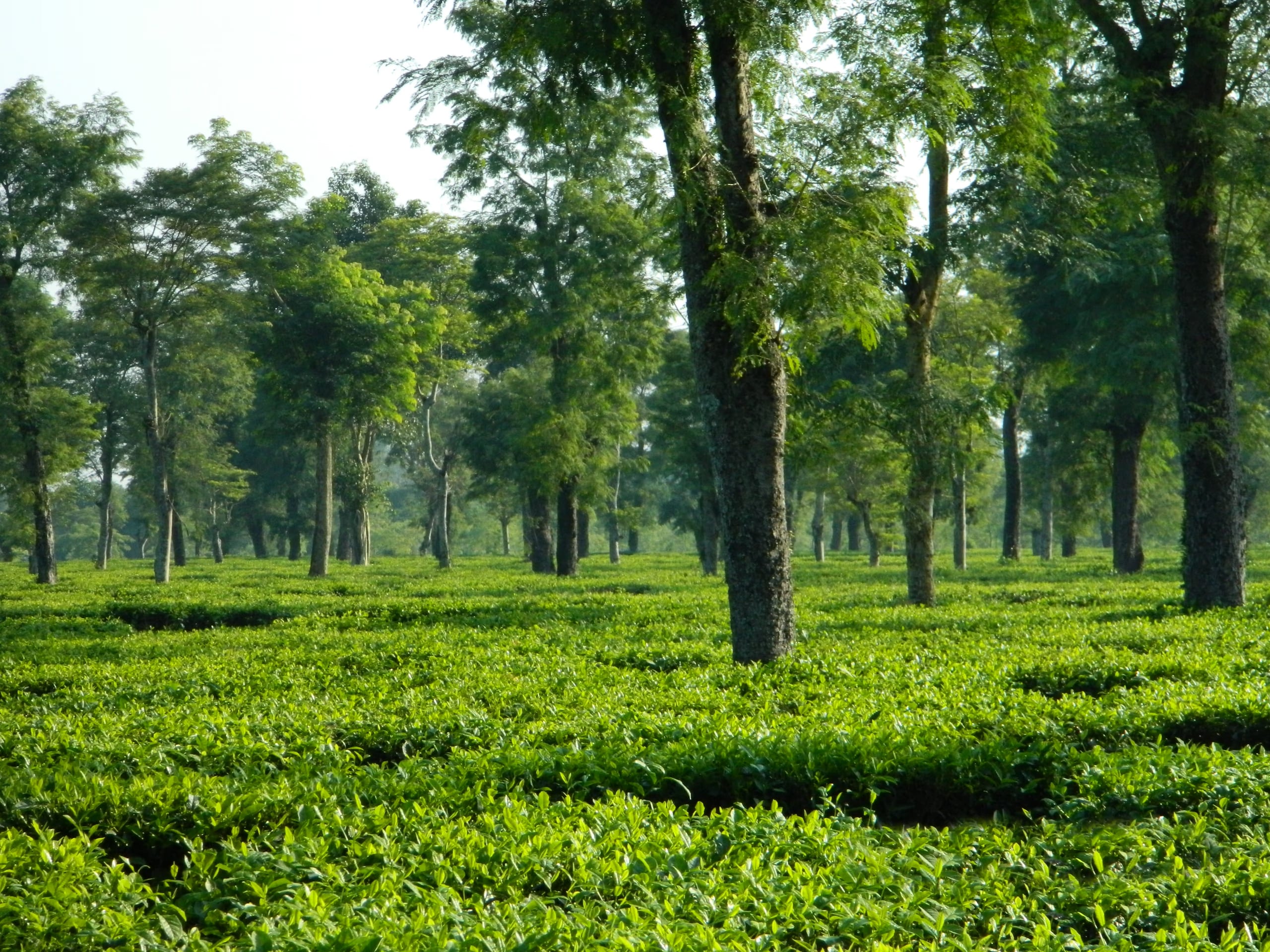
The story usually opens in 1823. The Scottish merchant-adventurer Robert Bruce was trading on the upper Brahmaputra. He learned that the Singpho people of the far east of the valley brewed a drink from the leaves of a wild plant they grew. The Assamese noble Maniram Dewan helped put him in touch with the Singpho chief who knew it. The plant was not the small-leafed China bush the world then took to be the only true tea. It was a large-leafed tree native to the valley, later named Camellia sinensis var. assamica. For years the East India Company's experts insisted that real tea could only be the China variety. A Tea Committee was formed in the 1830s, and the indigenous Assam plant was at last accepted as genuine tea. Only then did the colonial state grasp that it might break China's monopoly on a soil of its own.
The first gardens and the Assam Company
The first English experimental gardens were laid out from 1837 in upper Assam, at Chabua. The very name joins the Assamese words for tea and planting. It was the unmarked cradle of the industry. Encouraging results sent the first chests of Assam tea to a London auction. On the strength of them the Assam Company was floated in London in 1839. It was the first joint-stock company in the world formed to grow tea commercially. Its early years were close to catastrophe. Sickness, mismanagement, and ruinous losses nearly sank it. But it survived, turned a profit in the 1850s, and proved that tea could be grown for the market in Assam. Among the first Indians to grasp the opportunity was Maniram Dewan. He opened his own gardens at Cinnamara near Jorhat and so became the first Indian tea planter. The Company's hostility and his part in the rising of 1857 later brought him to the gallows.
The rush and the making of a landscape
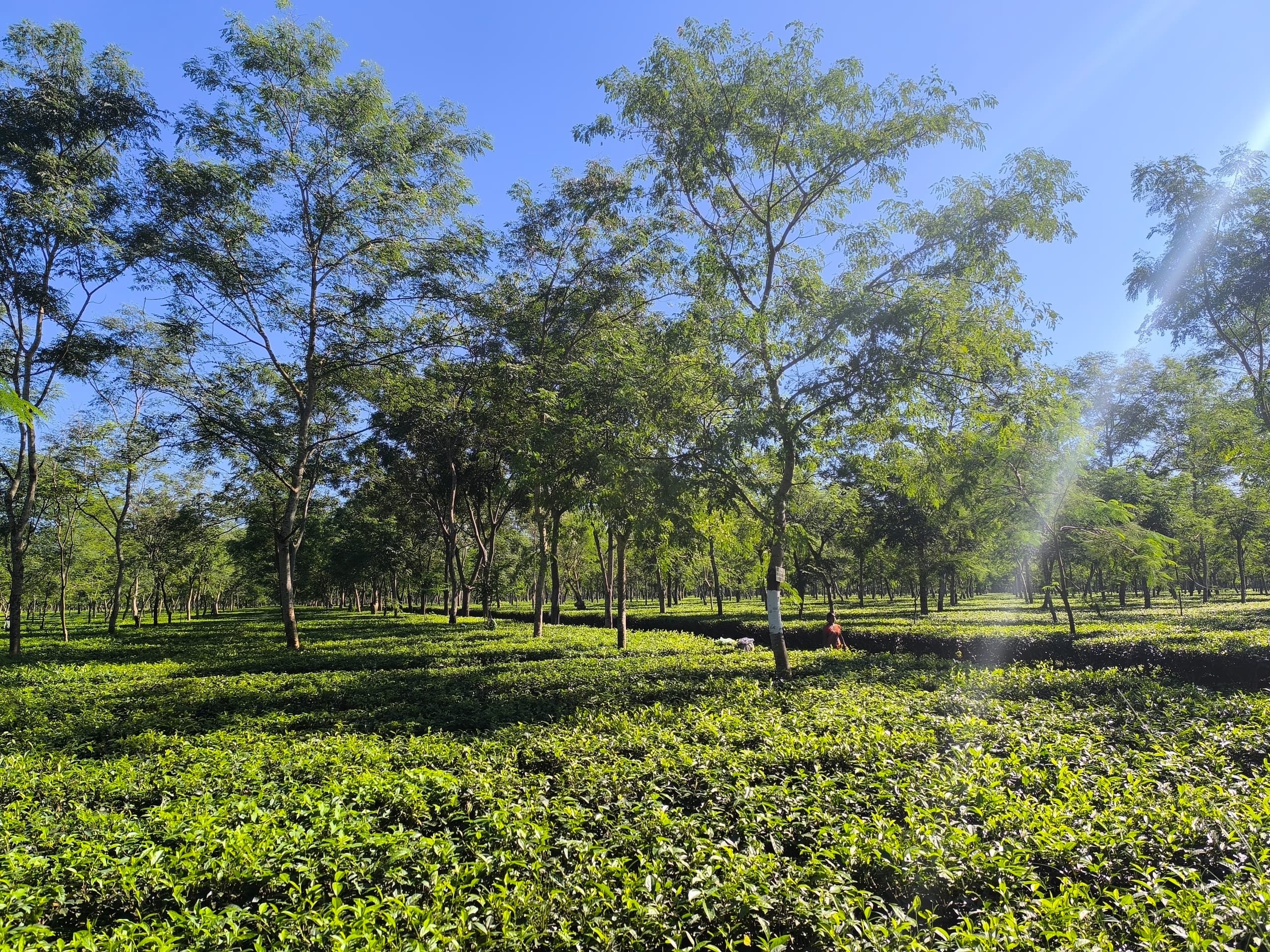
Proof of profit set off a speculative fever. Through the 1860s a “tea mania” drew British capital and adventurers into the valley. Forest and grazing land were cleared on a vast scale. The map of upper Assam was redrawn into a chequerboard of estates. The heart of the country was, and remains, the upper-valley districts. Above all comes Dibrugarh, which still calls itself the tea city of India, together with Tinsukia, Sivasagar, and Jorhat. A second great belt lies around Nagaon and the north bank. Within a generation, what had been frontier became one continuous plantation landscape, the largest in the world. The flat green sea of waist-high bushes under their shade trees became the defining sight of the region.
The garden world and its people
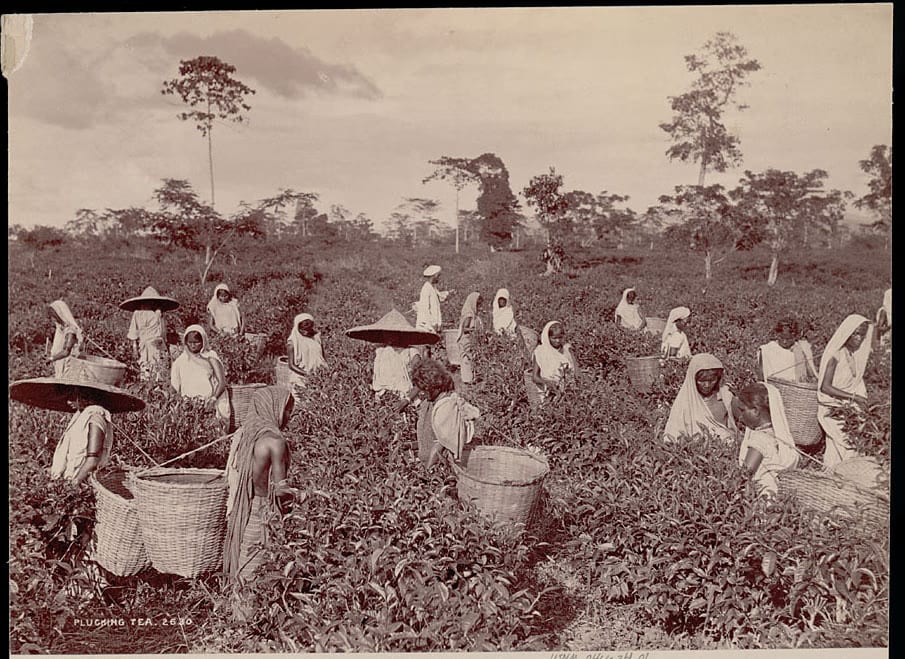
A plantation needs hands. The local population would not do the work on the planters' terms. So the industry built its workforce by importing it. From the 1860s, hundreds of thousands of labourers were brought under indenture from the impoverished districts of central India, Chotanagpur and beyond. The migration was brutal in transit and brutal on arrival. It brought high mortality, debt bondage, and a penal-contract system that tied a worker to the garden. Out of that forced migration grew an entire new community, the tea-garden or Adivasi people, now millions strong. Their descendants still live and work in the gardens and form one of Assam's major populations. Above them stood the planter's world of the manager's bungalow, the club, and the timber chang bungalow raised on stilts against flood and damp. That colonial order is preserved today at heritage estates near Dibrugarh. One relic of it still governs daily life. The gardens keep their own clock, an hour ahead of Indian Standard Time, known as “bagan time” or tea-garden time. By tradition the planters set it so the working day could start with the early tropical dawn. Many gardens follow it to this day.
Orthodox, CTC, and the second flush
Assam tea is made in two main ways. The difference is the difference between a commodity and a connoisseur's cup. Most of the crop, the great majority, is made by the CTC method, for “crush, tear, curl.” This mills the leaf into hard granules. They brew quickly into the strong, dark, brisk liquor wanted for tea bags and for the spiced milk tea of the subcontinent. A smaller share is made the older “orthodox” way, the leaf rolled whole to yield fine, tippy, full-leaf teas. The finest of these come from the second flush, the plucking of late May and June. It gives Assam its prized malty character and the golden leaf tips that mark a good cloth. The valley's orthodox tea won a Geographical Indication in 2008. The science behind the whole crop has long been anchored at the Tocklai research station near Jorhat. Founded in 1911, it is generally counted the oldest tea research institute in the world. The valley remains the single largest source of India’s tea, growing roughly half the country’s crop. That crop is grown almost at sea level, on the valley floor, which sets Assam apart from the hill teas of Darjeeling and the Nilgiris.
From garden to cup
Made tea leaves the gardens for the auction. The Guwahati Tea Auction Centre opened in 1970. It grew into the busiest tea-trading floor in the country and the largest auction of CTC tea anywhere. It is the hinge through which much of the valley's crop passes on its way to the blenders and the world's breakfast tables. For the visitor, the tea country itself is the experience: the estates around Dibrugarh and Jorhat, the heritage chang bungalows that take guests, the factory walk that follows a leaf from plucking through withering and rolling to the finished grain. And the surest way to carry the valley home is in the cup. The single-estate Assam teas of the second flush are among the finest the region makes.